

Arsenic Trioxide Pneumatic Conveying Technology: Principles, Applications, and Development Trends
As a specialized engineering company, Shandong HeadPowder Engineering Co., Ltd. focuses on the development and application of advanced material handling solutions. Among these, the pneumatic conveying technology for arsenic trioxide stands out as a critical solution for safe and efficient material transport. This technology addresses the unique challenges associated with handling arsenic trioxide, ensuring compliance with safety standards while optimizing operational efficiency.
Principles of Pneumatic Conveying for Arsenic Trioxide
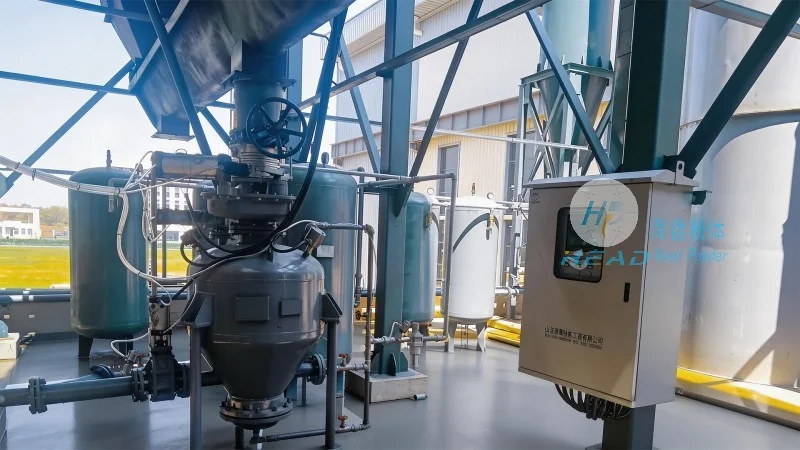
The core principle of pneumatic conveying involves the use of a gas stream, typically air, to transport solid materials like arsenic trioxide through a pipeline system. This method eliminates the need for mechanical components such as belts or buckets, reducing wear and maintenance costs. The technology operates on two main modes: dilute-phase and dense-phase conveying. Dilute-phase conveying uses higher air velocities to move particles in a dispersed state, suitable for short distances and low material loads. Dense-phase conveying, on the other hand, employs lower air velocities and higher material concentrations, ensuring gentle handling and minimal product degradation. For arsenic trioxide, which is a fine powder with potential health hazards, dense-phase conveying is often preferred to prevent dust generation and ensure product integrity.
Applications of Arsenic Trioxide Pneumatic Conveying
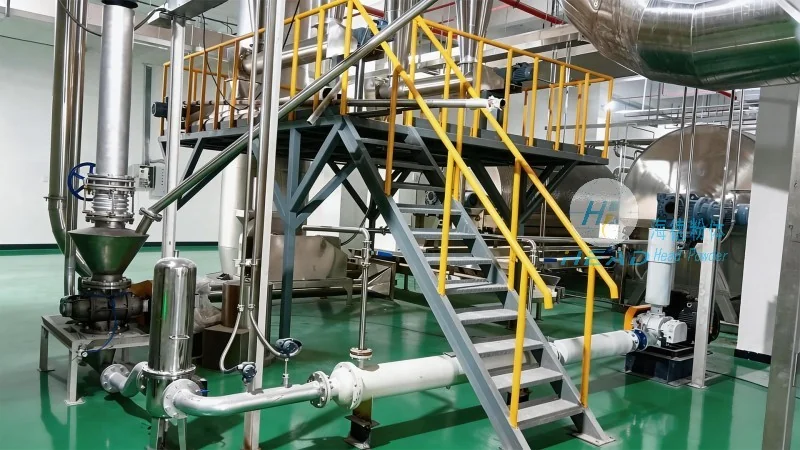
Shandong HeadPowder Engineering Co., Ltd. has successfully applied pneumatic conveying systems in various industrial settings. These systems are commonly used in pharmaceutical manufacturing, where arsenic trioxide is processed into active pharmaceutical ingredients (APIs). The technology ensures that the material is transported from storage silos to processing units without manual handling, reducing exposure risks for operators. In the chemical industry, the system is utilized in the production of arsenic-based compounds, where precise control over material flow is essential to maintain product quality. Additionally, the technology is employed in environmental remediation projects, where arsenic trioxide is transported from treatment facilities to disposal sites. The systems are designed to handle varying material properties, including different particle sizes and moisture contents, making them versatile for diverse applications.
Key Features and Advantages
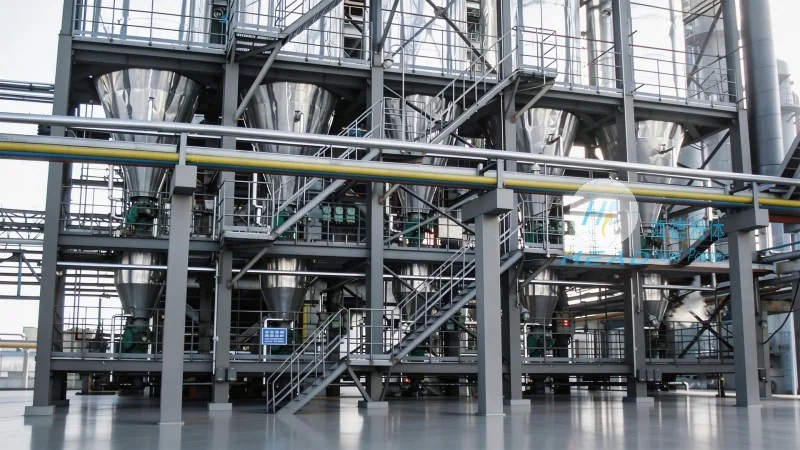
The pneumatic conveying systems developed by Shandong HeadPowder Engineering Co., Ltd. offer several advantages over traditional material handling methods. Firstly, they provide a dust-free environment, which is crucial for handling arsenic trioxide, as inhalation of fine particles can lead to severe health issues. The enclosed pipeline system prevents dust from escaping into the workplace, enhancing safety and compliance with occupational health regulations. Secondly, the technology offers high flexibility in system design, allowing for integration with existing production lines or expansion to accommodate increased production capacity. The systems can be customized to meet specific operational requirements, such as varying material flow rates or distance requirements. Thirdly, pneumatic conveying reduces energy consumption compared to other methods, as the air used for transport can be recycled and reused, minimizing operational costs. The gentle handling of the material also prevents agglomeration and degradation, ensuring that the arsenic trioxide maintains its intended properties throughout the transport process.
Technological Advancements and Development Trends
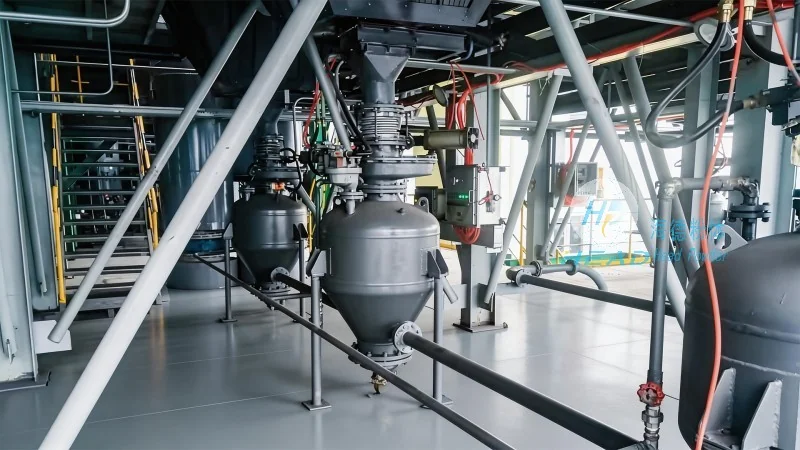
Over the years, the pneumatic conveying technology for arsenic trioxide has undergone significant advancements. Modern systems now incorporate advanced control systems, such as PLC (Programmable Logic Controller) and SCADA (Supervisory Control and Data Acquisition), which enable real-time monitoring and automation of the conveying process. This allows for precise control over material flow, pressure, and air velocity, ensuring optimal performance and safety. The use of high-efficiency filters and dust collection systems has further improved the environmental performance of the technology, reducing emissions and improving air quality. Additionally, the integration of sensors and IoT (Internet of Things) devices has enabled predictive maintenance, allowing for proactive identification and resolution of potential issues before they impact system operation. Looking ahead, the development trends in this technology focus on enhancing energy efficiency, improving material handling capacity, and integrating with digital manufacturing platforms. The adoption of sustainable practices, such as using recycled air and reducing energy consumption, is also a key trend. Furthermore, the technology is being optimized for handling more complex material compositions, including mixtures of arsenic trioxide with other chemicals, to support advanced industrial applications.