

What is a Limestone Powder and Lime Powder Pneumatic Conveying System? And What Are Its Design Princ
Welcome to the official website of Shandong HeadPowder Engineering Co., Ltd., a leading provider of advanced material handling solutions. Our company specializes in the design, manufacturing, and installation of high-efficiency pneumatic conveying systems, particularly for handling limestone powder and lime powder. This article will explore the fundamental concepts of such systems and delve into the core design principles that ensure optimal performance and reliability.
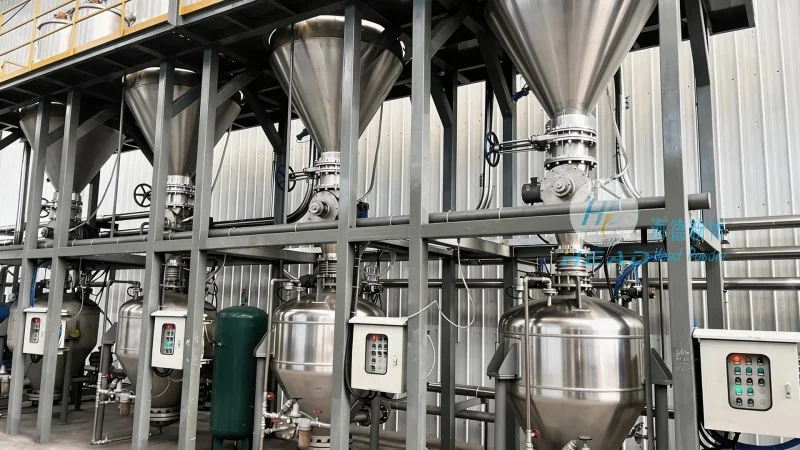
Understanding the Limestone and Lime Powder Pneumatic Conveying System
A pneumatic conveying system is a technology used to transport bulk solid materials, such as limestone powder and lime powder, through a pipeline using a gas stream, typically air. The system is composed of several key components, including a material feed hopper, a conveyor line, a gas source (usually a blower or compressor), and a discharge unit. The primary goal of this system is to move these fine powders from a storage or processing area to a destination, such as a silo, reactor, or packaging facility, with minimal loss and maximum efficiency.
Limestone powder and lime powder are widely used in various industries, including construction, agriculture, and chemical manufacturing. These materials are characterized by their fine particle size, which makes traditional mechanical conveying methods inefficient and often leads to material degradation or blockages. Pneumatic conveying offers a solution by utilizing air pressure to transport the powders, reducing the risk of contamination and ensuring a smooth, continuous flow.
Key Components of the Pneumatic Conveying System
The effectiveness of a limestone and lime powder pneumatic conveying system depends on the proper integration of several critical components. The material feed hopper is responsible for storing and feeding the powder into the system. It is typically equipped with a rotary valve or a feeder to control the flow rate and prevent material buildup. The conveyor line, often made of stainless steel or other corrosion-resistant materials, is designed to withstand the abrasive nature of the powders and maintain a consistent air flow.
The gas source, usually a positive displacement blower or a centrifugal fan, generates the necessary air pressure to move the material through the pipeline. The blower's capacity and pressure are carefully selected based on the material's properties, such as particle size, density, and moisture content. The discharge unit, which can be a rotary valve, a silo, or a spray nozzle, controls the release of the material at the destination. This component is crucial for maintaining the system's efficiency and preventing backflow or material accumulation.
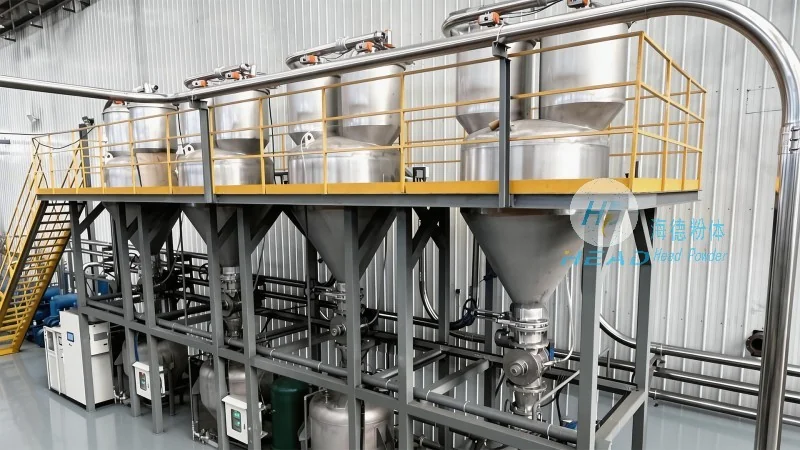
Design Principles for Optimal Performance
The design of a limestone and lime powder pneumatic conveying system follows several fundamental principles to ensure high efficiency, reliability, and low maintenance. The first principle is the selection of the appropriate air velocity. The air velocity must be high enough to prevent the material from settling in the pipeline but low enough to avoid excessive wear and energy consumption. Typically, the air velocity is maintained between 20 to 30 meters per second for fine powders like limestone and lime powder.
The second principle is the proper sizing of the pipeline. The diameter of the pipeline is determined by the material's flow rate and the air velocity. A larger diameter reduces the pressure drop and energy consumption but increases the system's cost. Conversely, a smaller diameter increases the pressure drop and may lead to material blockages. Engineers use computational fluid dynamics (CFD) and empirical formulas to calculate the optimal pipeline size for a given application.
The third principle is the prevention of material degradation. Limestone and lime powders are sensitive to moisture and temperature changes, which can affect their quality and performance. The system is designed with moisture-proof and temperature-controlled components, such as insulated pipelines and moisture separators, to maintain the material's integrity. Additionally, the use of smooth, non-abrasive pipeline surfaces minimizes particle attrition and prevents the formation of agglomerates.
Advantages of Using a Pneumatic Conveying System for Limestone and Lime Powder
Implementing a pneumatic conveying system for limestone and lime powder offers numerous advantages over traditional conveying methods. First, it provides a clean and hygienic method of material transport, which is essential in industries like food and pharmaceuticals. The system is enclosed, preventing dust emissions and contamination from external sources. Second, it offers high efficiency and low maintenance costs. Unlike mechanical conveyors, which require regular cleaning and replacement of wear parts, pneumatic systems have fewer moving parts and can operate continuously with minimal downtime.
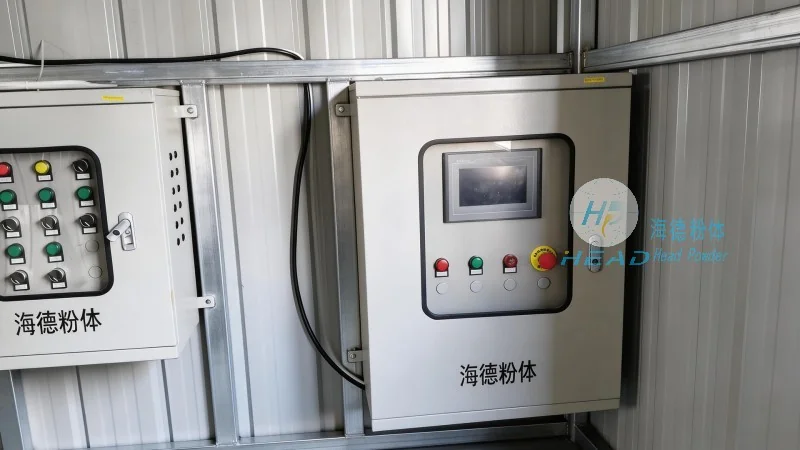
Third, the system is flexible and can be easily integrated into existing production lines. It can handle varying flow rates and material compositions, making it suitable for both small-scale and large-scale applications. The ability to transport materials over long distances without the need for intermediate storage or handling also enhances operational efficiency. Finally, the system is energy-efficient, as it uses compressed air, which can be generated on-site and recycled, reducing operational costs and environmental impact.
Applications and Industries
Limestone and lime powder pneumatic conveying systems are widely used in various industries due to their versatility and efficiency. In the construction industry, these systems are used to transport limestone powder for cement production and lime powder for mortar and plaster applications. The fine particle size of the powders is crucial for achieving the desired consistency and strength in these products.
In the agricultural sector, lime powder is used for soil conditioning and pH adjustment. Pneumatic conveying systems enable farmers to apply lime evenly and efficiently over large areas, improving soil fertility and crop yields. The chemical industry also relies on these systems for transporting limestone powder in the production of calcium carbonate and other chemical products.
Conclusion
A limestone and lime powder pneumatic conveying system is a sophisticated and efficient solution for handling fine bulk materials. The design principles, including proper air velocity, pipeline sizing, and material protection, ensure optimal performance and reliability. As a leading provider in the industry, Shandong HeadPowder Engineering Co., Ltd. specializes in customizing these systems to meet the specific needs of various applications, offering high-quality, durable, and energy-efficient solutions for material handling challenges.