

Working Principle and Characteristics of Negative Pressure Dilute Phase Powder Conveying
HeadPowder, a professional engineering company based in Shandong, China, specializes in providing advanced solutions for powder handling and conveying systems. With a focus on innovation and efficiency, the company has established itself as a leading provider of negative pressure dilute phase powder conveying technology. This article explores the working principle and key characteristics of this crucial industrial process.
About HeadPowder: A Leading Provider of Powder Conveying Solutions
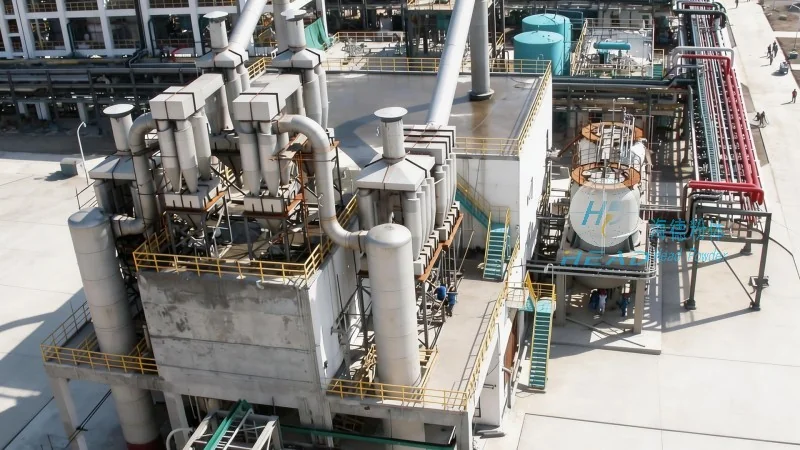
HeadPowder Engineering Co., Ltd. is headquartered in Shandong, China. The company has built a strong reputation in the industry by delivering high-quality, reliable powder conveying systems tailored to the needs of various sectors, including pharmaceuticals, chemicals, food processing, and more. By combining expertise in engineering design, manufacturing, and installation, HeadPowder ensures that its clients receive solutions that meet strict industry standards and operational requirements.
Working Principle of Negative Pressure Dilute Phase Powder Conveying
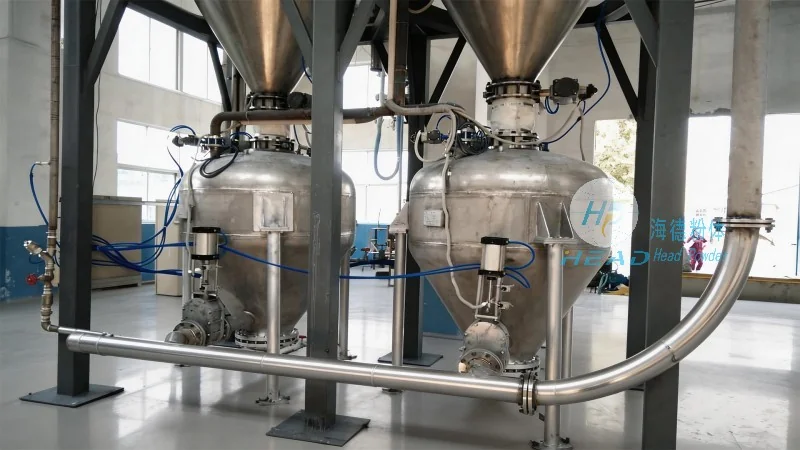
Negative pressure dilute phase powder conveying operates by creating a vacuum within the conveying system, which draws air and powder particles into the pipeline. The system typically consists of a vacuum pump (or fan), a series of pipelines, and a receiving hopper. As the vacuum is applied, air and the powder mixture are drawn from the source point (such as a silo or hopper) and transported through the pipeline to the destination. The key to this process is the dilute phase, where the powder is suspended in the air stream, allowing for efficient and low-resistance transport. The velocity of the air flow is carefully controlled to ensure that the powder particles remain suspended without settling or causing blockages. This method is particularly effective for transporting fine or cohesive powders over long distances with minimal energy consumption.
Key Characteristics of Negative Pressure Dilute Phase Powder Conveying
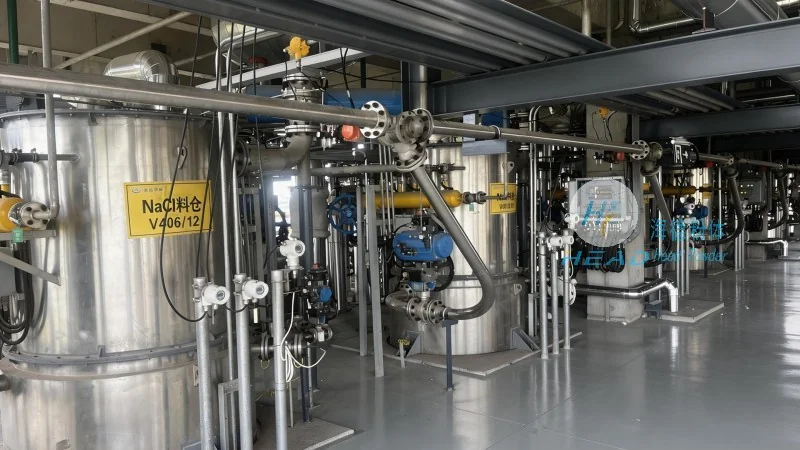
One of the primary advantages of negative pressure dilute phase powder conveying is its energy efficiency. By utilizing a vacuum to draw material rather than pushing it with positive pressure, the system requires less power to operate, resulting in lower operational costs. Additionally, this method reduces wear and tear on equipment, as the powder is suspended in the air rather than being forced through the pipeline under high pressure. This leads to longer equipment life and reduced maintenance requirements. The system is also highly versatile, capable of handling a wide range of powder types, including fine powders, granules, and even some cohesive materials. This adaptability makes it suitable for various applications, from small-scale laboratory operations to large-scale industrial production. Furthermore, negative pressure systems are generally considered safer, as they minimize the risk of dust explosions by keeping the powder in a dilute state and preventing the accumulation of static charge. The design of the system also allows for easy integration with existing facilities, making it a practical solution for retrofitting or expanding existing powder handling operations.
Applications and Benefits in Industrial Settings
The application of negative pressure dilute phase powder conveying is widespread across multiple industries. In the pharmaceutical industry, for example, it is used to transport active pharmaceutical ingredients (APIs) and excipients with high precision and minimal contamination. The low pressure and gentle handling of the system prevent product degradation and ensure product integrity. In the chemical industry, it is employed to handle reactive powders and hazardous materials, where safety is paramount. The system's ability to maintain a controlled environment and prevent dust dispersion makes it ideal for such applications. Similarly, in the food processing industry, it is used to convey ingredients like flour, sugar, and spices, ensuring that the product remains fresh and free from contamination. The benefits of this technology extend beyond efficiency and safety; it also contributes to environmental sustainability by reducing the need for manual handling and minimizing waste. By streamlining the powder handling process, negative pressure dilute phase conveying helps companies improve their overall operational performance and reduce their environmental footprint.
Conclusion
HeadPowder Engineering Co., Ltd. continues to be at the forefront of developing and implementing advanced powder conveying solutions. The negative pressure dilute phase powder conveying system, with its efficient working principle and numerous benefits, represents a significant advancement in industrial material handling. By leveraging this technology, companies can achieve improved productivity, reduced costs, and enhanced safety in their powder handling operations. As the demand for reliable and efficient powder conveying systems grows, HeadPowder remains committed to providing innovative solutions that meet the evolving needs of the industry.