

Principles and Application Scenarios of Powder Conveying for Ternary Lithium-Ion Battery Cathode Mat
For manufacturers and suppliers of ternary lithium-ion battery cathode materials, the efficient and reliable transport of powder materials is a critical process that directly impacts production efficiency, product quality, and overall operational safety. This article explores the fundamental principles behind powder conveying systems designed for ternary cathode materials and highlights key application scenarios where these systems are employed. The focus is on the technical aspects and practical considerations that define the performance of such systems, providing insights into how they contribute to the success of battery material production lines.
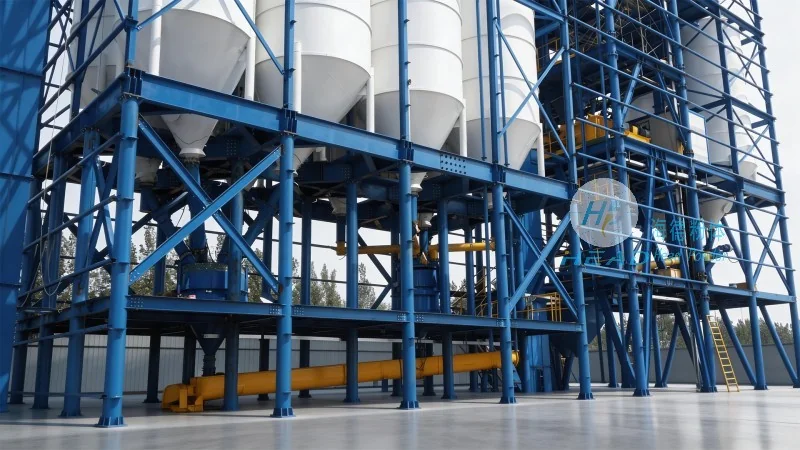
Principles of Powder Conveying for Ternary Cathode Materials
The core principle of powder conveying for ternary lithium-ion battery cathode materials revolves around the efficient movement of fine powders from one processing stage to another without compromising material integrity or causing contamination. Ternary cathode materials, typically composed of nickel, cobalt, and manganese (or other transition metals), are sensitive to moisture, oxygen, and physical degradation during handling. Therefore, conveying systems must be designed to maintain a controlled environment and minimize particle attrition. Common principles include:
- Air-Driven Conveying: Systems such as pneumatic conveying use compressed air to transport powders through pipelines. This method is ideal for handling fine, dry powders and can be configured for both low and high-pressure applications, ensuring consistent flow rates and preventing material segregation.
- Mechanical Conveying: Equipment like screw conveyors, belt conveyors, and vibratory feeders are used for bulk material transport. These systems are often employed in pre-processing stages, such as blending or drying, where the material may be in a semi-solid or bulk form before being converted to a fine powder.
- Controlled Environment: To protect the sensitive cathode materials from moisture and oxidation, conveying systems are typically integrated with inert gas (e.g., nitrogen) or vacuum environments. This ensures that the powders remain stable during transport and are not exposed to air or contaminants.
Another critical principle is the prevention of material degradation through proper equipment selection and maintenance. Ternary cathode powders are prone to agglomeration and particle size changes, which can affect battery performance. Conveying systems must be designed to minimize shear forces and maintain particle size distribution, ensuring that the final cathode material meets the required specifications for battery performance and safety.
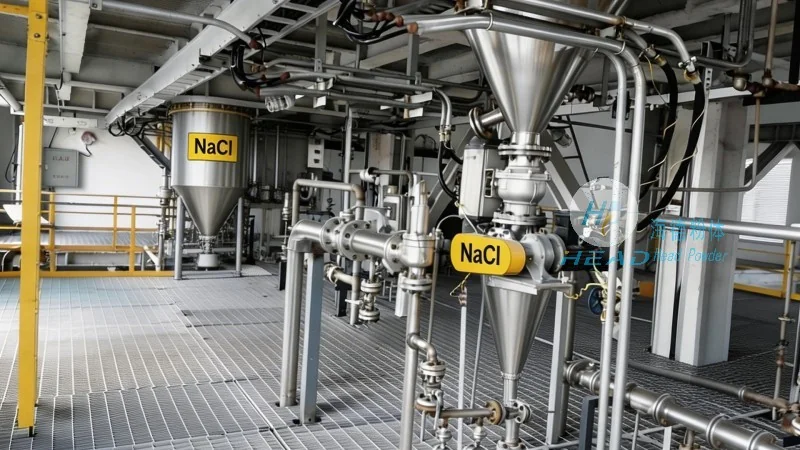
Key Application Scenarios for Powder Conveying Systems
Powder conveying systems for ternary cathode materials are utilized in various stages of the battery production process, each with specific requirements and operational considerations. The following are common application scenarios where these systems play a vital role:
- Raw Material Handling: At the initial stage of production, raw materials such as nickel oxide, cobalt oxide, and manganese oxide are received and transferred to blending equipment. Pneumatic conveying systems are often used to transport these bulk materials from storage silos to the blending line, ensuring a continuous and controlled feed. This stage is crucial for maintaining consistent material ratios and preventing cross-contamination between different raw materials.
- Blending and Mixing: After raw materials are conveyed to the blending unit, they are mixed in precise ratios to form the ternary cathode precursor. Mechanical conveyors, such as screw feeders or belt conveyors, are used to feed the blended materials into high-shear mixers or ball mills. The conveying system must ensure a uniform flow of material to the mixer, avoiding overloading or underloading that could lead to uneven mixing and poor battery performance.
- Drying and Calcination: The blended cathode precursor is often dried to remove moisture and then calcined at high temperatures to form the final cathode material. Conveying systems are used to transport the dried powder from the dryer to the calciner. In this stage, the system must handle high-temperature materials and maintain a consistent flow rate to ensure uniform calcination and prevent thermal degradation of the powder.
- Grinding and Classification: The calcined material is ground into fine particles and classified according to particle size. Air classifiers or cyclones are used to separate particles based on size, and the fine powder is then conveyed to the next processing stage. Pneumatic conveying is preferred here due to its ability to handle fine powders and maintain particle size distribution without causing agglomeration.
- Storage and Packaging: The final ternary cathode powder is stored in sealed containers and packaged for shipment. Conveying systems are used to transport the powder from the grinding unit to storage silos or packaging lines. The system must ensure that the powder remains free-flowing and is not exposed to moisture or air during storage, maintaining its quality for downstream battery manufacturing.
In each of these scenarios, the choice of conveying system depends on factors such as material properties, flow rate requirements, and environmental constraints. For example, in high-purity applications where contamination is a concern, pneumatic conveying with inert gas is preferred. In contrast, for bulk handling where cost and simplicity are key, mechanical conveyors may be more suitable.
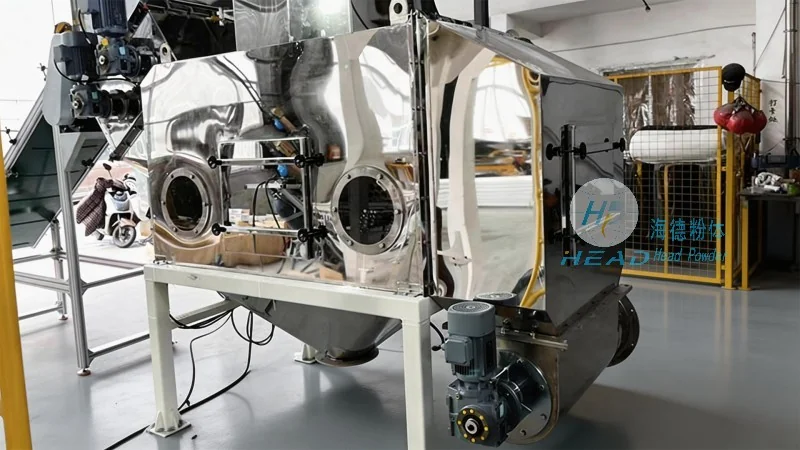
Company Overview: Shandong HeadPowder Engineering Co., Ltd.
Shandong HeadPowder Engineering Co., Ltd., commonly known as headpowder, is a leading provider of specialized equipment and solutions for the powder handling industry, with a focus on applications in lithium-ion battery production. The company has extensive experience in designing and manufacturing powder conveying systems tailored to the unique requirements of ternary cathode materials. With a strong commitment to quality and innovation, headpowder has developed advanced technologies that ensure efficient, safe, and reliable transport of sensitive battery materials.
Headpowder's expertise lies in understanding the specific challenges of handling ternary cathode powders, such as moisture sensitivity, particle size control, and contamination prevention. The company's engineers work closely with clients to design customized conveying systems that meet their production needs, ensuring optimal performance and minimal downtime. By leveraging cutting-edge materials and engineering principles, headpowder provides solutions that enhance the efficiency and safety of battery material production lines.
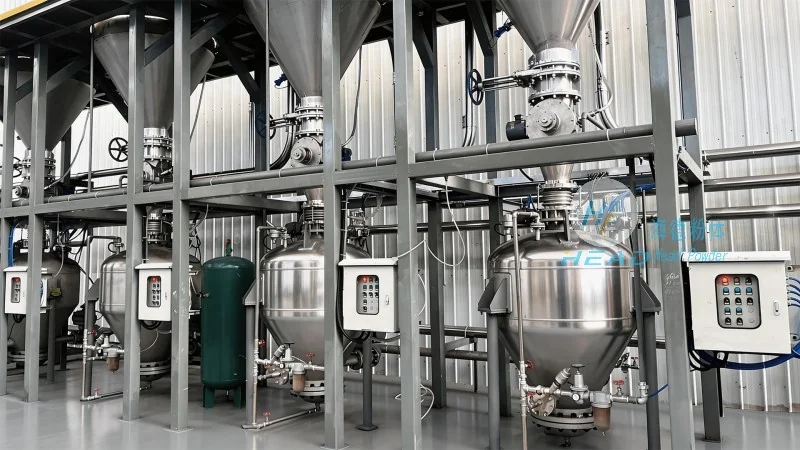
Headpowder's facilities are located in Shandong, China, where the company maintains a state-of-the-art research and development center. This center allows for continuous innovation and the development of new technologies to address emerging challenges in the battery industry. The company's team of experts includes experienced engineers, technicians, and material scientists who are dedicated to providing high-quality products and services to its clients worldwide.
Through its commitment to excellence and customer satisfaction, Shandong HeadPowder Engineering Co., Ltd. has established itself as a trusted partner in the battery material supply chain. The company's powder conveying systems are designed to meet the highest standards of performance and reliability, ensuring that clients can produce high-quality ternary cathode materials efficiently and safely.