

Operation Process and Working Principle of Boron Nitride Powder Conveying Equipment
For industrial applications involving boron nitride (BN) powder, efficient and reliable conveying systems are essential to ensure smooth material handling and processing. The operation process and working principle of boron nitride powder conveying equipment, as provided by Shandong HeadPowder Engineering Co., Ltd. (headpowder), a leading manufacturer in the field, involve several key components and steps that work in tandem to achieve optimal performance. This article outlines the detailed operation process and underlying working principles of such equipment, emphasizing the technical aspects and practical applications, with a focus on the equipment manufactured by Shandong HeadPowder Engineering Co., Ltd. located in Shandong, China.
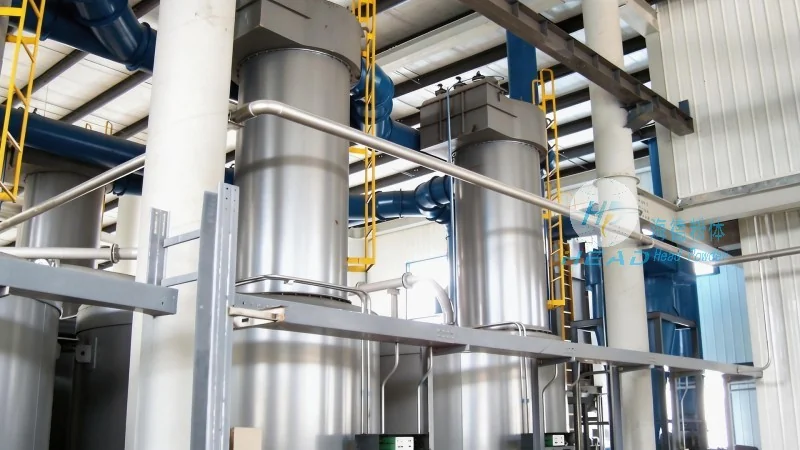
Key Components of Boron Nitride Powder Conveying Systems
The boron nitride powder conveying equipment typically comprises several critical components that work together to ensure efficient material transport. The primary components include a hopper for material storage, a feeder to regulate powder flow, a conveyor mechanism (such as screw or pneumatic systems), a control system for operation management, and safety features to prevent operational issues. The hopper is usually made of corrosion-resistant materials like stainless steel to accommodate the chemical properties of boron nitride powder and prevent contamination. The feeder, often a screw or vibratory type, ensures a consistent and controlled discharge of powder into the conveyor. The conveyor mechanism, whether mechanical (e.g., screw conveyors) or pneumatic (e.g., air-assisted systems), is designed to handle the specific characteristics of boron nitride powder, including its particle size (typically ranging from sub-micron to several microns), density (around 2.2 g/cm³), and flowability (often characterized by angle of repose and compressibility), to optimize performance. The control system monitors parameters like flow rate, pressure, and temperature, adjusting settings to maintain optimal performance. Safety features, such as overflow detectors and emergency shut-off valves, protect both the equipment and the material from damage.
Working Principle of Boron Nitride Powder Conveying
The working principle of boron nitride powder conveying equipment is based on the physical properties of the material and the mechanical or pneumatic forces applied to move the powder. For example, in pneumatic conveying systems, compressed air is used to create a flow that transports the powder through a pipeline. The air velocity and pressure are carefully controlled to ensure the powder is carried without causing excessive wear or degradation. In mechanical systems like screw conveyors, the rotating screw pushes the powder forward, utilizing the friction between the screw and the material to achieve movement. The design of the conveying system is tailored to the specific characteristics of boron nitride powder, such as its particle size and flow behavior, to prevent agglomeration or clogging. The working principle also considers the need to maintain the purity and integrity of the powder, which is crucial for downstream applications.
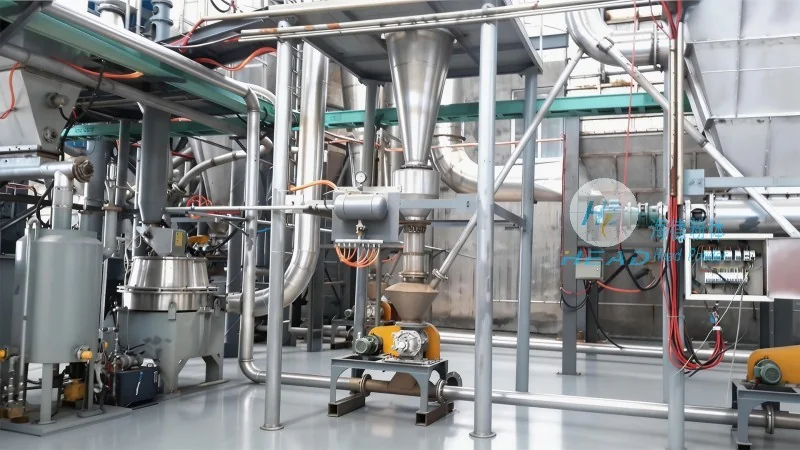
Operation Process of Boron Nitride Powder Conveying Equipment
The operation process of boron nitride powder conveying equipment involves several sequential steps that ensure the material is handled safely and efficiently. First, the boron nitride powder is loaded into the hopper, where it is stored until needed. The hopper is equipped with a feeder that regulates the flow of powder into the conveyor system. Next, the conveyor mechanism is activated, either by a motor or pneumatic pressure, to start the movement of the powder. The control system monitors the flow rate and pressure, adjusting parameters as needed to maintain consistent operation. During the conveying process, the equipment may include features like vibration or agitation to prevent clogging, especially for powders with poor flow characteristics. The system also incorporates sensors to detect any blockages or abnormal conditions, triggering alarms or automatic shutdowns. Finally, the powder is discharged into the target container or processing unit, completing the cycle. The entire process is designed to minimize downtime, maximize throughput, and ensure the integrity of the boron nitride powder, which is crucial for maintaining product quality in downstream applications.
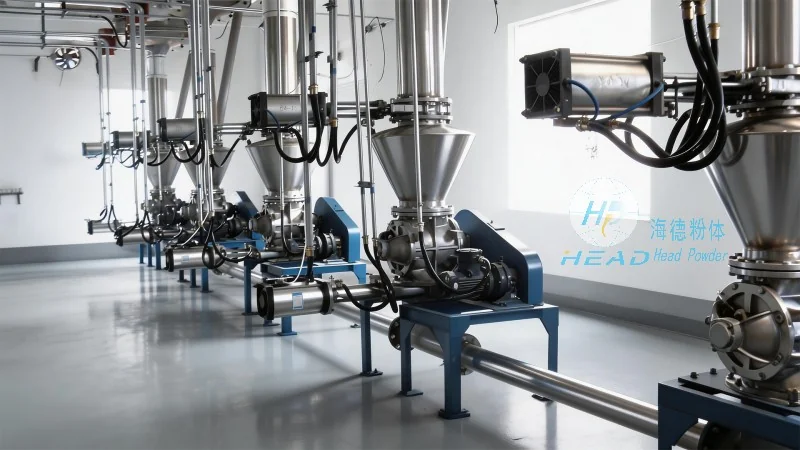
Advantages of Boron Nitride Powder Conveying Equipment
Using specialized conveying equipment for boron nitride powder offers several advantages over traditional methods. These include improved material handling efficiency, reduced labor costs, and enhanced safety by minimizing direct human contact with the powder. The equipment also helps maintain the purity of the boron nitride powder by preventing contamination from external sources. Additionally, the controlled environment of the conveying system can reduce dust generation and improve workplace safety. For manufacturers, this translates to higher productivity and better product quality, making the investment in such equipment worthwhile. Furthermore, the equipment's ability to handle fine powders without degradation makes it suitable for applications requiring high precision and purity, such as in the production of high-performance ceramics and electronic components.
Applications in Industrial Settings
Boron nitride powder conveying equipment is widely used in various industrial applications, including the production of high-performance ceramics, electronic components, and lubricants. In the ceramics industry, the equipment is used to transport boron nitride powder to mixing and molding processes, ensuring consistent material properties. The fine particle size and thermal stability of boron nitride make it an ideal additive for ceramic formulations, and the conveying system ensures that the powder is added uniformly. In electronics, the powder is conveyed to coating and encapsulation processes, where its thermal conductivity and electrical insulating properties are utilized. For example, boron nitride is used as a dielectric material in capacitors and as a thermal interface material in semiconductor devices. The equipment's ability to handle these applications without compromising the powder's properties is critical. In lubricant manufacturing, boron nitride is used as a solid lubricant, and the conveying system ensures that the powder is mixed with other components accurately. By integrating such conveying systems into production lines, companies can achieve greater automation and efficiency, leading to improved competitiveness in the market. The consistent performance of the equipment also reduces the need for manual adjustments, further enhancing operational reliability.