

Operation Process and Working Principle of Limestone and Gypsum Powder Conveying Equipment
HeadPowder, a leading manufacturer based in Shandong, China, specializes in providing efficient and reliable limestone and gypsum powder conveying equipment. These systems are crucial in various industrial applications, including cement production, construction materials processing, and chemical manufacturing, where the safe and effective transport of fine powders is essential. The equipment is designed to handle the unique challenges associated with limestone and gypsum, such as their tendency to agglomerate, high dust generation, and varying particle sizes.
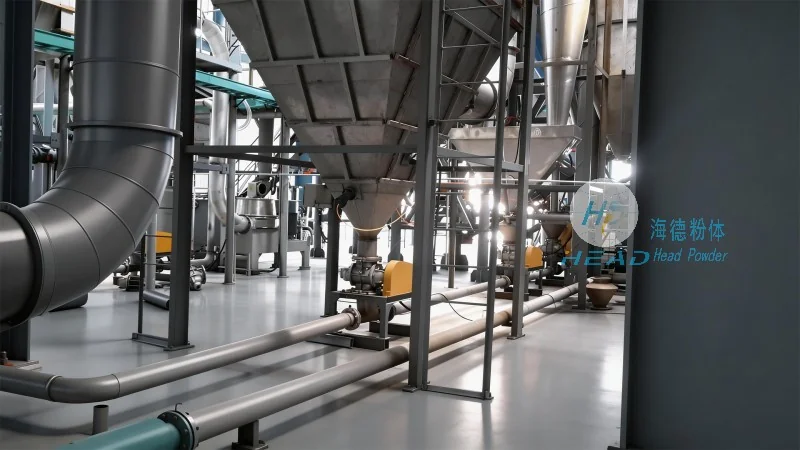
Company Overview: Shandong HeadPowder Engineering Co., Ltd.
HeadPowder is a professional enterprise dedicated to the research, development, and manufacturing of powder handling solutions. With a strong presence in Shandong, China, the company leverages advanced technology and years of industry experience to deliver high-quality conveying equipment. The company's commitment to innovation and customer satisfaction has established it as a trusted partner in the powder processing sector. HeadPowder's products are engineered to meet the specific needs of clients, ensuring optimal performance and durability in demanding operational environments.
Key Components and Structure of the Conveying System
The limestone and gypsum powder conveying equipment typically consists of several key components that work in tandem to ensure efficient material transport. The main parts include a hopper for material storage, a feeder to control the flow rate, a conveyor (such as a screw or pneumatic conveyor), and a dust collection system. The hopper is designed with a sloped bottom to facilitate material discharge and prevent blockages. The feeder, often a rotary valve or a vibratory feeder, regulates the amount of powder released into the conveyor, ensuring a consistent flow. The conveyor itself is tailored to the properties of limestone and gypsum, with features like anti-static coatings and abrasion-resistant materials to minimize wear and maintain material integrity. The dust collection system is integrated to capture and filter airborne particles, ensuring compliance with environmental regulations and maintaining a safe working environment.
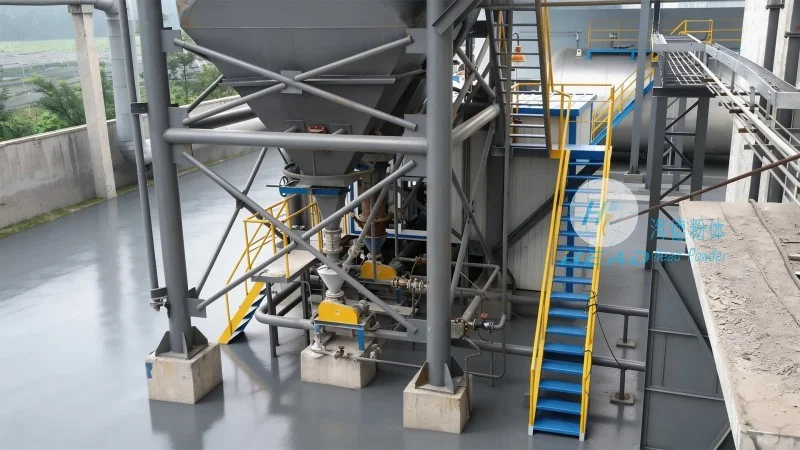
Operation Process: Step-by-Step Workflow
The operation of the limestone and gypsum powder conveying system follows a systematic workflow that ensures smooth and continuous material transport. The process begins with the loading of limestone or gypsum into the hopper. The material is then fed into the conveyor system through the feeder, which controls the flow rate based on the system's requirements. The conveyor transports the powder from the hopper to the discharge point, which may be a storage silo, a processing unit, or a delivery point. The system is equipped with sensors and control panels that monitor the flow rate, pressure, and other parameters, allowing for real-time adjustments to maintain optimal performance. The dust collection system operates concurrently, capturing any particles that escape during the conveying process and filtering them to meet environmental standards. The entire process is automated, reducing the need for manual intervention and minimizing the risk of human error.
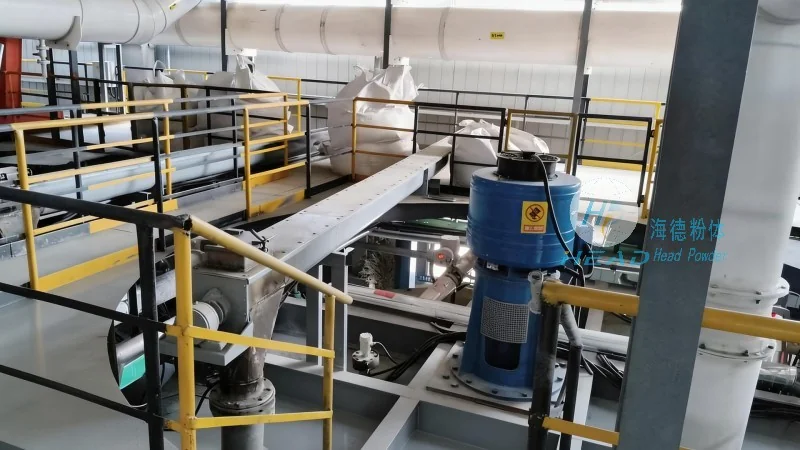
Working Principle: How the Equipment Transfers Powder
The working principle of the limestone and gypsum powder conveying equipment relies on the principles of fluidization and pneumatic or mechanical transport. For pneumatic conveyors, the system uses compressed air to create a flow of air and powder mixture, transporting the material through a pipeline. The air pressure and velocity are carefully controlled to ensure the powder is suspended and moved efficiently. The screw conveyors, on the other hand, use rotating screws to push the powder along a trough, relying on the mechanical force of the screw to move the material. Both systems are designed to handle the fine particles of limestone and gypsum, with adjustments made to the speed and pressure to prevent agglomeration and ensure consistent flow. The equipment is also equipped with features like air locks and check valves to prevent backflow and maintain the integrity of the material during transport.
Advantages and Applications of the Conveying Equipment
The limestone and gypsum powder conveying equipment offers several advantages that make it ideal for industrial applications. The system is highly efficient, capable of transporting large volumes of material with minimal energy consumption. It is also flexible, allowing for changes in the conveying route or flow rate without significant modifications. The equipment is designed for durability, with components made from high-quality materials that resist wear and corrosion from the abrasive nature of limestone and gypsum. Additionally, the integrated dust collection system ensures compliance with environmental regulations and maintains a safe working environment. The applications of this equipment are widespread, including in cement plants where limestone is a key raw material, in construction material manufacturers where gypsum is used for plaster and drywall, and in chemical processing facilities where fine powders are used in various production processes. The equipment's ability to handle the unique properties of limestone and gypsum makes it a vital component in these industries.