

Positive Pressure and Negative Pressure Conveying of Cement Aggregates: A Comparative Analysis of Tw
In the cement and aggregates industry, an efficient and reliable material conveying system is a critical factor for ensuring smooth production processes. Pneumatic conveying technology serves as a core solution for handling various granular materials, including cement, sand, and gravel. This article delves into two mainstream pneumatic conveying methods—positive pressure conveying and negative pressure conveying—and compares their applications in cement aggregate transport. By understanding the principles, advantages, disadvantages, and applicable scenarios of these two technologies, enterprises can more scientifically select a suitable conveying solution to enhance production efficiency and reduce operating costs.
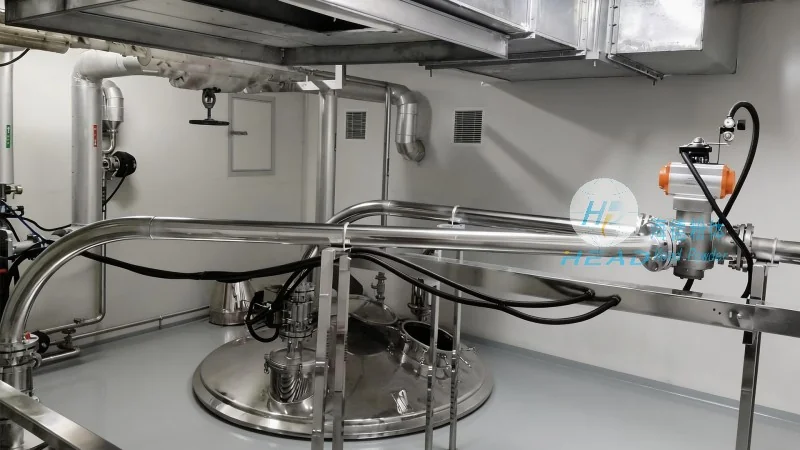
Positive Pressure Conveying: Analysis of High-Pressure Pneumatic Conveying Technology
Positive pressure conveying, also known as pressurized pneumatic conveying, involves injecting compressed air or gas into the conveying pipeline to create a gas environment with pressure higher than the ambient atmosphere, thereby transporting materials from the feed point to the discharge point. In cement aggregate transport, a positive pressure system typically consists of a feed device, conveying pipeline, air source equipment, separator, and discharge device. Its working principle is: materials are added to the feed hopper and mixed with air under the action of compressed air, forming a gas-solid two-phase flow that is transported through the pipeline to the destination. The pressure in a positive pressure system usually ranges from 0.5 to 1.0 MPa, depending on the conveying distance, material properties, and system design.
Positive pressure conveying offers several significant advantages. First, it enables long-distance, large-capacity material transport, suitable for transferring aggregates from raw material storage to production lines over long distances. Second, it causes less wear on materials because particles move in a suspended state within the pipeline, reducing collisions and friction between particles. Additionally, positive pressure systems can handle a variety of materials, including dry aggregates, cement, and mixtures, with high adaptability. In the cement industry, positive pressure conveying is commonly used to transport aggregates from storage yards to mixing stations or production workshops, ensuring timely material supply and preventing production interruptions.
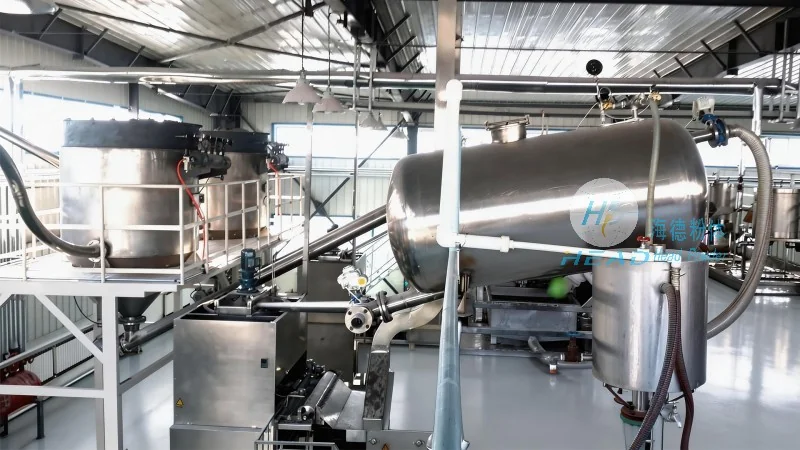
However, positive pressure conveying also has limitations. For example, the system requires powerful air source equipment such as air compressors, increasing energy consumption and maintenance costs. Moreover, positive pressure systems demand high sealing requirements, as pipeline and connection components must be airtight to prevent air and material loss, which affects conveying efficiency. Furthermore, for high-concentration or viscous materials, positive pressure systems may require more complex feed devices and separation equipment to maintain stable conveying conditions. Overall, positive pressure conveying is suitable for scenarios with high requirements for conveying efficiency, long material transport distances, and high sealing performance.
Negative Pressure Conveying: Analysis of Suction Pneumatic Conveying Technology
Negative pressure conveying, also known as suction pneumatic conveying, involves creating a negative pressure environment (lower than ambient atmosphere) within the conveying system to use atmospheric pressure to draw materials from the feed point into the pipeline and transport them to the discharge point. Unlike positive pressure conveying, the air source equipment for negative pressure systems is usually located at the discharge end, generating negative pressure through vacuum pumps or fans. A negative pressure system includes an intake nozzle, conveying pipeline, separator, and air source equipment. Its working principle is: the intake nozzle draws materials into the pipeline, mixes them with air to form a gas-solid flow, and is transported to the separator under negative pressure. Materials are separated from air in the separator and discharged, while air is expelled through the air source equipment.
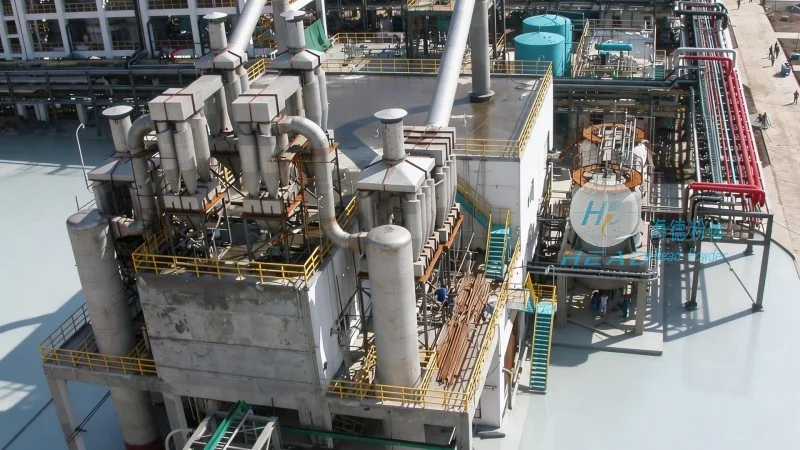
Negative pressure conveying has unique advantages. First, it can simultaneously draw materials from multiple feed points, suitable for dispersed material sources such as multiple storage silos or on-site material collection points. Second, negative pressure systems have less environmental impact because materials are not leaked to the outside during transport, reducing dust pollution and material loss. Additionally, the equipment layout of negative pressure systems is relatively flexible, with intake nozzles installed at low positions for easy material collection from the ground or low points. In the cement aggregate industry, negative pressure conveying is commonly used to draw aggregates from stockpiles or storage silos to production lines or warehouses, especially suitable for scenarios requiring material collection from multiple points.
However, negative pressure conveying also presents challenges. For example, the conveying distance of negative pressure systems is generally short, usually not exceeding 200 meters, as negative pressure decreases with distance, making it difficult to maintain effective conveying pressure. Additionally, negative pressure systems are sensitive to material moisture and viscosity; high-humidity or viscous materials may cause pipeline blockages, affecting conveying efficiency. Furthermore, negative pressure systems require powerful vacuum equipment, with higher energy consumption and maintenance costs. Overall, negative pressure conveying is suitable for short material transport distances, material collection from multiple points, and scenarios with high environmental requirements.
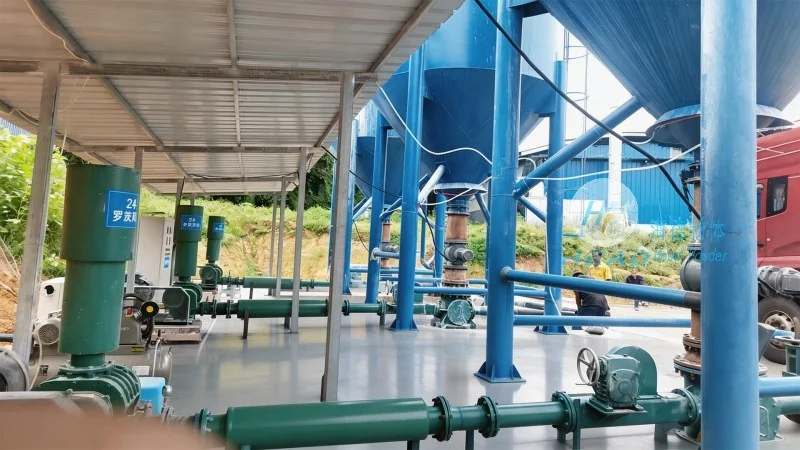
Comparison and Analysis of Positive and Negative Pressure Conveying
Positive pressure conveying and negative pressure conveying differ significantly in multiple aspects, and enterprises need to choose the appropriate solution based on specific needs. In terms of conveying distance, positive pressure systems are generally more suitable for longer distances than negative pressure systems, as positive pressure systems can handle hundreds of meters or even longer, while negative pressure systems are limited to short distances. From an energy consumption perspective, positive pressure systems require compressed air, with higher energy consumption, but negative pressure systems also have high energy consumption from powerful vacuum equipment, with the long-term energy consumption difference depending on the conveying distance and material properties. In terms of sealing performance, positive pressure systems demand higher sealing requirements because the system pressure is higher than the ambient atmosphere, and any leakage causes loss of materials and air; conversely, negative pressure systems are relatively easier to seal as the system pressure is lower than the ambient atmosphere, with air leakage being drawn into the system but materials not leaking. Regarding material adaptability, positive pressure systems perform better with dry and loose materials, while negative pressure systems may be more suitable for moist or viscous materials as the suction method can better handle these materials. In terms of system complexity and cost, positive pressure systems typically require more complex air source equipment (such as air compressors) and sealing components, with higher initial investment; negative pressure systems also require powerful vacuum equipment, increasing costs. Additionally, positive pressure systems have relatively simple maintenance as high system pressure makes fault detection easier, while negative pressure system fault detection may be more challenging as pressure changes in a negative environment are not easily detectable.
In practical applications, enterprises often combine the advantages of positive and negative pressure conveying. For example, long-distance aggregate transport may use a positive pressure system, while short-distance material collection uses a negative pressure system. Some large cement plants may also configure both positive and negative pressure conveying equipment to meet the needs of different production stages. By reasonably selecting and combining these two pneumatic conveying methods, enterprises can optimize material transport processes, improve production efficiency, reduce operating costs, and ensure production safety and environmental compliance.