

Types and Practical Applications of Pneumatic Conveying Systems for Lithium-Ion Battery Material Tra
HeadPowder, a leading engineering firm based in Shandong, China, specializes in the design and implementation of advanced material handling solutions, including pneumatic conveying systems tailored for the transport of lithium-ion battery materials. This article explores the various types of pneumatic conveying systems and their practical applications in the context of lithium-ion battery material handling, highlighting the technical advantages and real-world implementations.
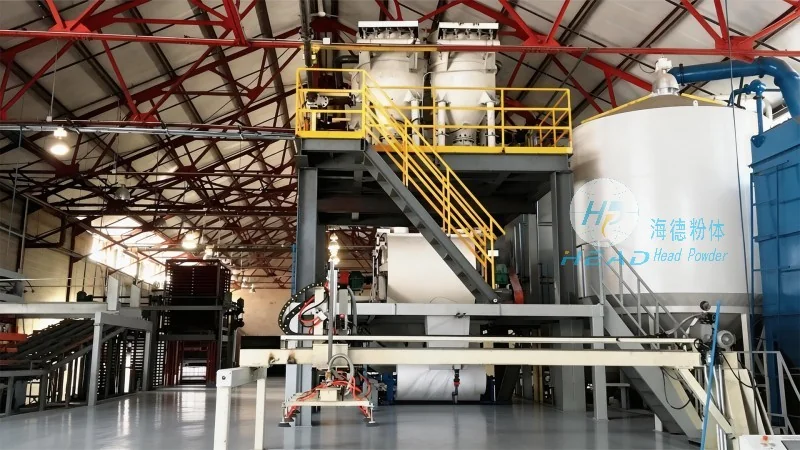
Overview of Pneumatic Conveying Systems for Lithium-Ion Battery Materials
Pneumatic conveying systems are critical in the modern battery manufacturing industry, particularly for handling fine powders and granules used in lithium-ion battery production. These systems utilize air or other gases to transport materials from one location to another, offering a flexible and efficient alternative to traditional mechanical conveying methods. The choice of system type depends on factors such as material characteristics, process requirements, and operational constraints. HeadPowder's expertise lies in selecting and customizing the most suitable pneumatic conveying solution for each client's specific needs.
Types of Pneumatic Conveying Systems
There are primarily two main categories of pneumatic conveying systems: positive pressure (or pressure) systems and negative pressure (or vacuum) systems. Each type has distinct characteristics and is suited for different applications.
1. **Positive Pressure Pneumatic Conveying Systems**: In this system, air is supplied under pressure to the material feed point, pushing the material through the conveying line. This method is effective for transporting materials over longer distances and at higher capacities. Positive pressure systems are often used for bulk material handling in industrial settings, including the transport of lithium-ion battery powders such as lithium carbonate, lithium hydroxide, and other active materials. The high-pressure air ensures consistent material flow and minimal degradation of the material.
2. **Negative Pressure Pneumatic Conveying Systems**: Conversely, negative pressure systems create a vacuum at the material discharge point, drawing the material into the conveying line. This approach is ideal for applications where the material is sensitive to pressure or where the conveying distance is shorter. Negative pressure systems are commonly used in laboratory-scale or small-scale production environments, where precise control over material flow is essential. For lithium-ion battery materials, negative pressure systems may be employed for handling fine powders that require gentle handling to avoid agglomeration or particle damage.
3. **Mixed-Pressure Pneumatic Conveying Systems**: Some advanced systems combine elements of both positive and negative pressure, offering flexibility in material transport. These hybrid systems can handle a wider range of materials and distances, making them suitable for complex battery material handling processes. HeadPowder's engineers often recommend mixed-pressure systems for large-scale battery manufacturing plants that require both high throughput and precise material control.
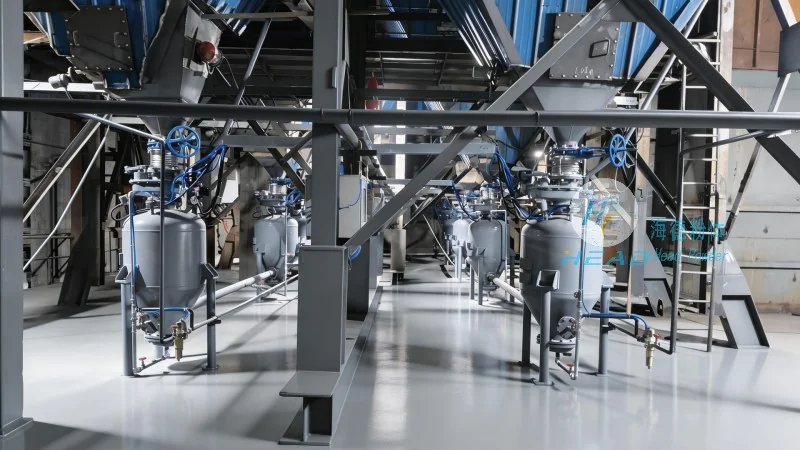
Practical Applications in Lithium-Ion Battery Material Transport
The practical application of pneumatic conveying systems in lithium-ion battery material transport is evident in various stages of the battery production process. From raw material handling to final product packaging, these systems play a vital role in ensuring efficiency and quality.
1. **Raw Material Handling**: The initial stage involves transporting raw materials such as lithium ores, carbonates, and hydroxides from storage silos to processing facilities. Positive pressure pneumatic conveying systems are commonly used here due to their ability to handle large volumes of bulk materials over considerable distances. For example, a battery manufacturer in Shandong, China, implemented a positive pressure system to transport lithium carbonate from a raw material warehouse to a chemical processing plant, achieving a material transfer rate of 50 tons per hour with minimal material loss.
2. **Intermediate Product Processing**: During the intermediate processing steps, such as mixing, grinding, and drying, pneumatic conveying systems are used to transfer processed materials between different equipment. Negative pressure systems are often preferred in these stages because they provide gentle handling, preventing the agglomeration of fine powders. HeadPowder designed a negative pressure conveying system for a client that processes lithium hydroxide, ensuring that the fine particles remain well-dispersed and free-flowing throughout the process.
3. **Final Product Assembly**: In the final assembly stage, pneumatic conveying systems are used to transport active materials to the battery cell manufacturing lines. The systems must meet stringent quality standards to avoid contamination and ensure consistent material composition. HeadPowder's custom-designed pneumatic conveying system for a major battery manufacturer in China has been instrumental in maintaining the purity of the active materials, resulting in higher battery performance and longer cycle life.
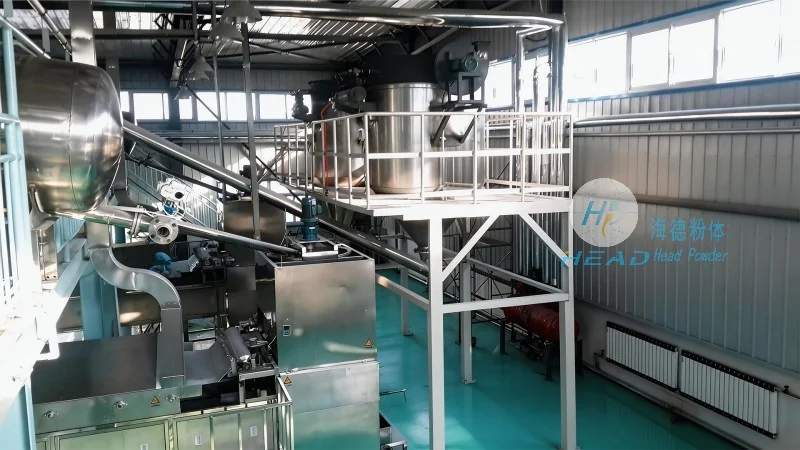
Technical Advantages and Considerations
When selecting a pneumatic conveying system for lithium-ion battery material transport, several technical advantages and considerations must be taken into account. These include material compatibility, system efficiency, and operational safety.
**Material Compatibility**: Lithium-ion battery materials are often sensitive to moisture, temperature, and contamination. Pneumatic conveying systems must be designed to minimize exposure to these factors. For instance, positive pressure systems can be equipped with moisture-proof seals and temperature-controlled air lines to protect the materials. HeadPowder's systems use high-quality materials and advanced sealing technologies to ensure that the transported materials remain in optimal condition.
**System Efficiency**: The efficiency of a pneumatic conveying system is measured by its ability to transport materials with minimal energy consumption and maximum throughput. Modern systems incorporate variable frequency drives (VFDs) and optimized air flow designs to achieve high efficiency. A study by HeadPowder on a battery material plant showed that their optimized pneumatic conveying system reduced energy consumption by 20% compared to traditional systems, while maintaining the same material transfer rate.
**Operational Safety**: Safety is a top priority in battery material handling, as many materials are flammable or reactive. Pneumatic conveying systems must comply with industry safety standards and regulations. HeadPowder's systems are designed with safety features such as explosion-proof components, overpressure relief valves, and automatic shutdown mechanisms. These features ensure that the systems operate safely and reliably in industrial environments.
Conclusion
Pneumatic conveying systems are indispensable in the efficient and safe transport of lithium-ion battery materials. The choice of system type—whether positive pressure, negative pressure, or mixed-pressure—depends on the specific requirements of the battery manufacturing process. HeadPowder, with its expertise in material handling engineering, provides customized pneumatic conveying solutions that meet the unique needs of each client. By leveraging advanced technology and careful system design, HeadPowder helps battery manufacturers optimize their material transport processes, improve product quality, and enhance overall operational efficiency.