

Operation Process and Working Principle of Automatic Quantitative Ingredient Gas-Pneumatic Conveying
Automatic quantitative ingredient gas-pneumatic conveying systems represent a sophisticated solution for material handling in various industrial sectors, including chemical processing, food and beverage, and pharmaceutical manufacturing. These systems are designed to efficiently transport bulk materials with precision and reliability, ensuring consistent quality and operational efficiency. As a leading manufacturer, Shandong HeadPowder Engineering Co., Ltd. (headpowder) has developed advanced systems that integrate cutting-edge technology and robust engineering to meet the diverse needs of modern industries.
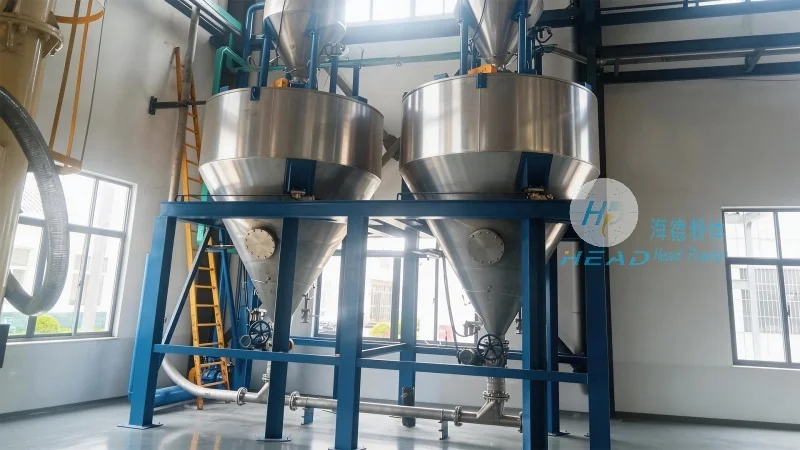
Overview of the System
At the core of an automatic quantitative ingredient gas-pneumatic conveying system is a network of components engineered to handle the entire material flow from source to destination. The system typically integrates feeders, hoppers, pneumatic conveyors, and control units, all working in tandem to achieve precise material measurement and transport. This integration is crucial for industries where material consistency directly impacts product quality and process outcomes. For instance, in the food industry, accurate ingredient dosing is essential to maintain flavor profiles and regulatory compliance, while in chemical manufacturing, precise material handling prevents contamination and ensures safe processing.
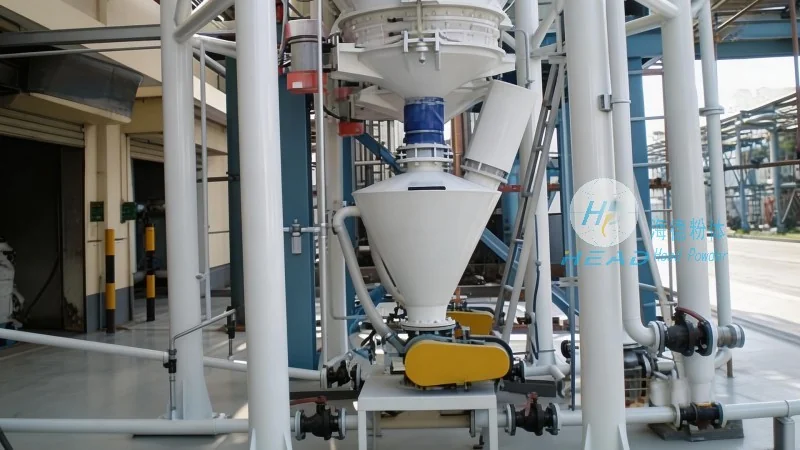
Operation Process: Step-by-Step Breakdown
The operation of an automatic quantitative ingredient gas-pneumatic conveying system follows a systematic sequence of actions, each designed to optimize material handling and minimize errors. The process begins with material storage in a hopper or silo, where bulk ingredients are held until needed. A feeder, often a volumetric or gravimetric type, then measures the required quantity of material. The feeder discharges the material into a conveying line, which is typically a flexible or rigid tube connected to a pneumatic conveyor system. The system uses compressed air or vacuum to move the material through the line, delivering it to the target destination, such as a mixer, storage tank, or processing unit. Throughout this process, the system continuously monitors flow rates and material levels, adjusting parameters in real-time to maintain accuracy. This closed-loop control ensures that the quantity of material delivered matches the setpoint, reducing waste and improving overall efficiency.
Working Principle: Gas-Pneumatic Conveying Mechanism
The working principle of a gas-pneumatic conveying system relies on the use of air to transport bulk materials. There are two primary modes of operation: positive pressure and negative pressure (or suction) systems. In a positive pressure system, compressed air is introduced into the conveying line, creating a pressure differential that propels the material forward. The air velocity is carefully controlled to ensure the material is suspended and transported without degradation. In contrast, a negative pressure system uses a vacuum to draw material from the source into the line, moving it toward the destination. Both systems rely on the principle of fluidization, where the material is suspended in the air stream, allowing it to be moved through the pipeline. The choice between positive and negative pressure depends on factors such as material properties, distance, and system layout. For example, positive pressure systems are often preferred for long-distance or high-volume transport due to their ability to handle abrasive materials without excessive wear, while negative pressure systems are suitable for applications requiring minimal dust generation or where the material is sensitive to pressure changes.
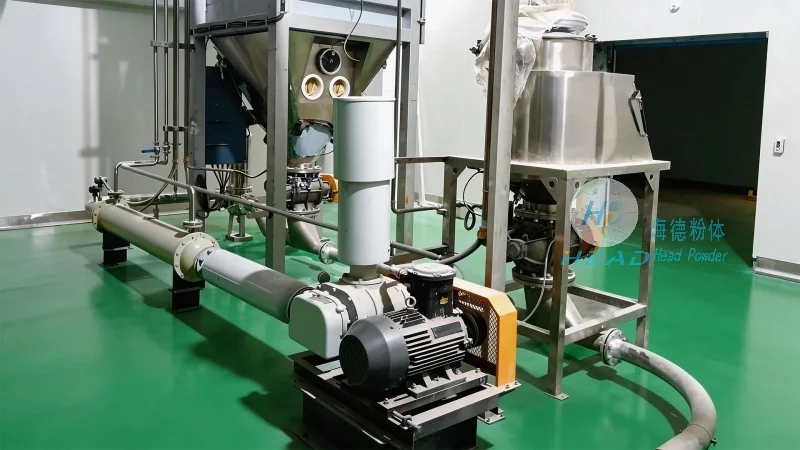
Key Components and Their Functions
Several critical components contribute to the effective operation of an automatic quantitative ingredient gas-pneumatic conveying system. These include: (1) Hoppers and Feeders: Hoppers store bulk materials and feeders measure the exact quantity required. Volumetric feeders use a rotating or oscillating mechanism to discharge material at a controlled rate, while gravimetric feeders use load cells to weigh material in real-time, ensuring precise dosing. (2) Pneumatic Conveyors: These are the primary transport mechanisms, consisting of pipelines, air movers (blowers or vacuum pumps), and control valves. The conveyors are designed to handle various material types, from fine powders to granules, with minimal degradation. (3) Control Units: These systems integrate sensors, controllers, and software to monitor and adjust the operation in real-time. Sensors detect material levels, flow rates, and pressure, while controllers adjust feeder speeds or air pressure to maintain setpoints. (4) Filters and Dust Collectors: To ensure environmental compliance and material purity, the system includes filters and dust collectors that capture fine particles and return them to the process or dispose of them safely. These components work together to ensure the system operates efficiently and reliably, with minimal downtime.