

Principle and Classification of Corn Starch Pneumatic Conveying and Its Application Introduction
Corn starch, a widely used industrial material, often requires efficient and reliable transportation methods for processing and distribution. Pneumatic conveying systems have emerged as a key solution for handling corn starch, offering advantages such as dust control, reduced contamination, and flexible system design. This article explores the fundamental principles of corn starch pneumatic conveying, outlines the primary classification methods, and discusses practical applications in various industries.
Basic Principle of Pneumatic Conveying for Corn Starch
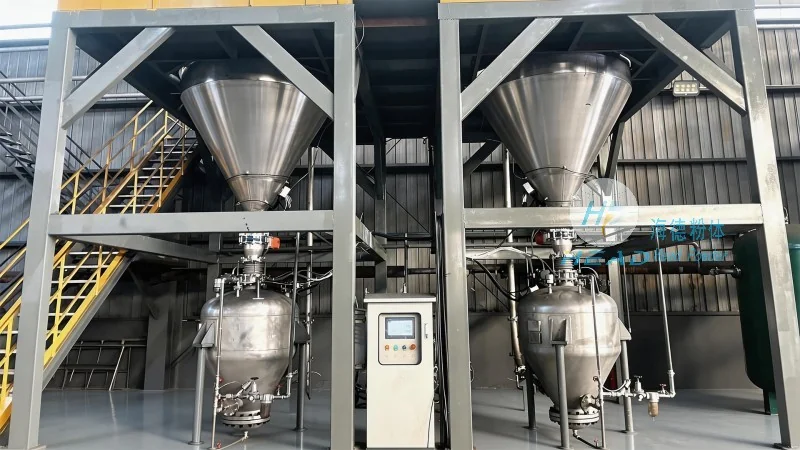
The core principle of pneumatic conveying involves transporting solid materials like corn starch using a gas stream, typically air or other gases. The process relies on creating a pressure differential between the conveying line and the ambient environment. In positive pressure systems, air is forced into the conveying line, carrying the corn starch particles forward. Conversely, negative pressure systems draw air and material through the line using a vacuum. For corn starch, which is often fine and prone to dust, positive pressure systems are commonly preferred due to their ability to maintain consistent flow and minimize particle degradation.
Classification of Corn Starch Pneumatic Conveying Systems
Pneumatic conveying systems for corn starch can be broadly classified into several categories based on operational characteristics and design. The primary classifications include:
1. Dilute Phase Conveying
Dilute phase systems operate at relatively low material-to-air ratios, typically ranging from 5 to 20 kg of material per cubic meter of air. This method is suitable for short to medium-distance conveying and is often used in applications where the corn starch is relatively dry and free-flowing. The system uses high-velocity air to transport the material, ensuring efficient movement while minimizing pressure drop and energy consumption.
2. Dense Phase Conveying
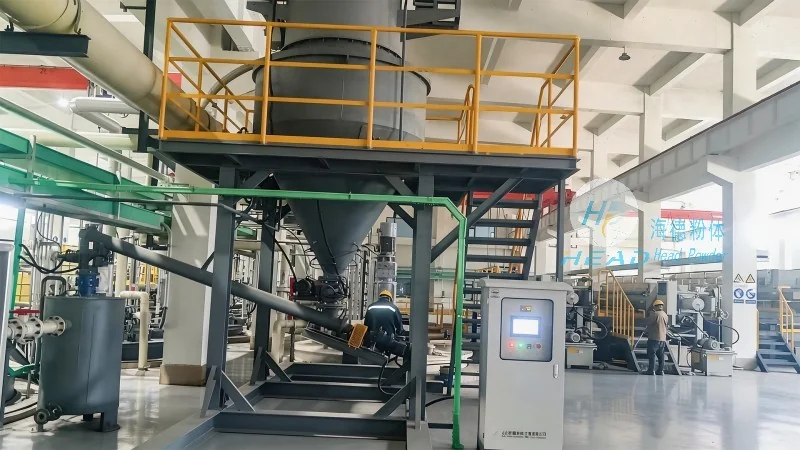
Dense phase systems, also known as low-velocity or slugging systems, operate at higher material-to-air ratios, often exceeding 20 kg per cubic meter of air. These systems are ideal for longer distances or when handling more cohesive or sensitive corn starch products. By reducing the air velocity and increasing the material concentration, dense phase conveying reduces particle breakage and maintains product integrity. This method is particularly useful for transporting corn starch that is prone to caking or requires gentle handling.
3. Hybrid Systems
Hybrid pneumatic conveying systems combine elements of both dilute and dense phase operations. They may use a combination of high and low velocity air segments to optimize conveying efficiency over varying distances or material characteristics. For corn starch applications, hybrid systems can be tailored to balance energy efficiency with the need for gentle material handling, making them versatile for diverse industrial needs.
Application Examples in the Industry
HeadPowder, a leading provider of engineering solutions, has extensive experience in implementing pneumatic conveying systems for corn starch processing. The company's expertise lies in designing customized solutions that meet specific operational requirements. For instance, in food processing facilities, corn starch is often used as a thickening agent or filler. Pneumatic conveying systems enable seamless integration with existing production lines, ensuring consistent material supply and reducing downtime.
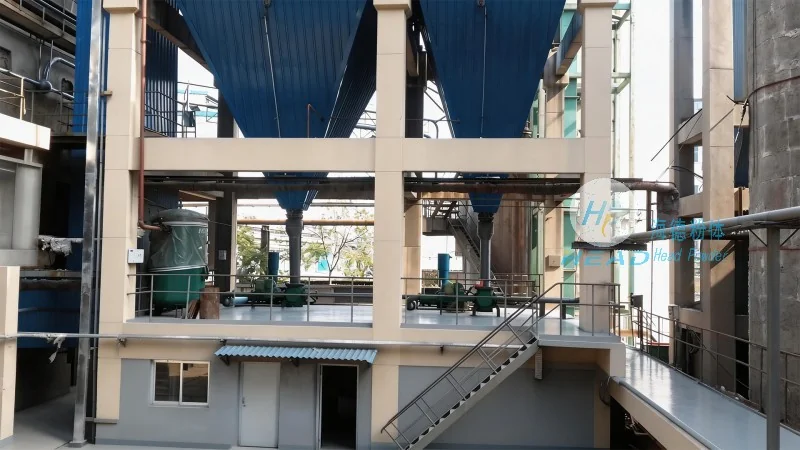
In pharmaceutical and chemical industries, where corn starch is used as an excipient or raw material, the need for sterile and contamination-free handling is critical. HeadPowder's systems incorporate advanced filtration and air purification technologies to maintain high standards of product quality. The company's solutions are designed to handle fine corn starch powders efficiently, preventing agglomeration and ensuring uniform distribution in downstream processes.
Additionally, in agricultural and feed processing sectors, large volumes of corn starch are transported from storage silos to processing units. Pneumatic conveying systems offer a cost-effective and space-saving alternative to traditional belt or bucket elevators. By utilizing positive pressure systems, these applications can handle bulk quantities of corn starch while minimizing dust generation and improving workplace safety.
Conclusion
Pneumatic conveying represents a sophisticated and efficient method for handling corn starch, with applications spanning multiple industries. The choice of system type—dilute, dense, or hybrid—depends on factors such as conveying distance, material properties, and operational requirements. Companies like Shandong HeadPowder Engineering Co., Ltd. play a vital role in designing and implementing these systems, ensuring optimal performance and reliability. As the demand for corn starch continues to grow, the importance of advanced pneumatic conveying technology in maintaining production efficiency and product quality cannot be overstated.