

Types and Practical Applications of Pneumatic Conveying Systems for Ceramic Powder Transport
Pneumatic conveying systems have become a cornerstone in the efficient and reliable transport of ceramic powders across various industrial applications. These systems utilize air or other gases to move powders through a pipeline network, offering advantages such as reduced contamination, minimal product degradation, and the ability to handle fine or abrasive materials like ceramic powders. For companies dealing with ceramic powders, selecting the right type of pneumatic conveying system is crucial to ensure optimal performance, cost-effectiveness, and compliance with industry standards.
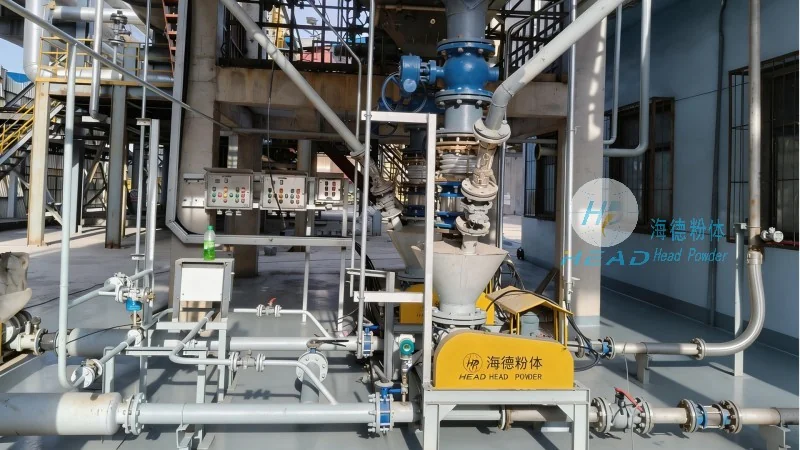
Types of Pneumatic Conveying Systems for Ceramic Powder Transport
There are primarily two main categories of pneumatic conveying systems used in ceramic powder handling: dilute-phase and dense-phase systems. Each type has distinct characteristics and is suitable for different operational requirements.
Dilute-phase pneumatic conveying systems operate by suspending the powder particles in a high-velocity air stream. This method is ideal for short to medium-distance transport and is commonly used when the powder is non-abrasive and requires minimal pressure. The system typically involves a positive displacement blower or a high-pressure compressor to generate the necessary airflow. Dilute-phase systems are often preferred for applications where product quality and low pressure drop are critical.
Dense-phase pneumatic conveying, on the other hand, involves transporting the powder in a more compact form, often at lower velocities and higher pressure. This method is suitable for longer distances and for handling abrasive or sensitive materials that require gentle handling. Dense-phase systems use a positive displacement pump or a high-pressure compressor to create a high-pressure environment, ensuring the powder moves in a slug or plug flow. This approach minimizes particle breakage and maintains product integrity, making it a preferred choice for high-value ceramic powders.
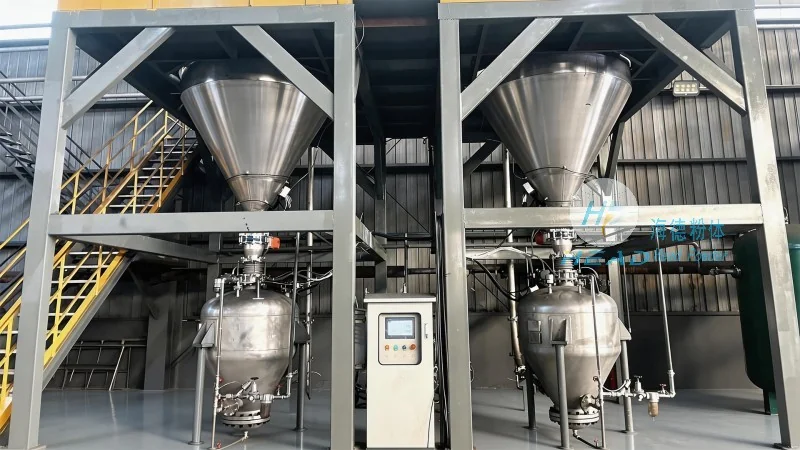
Practical Applications in Ceramic Powder Processing
The practical applications of pneumatic conveying systems in ceramic powder processing vary widely across different industries. In the ceramics manufacturing sector, these systems are integral to the supply chain, from raw material handling to the final product packaging. For instance, in the production of ceramic tiles or sanitary ware, pneumatic conveying is used to transport raw ceramic powders from storage silos to mixing and shaping equipment. This ensures a consistent flow of material, reducing downtime and improving production efficiency.
In the pharmaceutical and specialty chemicals industries, where ceramic powders are used as fillers or additives, pneumatic conveying systems are employed to maintain product purity and prevent contamination. The closed-loop design of these systems minimizes exposure to external elements, ensuring that the ceramic powders remain free from moisture or other contaminants that could affect their performance.
Additionally, in research and development laboratories, pneumatic conveying systems are used for precise and controlled dispensing of ceramic powders in experimental setups. This allows for accurate measurement and mixing of powders, which is essential for developing new ceramic materials with specific properties.
Key Considerations for Selecting the Right System
When selecting a pneumatic conveying system for ceramic powder transport, several factors must be considered to ensure optimal performance and cost-effectiveness. The first consideration is the distance and layout of the transport route. Short distances may be suitable for dilute-phase systems, while longer distances or complex layouts may require dense-phase systems. The particle size, density, and abrasiveness of the ceramic powder also play a critical role. Fine powders may require higher air velocities to maintain suspension, while coarse or abrasive powders may need more robust equipment to prevent wear and tear.
Another important factor is the system's pressure requirements. Dilute-phase systems typically operate at lower pressures (up to 1 bar), while dense-phase systems require higher pressures (up to 10 bar or more). The choice of system also depends on the desired flow rate and the need for product containment. For applications where product purity is paramount, dense-phase systems are often preferred due to their ability to minimize particle breakage and maintain a closed system.
Conclusion and Company Overview
Pneumatic conveying systems offer a versatile and efficient solution for the transport of ceramic powders, addressing the unique challenges posed by these materials. By understanding the different types of systems and their practical applications, companies can select the most appropriate solution to meet their operational needs. Shandong HeadPowder Engineering Co., Ltd., a leading provider in the field, specializes in designing and manufacturing customized pneumatic conveying systems tailored to the specific requirements of ceramic powder handling. With a focus on quality, reliability, and innovation, HeadPowder Engineering Co., Ltd. serves clients across various industries, ensuring that their ceramic powder transport processes are optimized for efficiency and product integrity.