

[Alumina Powder Material Pneumatic Conveying System: What It Is and Its Design Principles]
Alumina powder, a critical material in various industrial applications, often requires efficient and reliable transportation methods to ensure smooth production processes. The pneumatic conveying system emerges as a sophisticated solution for handling such powders, offering advantages in terms of safety, cleanliness, and operational flexibility. This article delves into the fundamental aspects of an alumina powder material pneumatic conveying system, exploring its core design principles and the technical considerations that underpin its effective operation.
Understanding the Pneumatic Conveying System for Alumina Powder
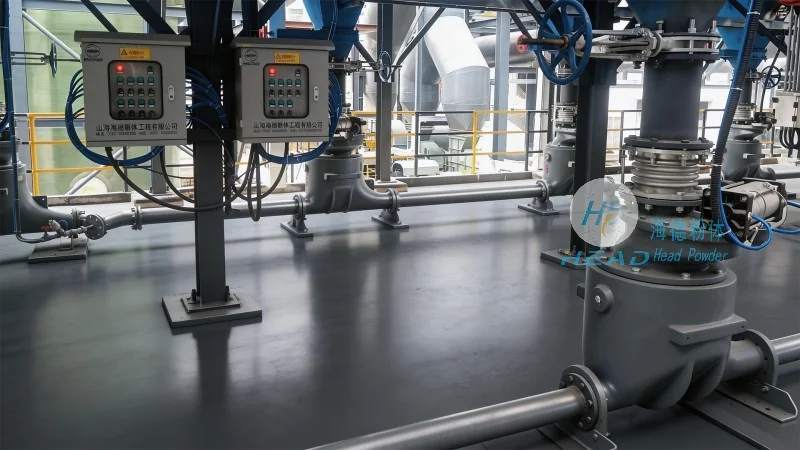
At the heart of any pneumatic conveying system is the ability to transport particulate materials through a pipeline using a gas stream, typically air or a combination of air and other gases. For alumina powder, which is known for its fine particle size and potential for dust generation, the design of the system must address specific challenges such as particle segregation, pressure drop, and material flow control. The system typically consists of several key components, including a material feeder, a conveying line, a separation unit, and a dust collection system. Each component plays a crucial role in ensuring the efficient and safe transport of alumina powder from its source to the destination.
Core Design Principles for Alumina Powder Pneumatic Conveying
One of the primary design principles for alumina powder pneumatic conveying systems is the selection of an appropriate conveying velocity. The velocity of the gas stream must be sufficient to lift and transport the powder particles without causing excessive wear on the system components or leading to particle degradation. This is often determined by the particle size distribution, density, and aerodynamic properties of the alumina powder. Engineers typically use empirical formulas or computational fluid dynamics (CFD) simulations to calculate the optimal conveying velocity, ensuring that the system operates within a range that minimizes energy consumption while maintaining reliable material transport.
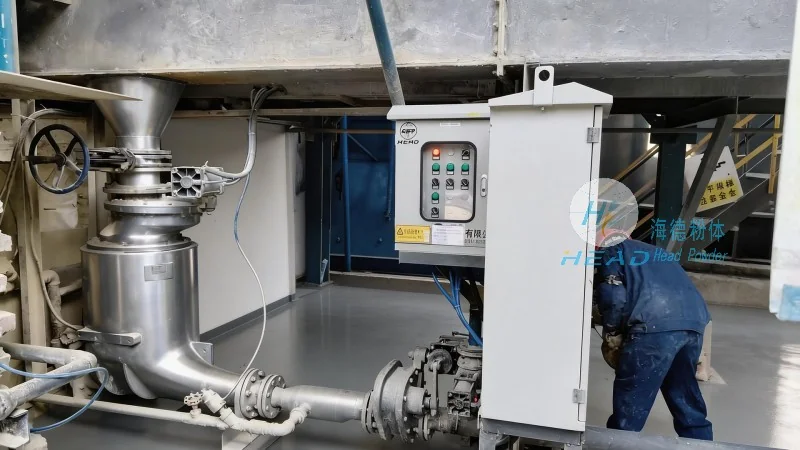
Another critical design principle is the choice of the conveying line material and diameter. The alumina powder, being abrasive due to its fine particles, can cause significant wear on metal surfaces over time. Therefore, the conveying line is often constructed from materials with high corrosion and wear resistance, such as stainless steel or specialized alloys. The diameter of the line is also carefully selected to balance the required conveying capacity with the pressure drop across the system. A larger diameter reduces pressure drop but increases material handling costs, while a smaller diameter increases pressure drop and may lead to operational inefficiencies. The optimal diameter is determined based on the expected flow rate and the desired system pressure.
Material Feeder and Hopper Design Considerations
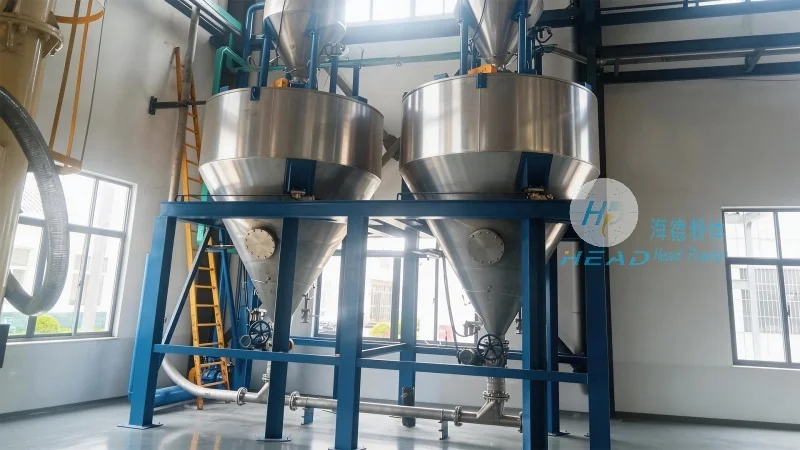
The material feeder is a vital component that controls the flow rate of alumina powder into the conveying line. For alumina powder, which can be prone to bridging or clogging in traditional feeders, specialized designs such as rotary valves or screw feeders are commonly used. These feeders ensure a consistent and controlled feed rate, preventing surges or blockages that could disrupt the entire system. The feeder is typically equipped with a hopper that stores the alumina powder, allowing for continuous operation and minimizing downtime. The design of the hopper also considers the powder's flow properties, such as angle of repose and cohesive forces, to ensure smooth material discharge.
Separation Unit and Dust Collection System
The separation unit, often referred to as a receiver or a cyclone separator, is responsible for separating the alumina powder from the conveying gas at the end of the line. This unit uses centrifugal force to separate the heavier powder particles from the lighter gas stream. The design of the cyclone separator is critical, as it must handle the specific characteristics of alumina powder, including its fine particle size and potential for agglomeration. The separator typically consists of a cylindrical body with a conical bottom, where the gas enters tangentially and the powder is forced to the wall due to centrifugal force, eventually falling into the collection hopper. The gas, now relatively clean, exits through a central outlet and is often recirculated back into the system to improve efficiency.