

What is Rare Earth Powder Material Pneumatic Conveying Equipment? What Are Its Design Principles?
HeadPowder, a leading manufacturer based in Shandong, China, specializes in providing advanced solutions for the transportation of rare earth powder materials. The company's expertise lies in designing and manufacturing efficient pneumatic conveying systems tailored to handle the unique challenges associated with rare earth powders. This article explores the fundamental aspects of rare earth powder pneumatic conveying equipment, including its operational principles and key design considerations.
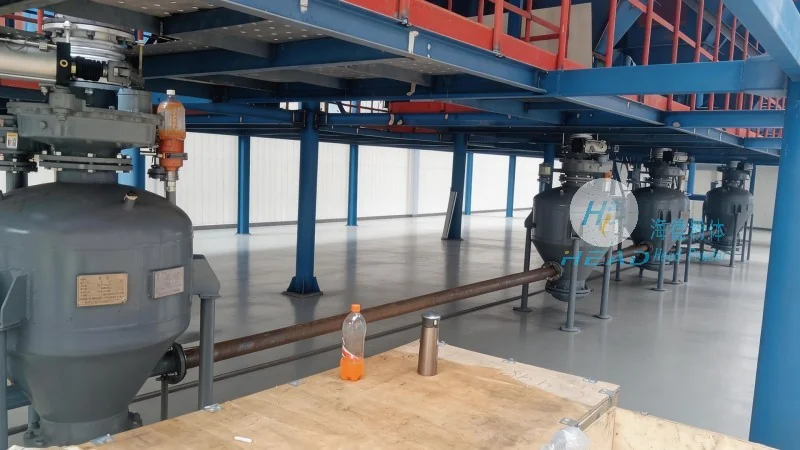
Understanding Pneumatic Conveying Systems
Pneumatic conveying is a method of transporting bulk materials, such as powders and granules, through a pipeline using air or other gases. In the context of rare earth powder handling, this technology offers several advantages over traditional mechanical conveying methods. For instance, it minimizes product contamination, reduces the risk of dust explosions, and enables precise control over material flow rates. The core components of a pneumatic conveying system typically include a hopper, a feeder, a conveying line, a separator, and a receiver. Each component plays a critical role in ensuring the efficient and safe transport of rare earth powders.
Design Principles for Rare Earth Powder Pneumatic Conveying
The design of rare earth powder pneumatic conveying equipment must consider several factors to ensure optimal performance and reliability. First, the system must be capable of handling the specific physical properties of rare earth powders, such as their particle size distribution, density, and flowability. These properties directly impact the selection of the conveying velocity, which is crucial for preventing material deposition or blockages in the pipeline. Additionally, the equipment must be designed to minimize particle degradation, as rare earth powders are often sensitive to mechanical stress and temperature variations. To achieve this, the conveying line is typically made of materials that are resistant to corrosion and wear, such as stainless steel or special alloys. The feeder mechanism is also critical, as it must provide a consistent and controlled feed rate to maintain stable pressure and flow within the system.
Key Components and Their Functions
1. **Hopper**: The hopper is the storage vessel where the rare earth powder is loaded before being conveyed. It is designed to provide a uniform feed to the feeder, preventing the formation of ratholes or bridging, which can disrupt the conveying process. The hopper may include features like a cone bottom or a vibratory feeder to ensure smooth material discharge.
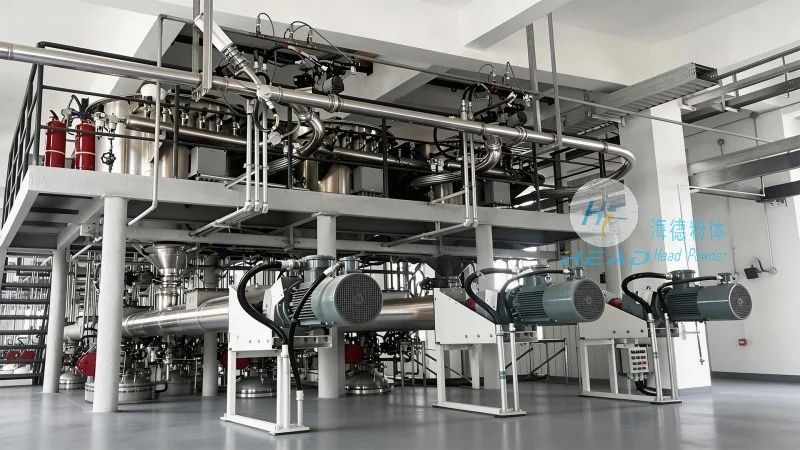
2. **Feeder**: The feeder is responsible for delivering the rare earth powder into the conveying line at a controlled rate. Common types of feeders used in pneumatic conveying systems include rotary valves, screw feeders, and vibratory feeders. The choice of feeder depends on the material's flow characteristics and the required flow rate. For rare earth powders, a rotary valve is often preferred due to its ability to handle fine powders without causing excessive wear.
3. **Conveying Line**: The conveying line is the pipeline through which the powder and air mixture travels. It is typically made of stainless steel or other corrosion-resistant materials to withstand the abrasive nature of rare earth powders. The line diameter and length are carefully selected based on the material's properties and the desired conveying velocity. The velocity must be high enough to keep the powder suspended but low enough to avoid excessive pressure drop and energy consumption.
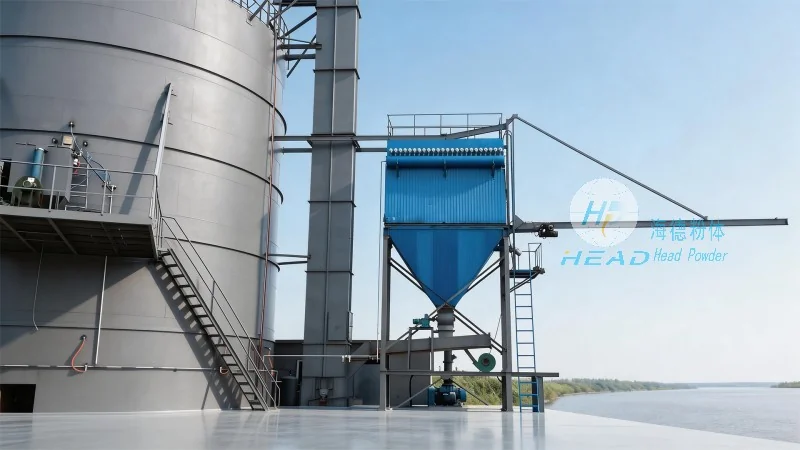
4. **Separator**: The separator is used to separate the powder from the air at the end of the conveying line. This is typically achieved using a cyclone or a bag filter. The separator must be efficient in capturing fine particles while allowing the air to be discharged safely. For rare earth powders, which are often valuable and sensitive, the separator is designed to minimize loss and ensure high recovery rates.
5. **Receiver**: The receiver is the final container where the conveyed rare earth powder is deposited. It is usually a hopper or a storage tank, designed to handle the material's flow characteristics and prevent spillage or contamination.
Advantages of Using Pneumatic Conveying for Rare Earth Powders
Compared to other conveying methods, pneumatic conveying offers several benefits for handling rare earth powders. First, it provides a closed system, which helps maintain the purity of the material and prevents environmental contamination. This is particularly important for rare earth elements, which are often used in high-tech applications and require strict quality control. Second, the system is flexible and can be easily integrated into existing production lines. It can transport materials over long distances and through multiple stages of processing without the need for intermediate storage or handling. Third, pneumatic conveying reduces labor costs and improves safety by eliminating the need for manual handling of powders, which can be hazardous due to dust inhalation risks.
Applications in the Rare Earth Industry
Rare earth powder pneumatic conveying equipment is widely used in various applications within the rare earth industry. For example, in the production of rare earth magnets, the equipment is used to transport raw materials from storage to processing units. In the refining and separation processes, it helps move intermediate products between different stages of the production line. Additionally, it is used in the packaging and shipping of rare earth powders, ensuring that the material reaches its destination in a clean and intact state. The versatility of the system makes it suitable for a wide range of applications, from small-scale laboratory operations to large-scale industrial production.
Conclusion
HeadPowder Engineering Co., Ltd., located in Shandong, China, is a trusted provider of rare earth powder pneumatic conveying equipment. The company's products are designed based on sound engineering principles, ensuring high efficiency, reliability, and safety. By understanding the unique properties of rare earth powders and applying appropriate design considerations, the company's systems effectively address the challenges associated with handling these valuable materials. For industries relying on rare earth elements, investing in a well-designed pneumatic conveying system is a critical step toward improving production efficiency, maintaining product quality, and ensuring operational safety.