

Working Principle and Characteristics of Industrial Alkali Material Pneumatic Conveying Systems
For industrial applications involving the handling of alkaline materials, efficient and reliable material transport is crucial. The pneumatic conveying system for industrial alkali materials, offered by Shandong HeadPowder Engineering Co., Ltd., represents a sophisticated solution designed to meet the demands of modern industrial processes. This article will explore the working principle and key characteristics of such systems, providing insights into their functionality and benefits.
Working Principle of Industrial Alkali Material Pneumatic Conveying Systems
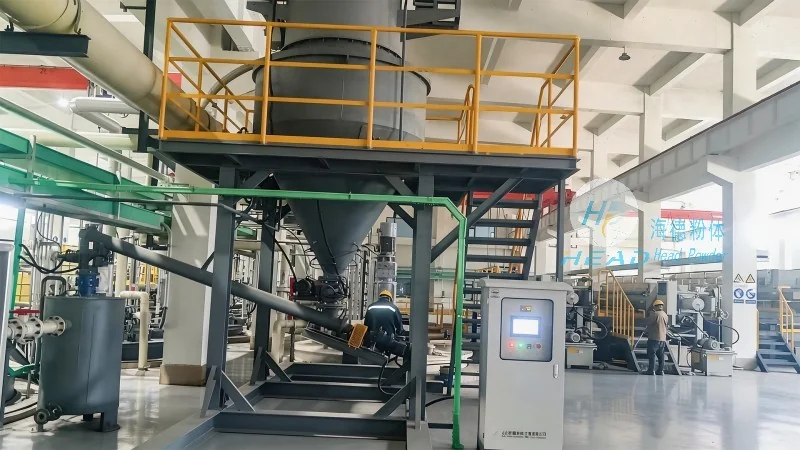
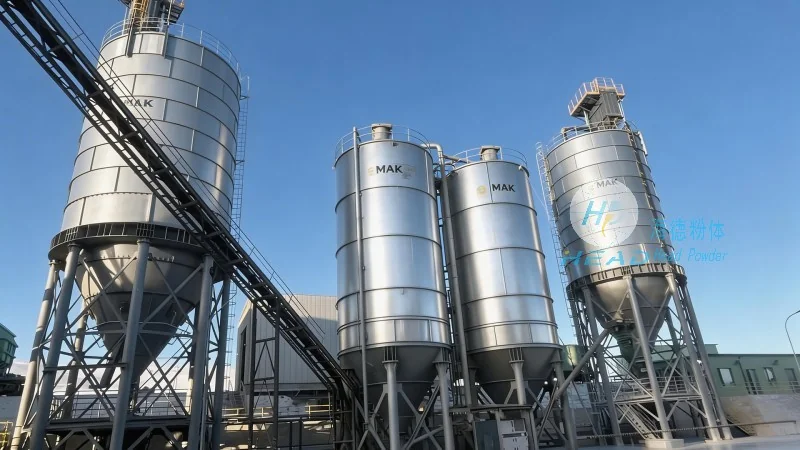
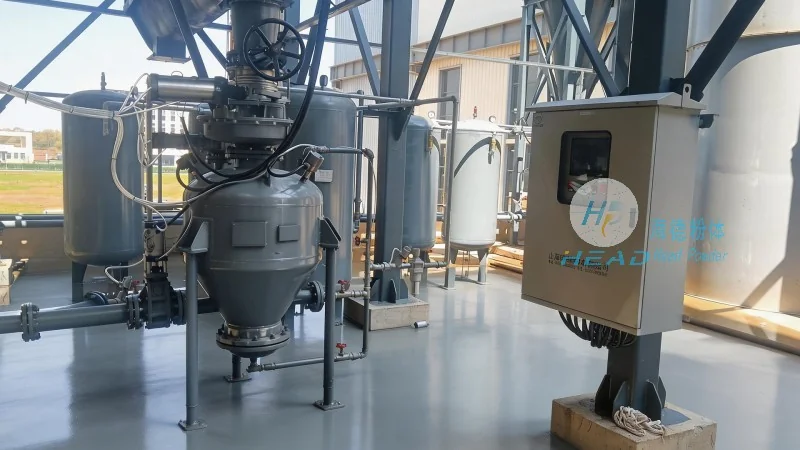
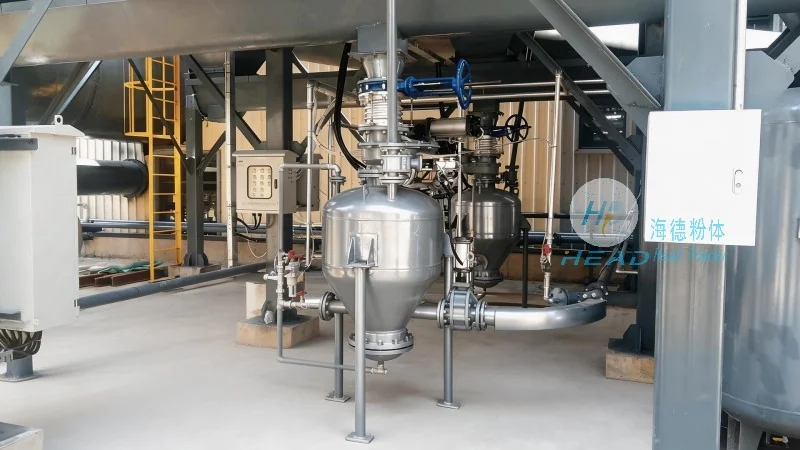
The working principle of industrial alkali material pneumatic conveying systems can be categorized into two main types: dense-phase and dilute-phase systems. The dense-phase system operates by using a higher air-to-material ratio, which results in a slower but more stable material flow. This type is ideal for transporting fine powders or materials that are prone to bridging or caking. The dilute-phase system, on the other hand, uses a lower air-to-material ratio, allowing for faster transport over longer distances. It is commonly used for bulk materials with larger particle sizes. The system's working principle involves the use of a blower or compressor to generate the necessary air pressure. The air is then mixed with the material in a hopper or feeder, and the mixture is introduced into the pipeline. The pipeline network includes various components such as elbows, tees, and bends, which are designed to minimize pressure loss and maintain consistent flow. The air lock, a critical component, prevents the material from flowing back into the feeder, ensuring a continuous transport process. The cyclone separator, another key component, separates the material from the air stream by using centrifugal force. The separated material is collected in a receiving hopper, while the air is filtered and discharged through a dust collector. This closed-loop system ensures that the material is transported efficiently and that the air is cleaned before being released into the environment. The working principle also emphasizes the importance of maintaining the correct pressure and flow rate to prevent system blockages or material degradation. By carefully controlling these parameters, the system can achieve optimal performance and ensure the safe transport of industrial alkali materials.