

Principles and Application Scenarios of Air-Driven Conveying Systems for Synthetic Fiber Materials
HeadPowder, a leading engineering company based in Shandong, China, specializes in the design and implementation of advanced air-driven conveying systems tailored for synthetic fiber materials. This article delves into the fundamental principles behind these systems and highlights the key characteristics of their operational environments.
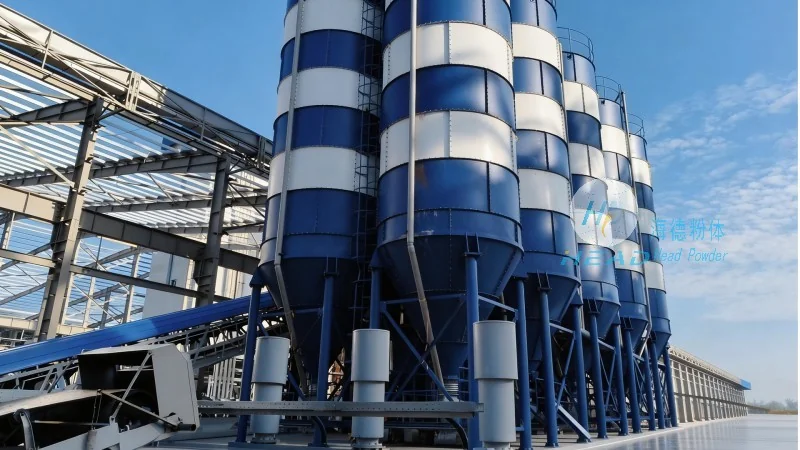
Understanding Air-Driven Conveying Systems
At its core, an air-driven conveying system utilizes a stream of air to transport bulk materials through a pipeline network. This method, commonly known as pneumatic conveying, offers a highly efficient and flexible solution for moving synthetic fiber materials, which are often delicate and require gentle handling. The system typically consists of a blower or compressor to generate the air flow, a hopper to store the material, and a series of pipes and valves to direct the material to its destination.
Key Working Principles
The operation of an air-driven conveying system is governed by several key principles. First, the material is introduced into the hopper, where it is then fed into the pipeline under the pressure of the air stream. The air flow creates a low-pressure zone within the pipe, which draws the material along with it. This process, known as dilute-phase or dense-phase conveying, depends on the material's properties, such as particle size, density, and moisture content, as well as the system's design parameters like air velocity and pressure. Dilute-phase conveying is suitable for materials with low to medium density and fine particles, while dense-phase conveying is preferred for bulkier or more abrasive materials, as it minimizes particle degradation and reduces wear on the system components.
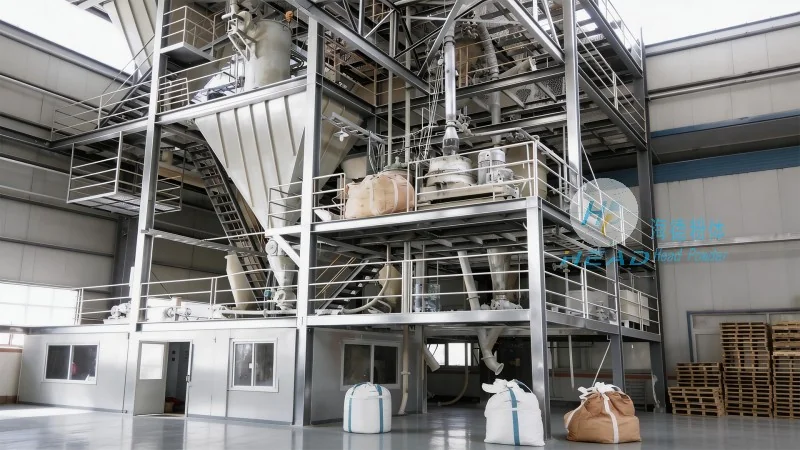
Application Scenarios and Operational Characteristics
The versatility of air-driven conveying systems makes them ideal for a wide range of industrial applications, particularly in the synthetic fiber industry. These systems are commonly employed in scenarios where traditional mechanical conveyors may not be suitable due to the material's sensitivity or the need for enclosed, dust-free environments. For instance, in textile manufacturing plants, air-driven systems are used to transport raw synthetic fibers from storage silos to processing machinery, ensuring minimal contamination and consistent material flow. In addition, they are widely used in the production of nonwoven fabrics, where the gentle handling of fibers is critical to maintaining the integrity of the final product.
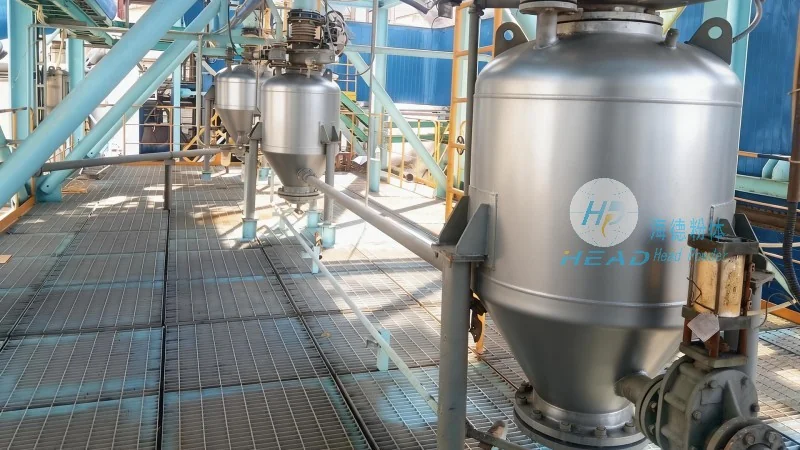
Advantages in Specific Work Environments
When deployed in specific work environments, air-driven conveying systems exhibit several distinct advantages. One of the most significant benefits is their ability to handle materials that are difficult to transport using conventional methods, such as fine powders or fibers that tend to clump or agglomerate. The enclosed pipeline system prevents dust emissions, making it suitable for applications in cleanroom environments or where air quality regulations are stringent. Furthermore, these systems can be easily integrated with other processing equipment, allowing for seamless material transfer from one stage of production to the next. The flexibility of the system design also enables adjustments to be made quickly, adapting to changes in production volume or material type without major modifications to the infrastructure.
Conclusion
HeadPowder Engineering Co., Ltd., with its headquarters in Shandong, China, leverages its expertise in air-driven conveying technology to provide customized solutions for synthetic fiber material handling. By understanding the fundamental principles of pneumatic conveying and tailoring systems to specific operational requirements, the company ensures efficient, reliable, and cost-effective material transport in diverse industrial settings. The application scenarios and operational characteristics discussed highlight the adaptability and effectiveness of these systems in modern manufacturing environments.