

Classification and Composition of Stone Powder Pneumatic Conveying Systems
Pneumatic conveying systems are a critical technology in industrial processes for transporting bulk materials like stone powder. These systems utilize air or gas to move materials through a pipeline, offering significant advantages over traditional methods such as belt conveyors or bucket elevators. The primary benefits include reduced labor costs, minimized material degradation, improved process control, and enhanced safety by eliminating the need for manual handling. For industries dealing with stone powder, which is often fine and abrasive, selecting an appropriate pneumatic conveying system is essential to maintain product quality and ensure efficient operation.
Classification of Stone Powder Pneumatic Conveying Systems
Stone powder pneumatic conveying systems can be classified based on several key parameters, including the conveying principle, material characteristics, and operational requirements. The main classifications are dense-phase and dilute-phase systems. Dense-phase systems operate by compressing the material-air mixture, resulting in a higher material concentration in the pipeline. This method is particularly effective for fine powders like stone powder, as it minimizes particle segregation and reduces the risk of material degradation. Dense-phase systems can be further divided into pressure systems (using positive pressure to push the material) and vacuum systems (using negative pressure to pull the material). Pressure systems are commonly used for short to medium-distance transport, while vacuum systems are suitable for longer distances or when the material needs to be collected from multiple points. Dilute-phase systems, in contrast, operate with a lower material concentration, using high-velocity air to transport the material. These systems are typically employed for larger particles or when the distance between the source and destination is significant. Dilute-phase systems can be categorized as positive pressure, negative pressure, or a combination of both, depending on the specific application. The choice between dense-phase and dilute-phase systems depends on factors such as material fineness, distance, and the desired flow rate. Additionally, systems can be classified by the type of air flow, with positive pressure systems being more common for stone powder due to their ability to handle fine particles and maintain consistent flow.
Key Components of a Stone Powder Pneumatic Conveying System
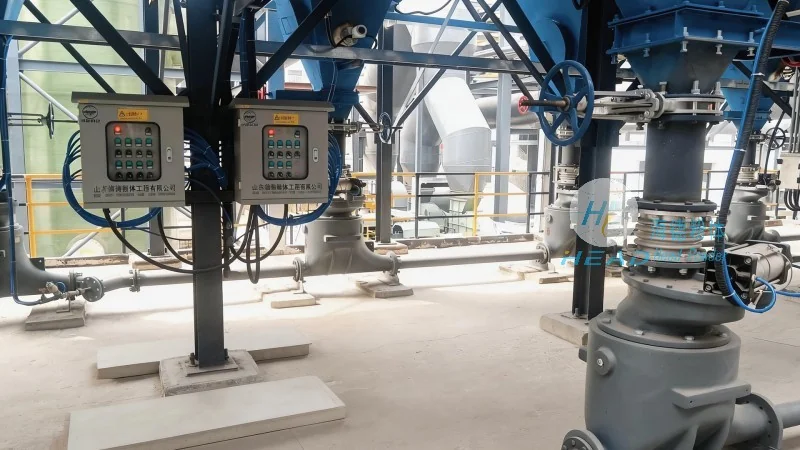
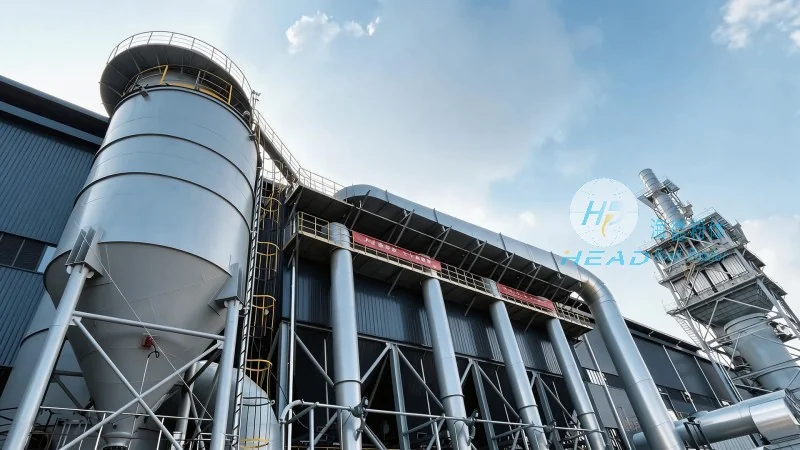
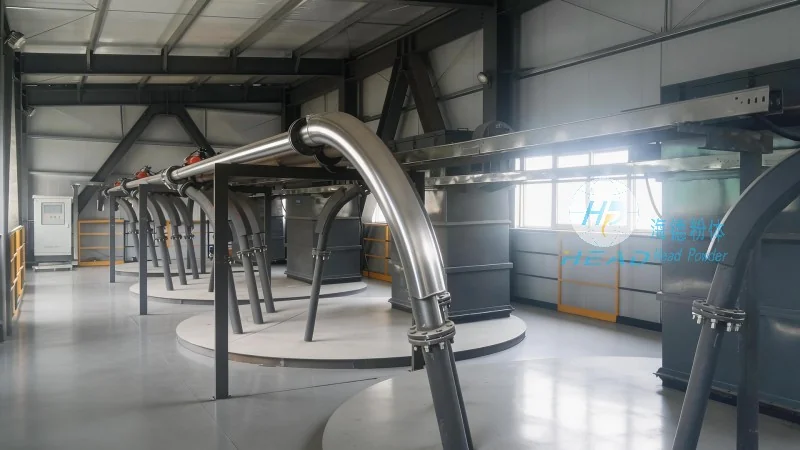
A typical stone powder pneumatic conveying system consists of several essential components that work in concert to ensure reliable and efficient operation. The primary components include the material feeder, conveying line, air compressor or vacuum pump, and separation and collection equipment. The material feeder is responsible for introducing stone powder into the system at a consistent rate. For stone powder, which can be abrasive and have varying flow characteristics, the feeder is designed with features like a hopper with a conical bottom and a rotary valve or screw feeder to ensure smooth and controlled feeding. The conveying line is typically constructed from materials such as stainless steel or high-density polyethylene to withstand the abrasive nature of stone powder and prevent corrosion. The line is equipped with bends and elbows that are designed to minimize pressure loss and maintain material flow. The air compressor or vacuum pump provides the necessary pressure or suction to move the material through the line. For dense-phase systems, a positive pressure compressor is used, while a vacuum pump is used for vacuum systems. The compressor or pump is selected based on the system's capacity, pressure requirements, and the type of material being conveyed. The separation and collection equipment is crucial for removing the stone powder from the air stream and collecting it in a designated container. This equipment includes cyclones, filters, or baghouses, which are chosen based on the particle size and air flow rate. The cyclone separator uses centrifugal force to separate the material from the air, while filters trap fine particles. The collection equipment is designed to maintain air quality and comply with environmental regulations. Each component is carefully selected and integrated to ensure the system operates reliably, with minimal downtime and maximum productivity. The material feeder ensures consistent input, the conveying line provides the path, the compressor or pump provides the force, and the separation equipment ensures clean air and collected material.