

Classification and Composition of Alumina Powder Pneumatic Conveying Systems
Alumina powder pneumatic conveying systems are critical for the efficient and safe transfer of alumina powder in industrial processes. These systems are engineered to address the unique challenges of handling fine, abrasive, and potentially hazardous alumina particles, ensuring reliable material movement while maintaining operational safety and environmental compliance.
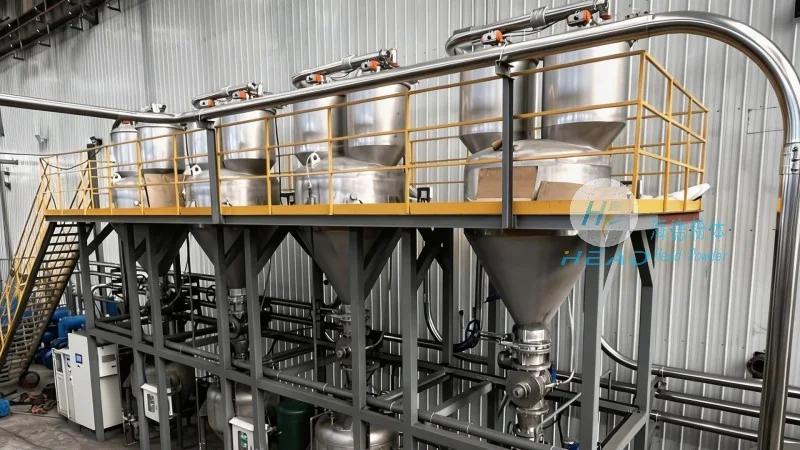
System Classification
Alumina powder pneumatic conveying systems are categorized based on the air velocity and particle concentration within the conveying line. The three primary classifications are dilute-phase, dense-phase, and mixed-phase systems, each tailored to specific operational requirements and material handling needs.
Dilute-phase systems operate at high air velocities (typically above 15 m/s) with low particle concentrations (less than 10% by volume). This method is ideal for long-distance or high-speed conveying, where the powder is suspended in the air stream. Dense-phase systems utilize lower air velocities (around 5-10 m/s) and higher particle concentrations (up to 50% by volume), resulting in a more compact, low-velocity flow. This approach is preferred for applications requiring gentle handling, such as transporting sensitive or abrasive alumina powders. Mixed-phase systems combine elements of both dilute and dense-phase operations, offering flexibility in conveying conditions and particle handling.
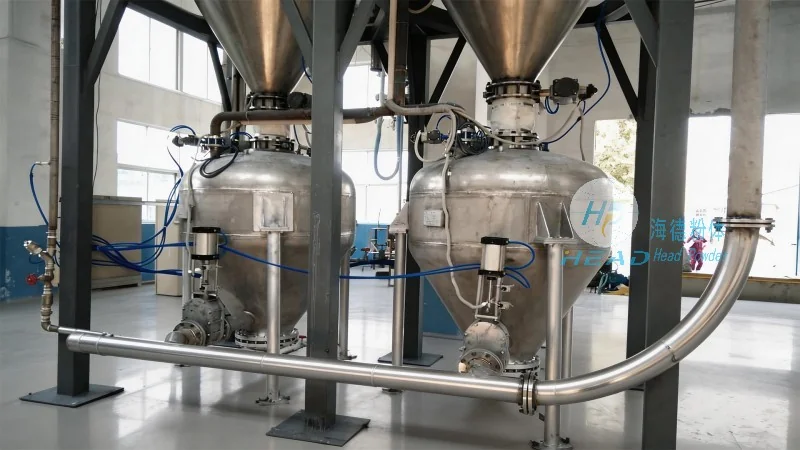
System Composition
The standard components of an alumina powder pneumatic conveying system include the material feed system, conveying pipeline, separation and collection equipment, and control devices. The material feed system, often supplied by Shandong HeadPowder Engineering Co., Ltd., features a hopper with a rotary valve or screw feeder that regulates the flow rate of alumina powder. This ensures consistent material input, preventing blockages and maintaining system stability. The conveying pipeline, typically made of corrosion-resistant materials like stainless steel or high-density polyethylene, is designed to withstand the abrasive nature of alumina particles. It includes optimized bends and fittings to minimize pressure losses and maintain efficient flow.
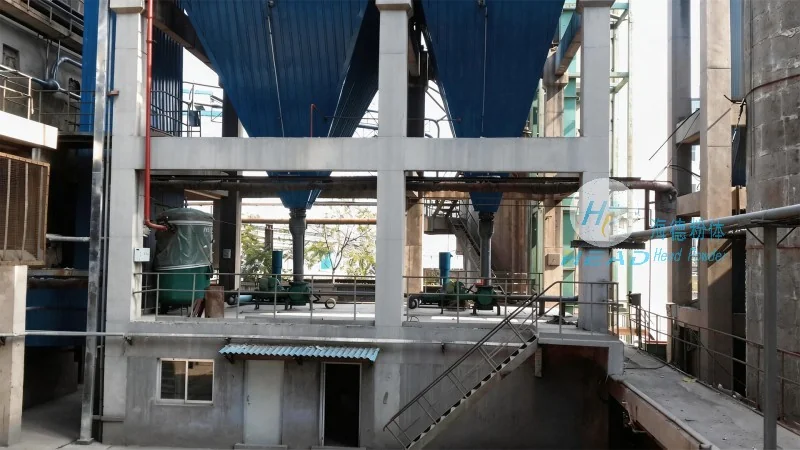
The separation and collection equipment is essential for safely handling the powder at the destination. This includes cyclone separators, filters, and dust collectors that separate the powder from the air stream. The cyclone separator uses centrifugal force to separate larger particles, while the filter captures fine particles, ensuring dust containment and environmental compliance. The control and monitoring devices provide real-time feedback on system performance, including pressure, flow rate, and temperature. These devices allow operators to adjust parameters as needed, ensuring optimal operation and preventing issues like overpressure or blockages.
Application and Performance
Alumina powder pneumatic conveying systems are widely used in the aluminum industry, chemical processing, and pharmaceutical sectors. They offer advantages over mechanical conveying, such as reduced labor costs, improved safety by eliminating manual handling, and increased flexibility in material transport. The systems can handle a wide range of particle sizes and shapes, making them suitable for diverse alumina applications. Additionally, they contribute to better environmental performance by containing dust and preventing contamination, which is critical in industries where material purity is paramount.