

Principle and Classification Application of Air-Flow Conveying for Manganese Carbonate
HeadPowder Engineering Co., Ltd. is a professional enterprise specializing in the research, development, and application of advanced material handling technologies. This article introduces the working principle and classification applications of air-flow conveying for manganese carbonate, a key industrial material widely used in battery production, chemical synthesis, and other sectors.
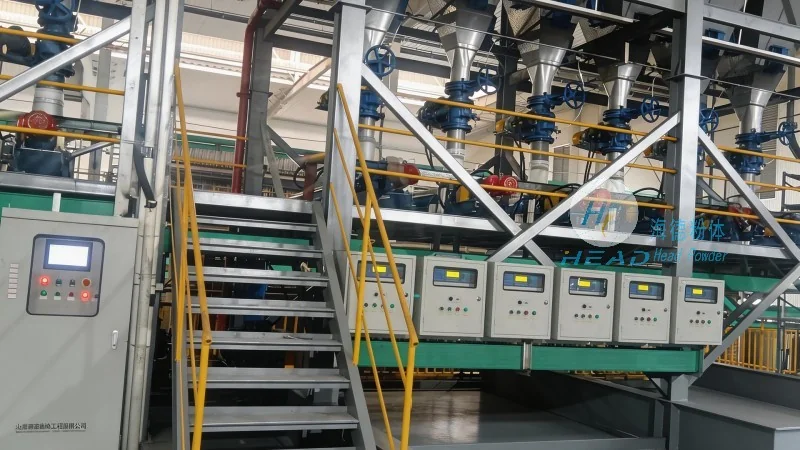
Understanding Air-Flow Conveying Technology
Air-flow conveying, also known as pneumatic conveying, is a method of transporting bulk materials through a pipeline using compressed air or other gas. This technology offers advantages such as high efficiency, flexibility in layout, and the ability to handle materials in a closed system, minimizing dust and contamination. The core of air-flow conveying lies in the interaction between the material particles and the gas flow within the pipeline, which determines the conveying capacity, pressure drop, and system performance.
Manganese Carbonate: Properties and Handling Requirements
Manganese carbonate is a white or light gray crystalline powder with a Mohs hardness of 2-3. It is hygroscopic and can absorb moisture from the air, which affects its flowability and handling characteristics. Due to its fine particle size (typically 10-200 μm) and cohesive nature, traditional gravity or mechanical conveying methods may lead to blockages, dust issues, and material degradation. Air-flow conveying is particularly suitable for handling such materials as it can maintain a consistent flow rate and prevent material degradation during transport.
The Working Principle of Air-Flow Conveying for Manganese Carbonate
The air-flow conveying system for manganese carbonate typically consists of a material feed hopper, a conveying pipeline, a control valve, and a dust collection system. The process begins with the material being fed into the hopper under gravity or by a feeder. Compressed air is then introduced into the pipeline, creating a gas-solid flow. The air velocity is maintained above the minimum conveying velocity (also known as the critical velocity) to keep the material particles suspended and transported to the destination. The pressure drop along the pipeline is a critical parameter, as it indicates the energy consumption and the ability to transport the material over a given distance. The system is designed to ensure that the air velocity remains above the minimum conveying velocity throughout the pipeline, preventing material deposition and ensuring smooth transport.
Classification of Air-Flow Conveying Systems
Based on the pressure and gas flow direction, air-flow conveying systems for manganese carbonate are classified into two main types: suction conveying and pressure conveying.
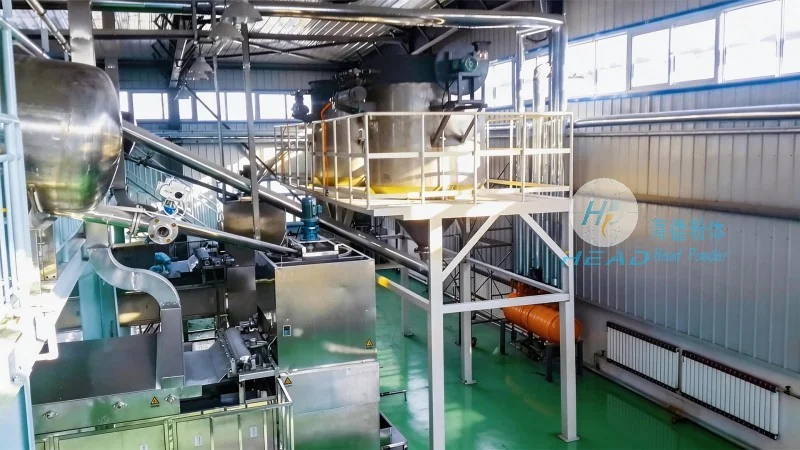
Suction Conveying Systems
Suction conveying systems operate under negative pressure, where the material is drawn from the source by the suction of the air flow. This type of system is suitable for short to medium conveying distances (typically up to 50 meters) and is commonly used for handling materials from hoppers or silos. The system includes a vacuum pump or a fan that creates a negative pressure in the pipeline, pulling the material particles along with the air. The key advantages of suction conveying are its simplicity and low initial cost. However, it has limitations in terms of conveying distance and material capacity, as the pressure drop increases with distance and material load.
Pressure Conveying Systems
Pressure conveying systems operate under positive pressure, where the material is pushed through the pipeline by the pressure of the air flow. This type of system is suitable for longer conveying distances (up to several hundred meters) and higher material capacities. The system includes a blower or a compressor that supplies compressed air to the pipeline, pushing the material particles forward. Pressure conveying systems are more complex and require higher energy input compared to suction systems, but they offer greater flexibility in layout and higher conveying efficiency for longer distances.
Application Scenarios in Industrial Production
HeadPowder Engineering Co., Ltd. has successfully applied air-flow conveying technology for manganese carbonate in various industrial processes. One typical application is in the battery manufacturing industry, where manganese carbonate is used as a raw material for lithium-ion batteries. The air-flow conveying system is used to transport the material from storage silos to the mixing and charging stations, ensuring a continuous and dust-free supply. Another application is in the chemical synthesis industry, where manganese carbonate is used as a catalyst or reagent. The system is used to convey the material from the production line to the packaging and storage areas, maintaining product purity and preventing contamination.
Advantages of Air-Flow Conveying for Manganese Carbonate Handling
Compared to traditional conveying methods, air-flow conveying offers several advantages for handling manganese carbonate:
1. Efficiency and Speed: The system can transport materials at high speeds, reducing the overall production time and increasing throughput.
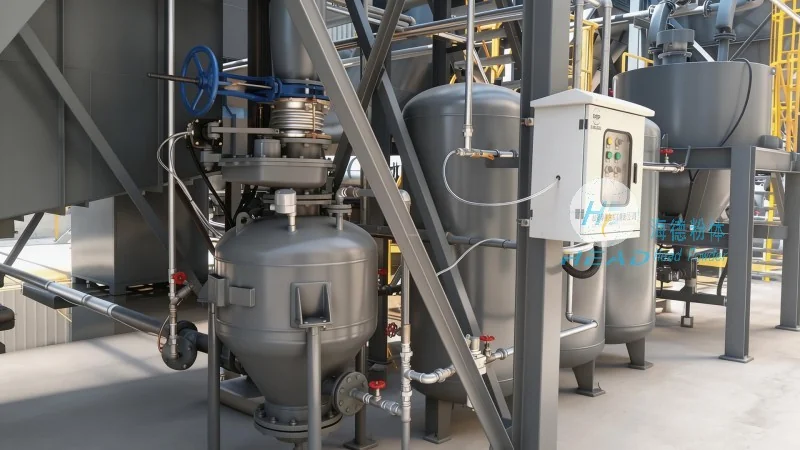
2. Closed System: The material is transported in a closed pipeline, minimizing dust emissions and protecting the environment and workers from exposure to fine particles.
3. Flexibility: The system can be easily reconfigured to change the conveying route or distance, adapting to different production layouts and requirements.
4. Low Maintenance: With fewer moving parts compared to mechanical conveyors, the air-flow system requires less maintenance and has a longer service life.
Conclusion
HeadPowder Engineering Co., Ltd. provides comprehensive air-flow conveying solutions for manganese carbonate, combining advanced technology with professional application expertise. By understanding the unique properties of manganese carbonate and the principles of air-flow conveying, the company ensures efficient, reliable, and safe material handling in various industrial applications. The air-flow conveying systems are designed to meet the specific requirements of each client, from short-distance transport to long-distance, high-capacity operations. With continuous innovation and a commitment to quality, HeadPowder Engineering Co., Ltd. remains a leading provider of material handling solutions for the manganese carbonate industry.