

Comparative Analysis of Positive Pressure and Negative Pressure Conveying for Reduced Iron Powder
HeadPowder, a leading manufacturer in the field of material handling solutions, specializes in providing advanced conveying systems for various industrial applications. This article provides a detailed comparison between positive pressure and negative pressure conveying systems, specifically focusing on their application in the handling of reduced iron powder. The analysis aims to help industrial operators and engineers make informed decisions when selecting the most suitable conveying method for their processes.
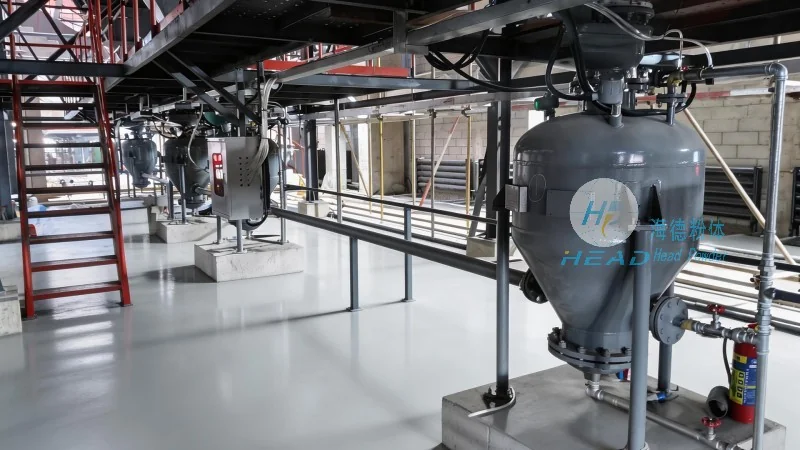
Introduction to Conveying Systems for Reduced Iron Powder
Reduced iron powder is a critical raw material in many industrial processes, including steel production, chemical manufacturing, and battery production. Efficient and reliable material handling is essential to maintain production efficiency and product quality. Conveying systems, particularly pneumatic conveying systems, are widely used for transporting reduced iron powder due to their ability to handle fine powders and minimize material degradation. Two primary types of pneumatic conveying systems are commonly employed: positive pressure conveying and negative pressure conveying. Each method has distinct characteristics, advantages, and limitations that make it suitable for different operational conditions and material properties.
Positive Pressure Conveying System
Positive pressure conveying, also known as pressure conveying, operates by blowing air or a carrier gas into a pipeline at a pressure higher than the ambient atmospheric pressure. The system uses a positive pressure blower or compressor to generate the necessary pressure to move the material through the pipeline. In the context of reduced iron powder, positive pressure conveying systems are often preferred for applications requiring high material throughput and long-distance transport. The high pressure ensures that the material is effectively transported without clogging or blockages, which can occur in systems with lower pressure differentials.
A key advantage of positive pressure conveying is its ability to handle a wide range of material sizes and densities. The high pressure helps to maintain the flow of the material, even when dealing with cohesive or sticky powders. Additionally, positive pressure systems are generally more robust and less prone to contamination from external air, as the system is sealed and pressurized. This feature is particularly important for handling materials that are sensitive to moisture or air exposure, such as reduced iron powder, which can oxidize or degrade when exposed to atmospheric conditions.
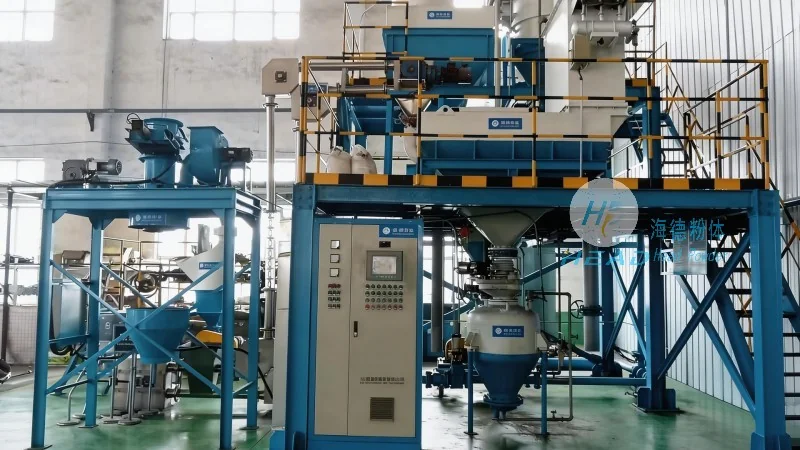
Negative Pressure Conveying System
Negative pressure conveying, or vacuum conveying, operates by creating a vacuum in the pipeline, which draws the material from the source into the system. The system uses a vacuum pump to reduce the pressure inside the pipeline below atmospheric pressure, causing the material to be drawn into the pipeline and transported to the destination. Negative pressure conveying is often used for shorter distances and lower material throughput compared to positive pressure systems. It is particularly suitable for applications where the material needs to be collected from multiple points or where the material is relatively light and fine.
One of the main advantages of negative pressure conveying is its lower energy consumption compared to positive pressure systems. The vacuum pump requires less power to operate, making it more energy-efficient for certain applications. Additionally, negative pressure systems are generally simpler in design and require fewer components, which can reduce maintenance costs and downtime. However, negative pressure conveying has limitations, especially when handling cohesive or heavy materials. The lower pressure differentials can lead to clogging and blockages, which may require additional equipment such as rotary valves or airlocks to prevent material buildup.
Comparison of Positive Pressure and Negative Pressure Conveying
When comparing positive pressure and negative pressure conveying systems for reduced iron powder, several factors need to be considered. The choice between the two methods depends on the specific requirements of the application, including the distance of transport, material characteristics, and operational constraints. The following table summarizes the key differences between the two systems:
| Feature | Positive Pressure Conveying | Negative Pressure Conveying |
|---|---|---|
| Operating Principle | Pressurized air pushes material through pipeline | Vacuum pulls material into pipeline |
| Pressure Differential | Higher (positive pressure) | Lower (negative pressure) |
| Material Throughput | Higher (suitable for high volume) | Lower (suitable for low volume) |
| Transport Distance | Longer (up to several hundred meters) | Shorter (typically up to 100 meters) |
| Energy Consumption | Higher (due to higher pressure) | Lower (due to vacuum pump) |
| Material Handling | Handles cohesive and heavy materials better | Less effective with cohesive materials |
| Contamination Risk | Lower (sealed system) | Higher (exposes material to ambient air) |
From the comparison, it is evident that positive pressure conveying is generally more suitable for high-volume, long-distance transport of reduced iron powder, especially when the material is cohesive or heavy. The higher pressure ensures consistent flow and reduces the risk of clogging. On the other hand, negative pressure conveying is more energy-efficient and simpler for shorter distances and lower material throughput, particularly for light and non-cohesive powders.
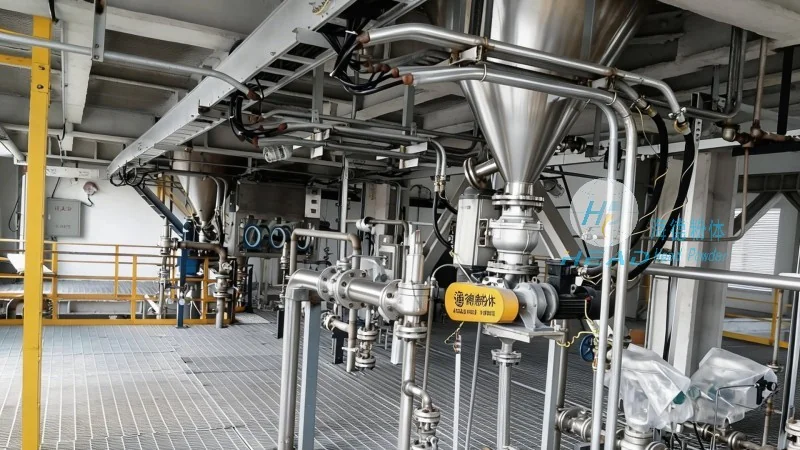
Application Considerations
When selecting between positive pressure and negative pressure conveying for reduced iron powder, several practical considerations should be taken into account. The first consideration is the distance of the material transport. Positive pressure systems are ideal for distances exceeding 100 meters, while negative pressure systems are more appropriate for shorter distances, typically up to 100 meters. The second consideration is the material properties, such as particle size, density, and cohesion. For materials with high cohesion or large particle sizes, positive pressure conveying is preferred due to its ability to maintain flow and prevent blockages. Conversely, for fine and light powders, negative pressure conveying may be sufficient.
Operational constraints also play a role in the selection process. Positive pressure systems require more robust equipment, such as high-pressure blowers and larger pipelines, which can increase initial investment costs. However, they offer higher reliability and lower maintenance costs in the long run. Negative pressure systems, while less expensive initially, may require more frequent maintenance due to the vacuum pump and the risk of material contamination. Additionally, the environmental impact should be considered. Positive pressure systems are more environmentally friendly as they do not expose the material to ambient air, reducing the risk of oxidation or degradation. Negative pressure systems, on the other hand, may require additional filtration to prevent dust emissions.
Conclusion
In conclusion, both positive pressure and negative pressure conveying systems offer viable solutions for handling reduced iron powder, but their suitability depends on the specific operational requirements. Positive pressure conveying is generally preferred for high-volume, long-distance transport of cohesive or heavy materials, providing reliable and efficient material handling with lower contamination risk. Negative pressure conveying, while more energy-efficient for shorter distances and lighter materials, may be limited by its lower pressure differentials and higher risk of clogging. Industrial operators should carefully evaluate their material properties, transport distance, and operational constraints to select the most appropriate conveying system. HeadPowder, with its expertise in material handling solutions, can provide customized conveying systems that meet the specific needs of industrial applications, ensuring optimal performance and efficiency.