

Main Structures for the Pneumatic Conveying of Sodium Hydroxide Powder
When it comes to the efficient and safe transportation of sodium hydroxide powder, understanding the various pneumatic conveying structures is crucial. As a leading provider in the field, Shandong HeadPowder Engineering Co., Ltd. specializes in designing and implementing systems tailored to meet diverse industrial needs. This article explores the primary structures used for the pneumatic conveying of sodium hydroxide powder, highlighting their functionalities and applications.
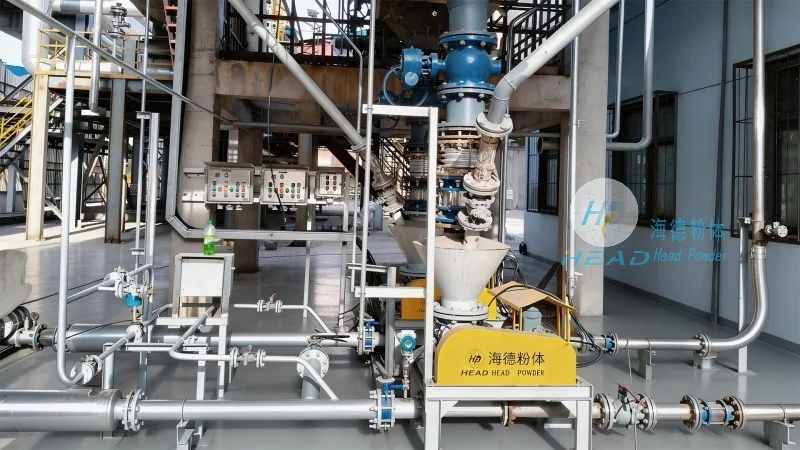
1. Positive Pressure Pneumatic Conveying Systems
Positive pressure systems are widely used for the transport of sodium hydroxide powder due to their ability to handle high material loads and long distances. In this setup, a positive pressure is maintained throughout the entire conveying line, ensuring that the material is continuously pushed forward by the air flow. The system typically includes a blower or a positive displacement pump that generates the necessary pressure to move the powder. Key components of a positive pressure system include a hopper for material storage, a feeder to control the flow rate, a pipeline network, and a receiver at the destination. The positive pressure helps in preventing dust leakage and maintaining a consistent flow, making it suitable for applications where reliability and high throughput are essential. For sodium hydroxide powder, which can be hygroscopic and reactive, the positive pressure system offers a controlled environment that minimizes exposure to moisture and air, thus preserving the material's quality.
2. Negative Pressure (Vacuum) Pneumatic Conveying Systems
Negative pressure systems, also known as vacuum systems, are another common structure for sodium hydroxide powder conveying. These systems operate by creating a vacuum at the receiver end, which draws the powder from the source through the pipeline. The vacuum is generated by a vacuum pump, and the air flow carries the powder particles to the collection point. Negative pressure systems are particularly advantageous for short to medium distances and when the material needs to be transported from multiple points to a central location. They are also suitable for applications where the material is sensitive to pressure changes or where the system needs to be installed in areas with limited space. The key components of a negative pressure system include a vacuum pump, a hopper, a feeder, and a receiver. The vacuum created helps in maintaining a clean and controlled environment, reducing the risk of dust dispersion and ensuring that the powder is transported without contamination. For sodium hydroxide powder, the vacuum system can be optimized to handle fine powders efficiently, as the low pressure helps in preventing agglomeration and maintaining particle integrity.
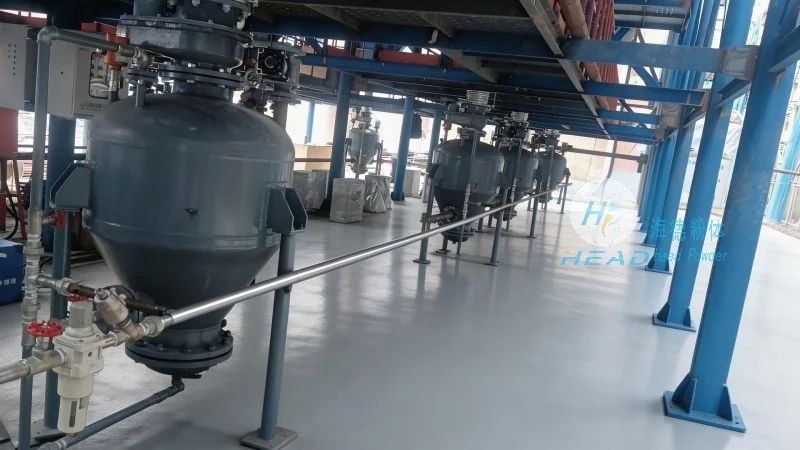
3. Dilute Phase Pneumatic Conveying Systems
Dilute phase systems are designed for high-speed, low-concentration transport of sodium hydroxide powder. In this structure, the powder is suspended in the air stream at a low concentration, typically less than 10% by volume. The high velocity of the air ensures that the powder particles remain in suspension, allowing for long-distance transport with minimal pressure drop. Dilute phase systems are ideal for applications where the material needs to be conveyed over several hundred meters or more, and where the system needs to handle large volumes of powder. The components of a dilute phase system include a high-pressure blower, a feeder, and a pipeline with appropriate diameter and length. The system is capable of handling fine and cohesive powders like sodium hydroxide, as the high air velocity prevents particle settling and maintains a uniform flow. The dilute phase design also allows for easier cleaning and maintenance, as the low concentration of powder reduces the risk of blockages and wear on the equipment. For sodium hydroxide powder, the dilute phase system offers a cost-effective solution for long-distance transport, with lower energy consumption compared to dense phase systems.
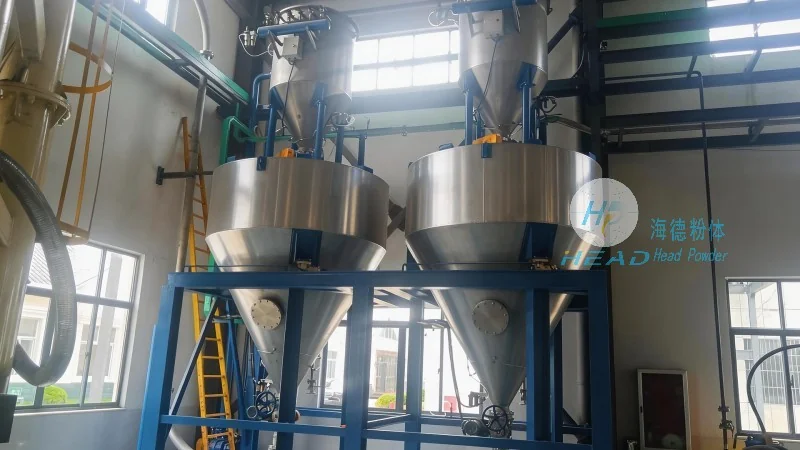
4. Dense Phase Pneumatic Conveying Systems
Dense phase systems are used for the transport of sodium hydroxide powder when high pressure and low velocity are required. In this structure, the powder is conveyed in a dense phase, typically at a concentration of 10-20% by volume, which results in a lower air velocity and higher pressure drop. The system is suitable for applications where the material is sensitive to high velocities or where the pipeline length is short. Dense phase systems are commonly used for handling abrasive or cohesive powders, as the lower velocity reduces wear on the pipeline and equipment. The key components of a dense phase system include a positive displacement pump, a feeder, and a pipeline with a larger diameter to accommodate the higher pressure. The system operates by compressing the air and powder mixture, which is then released in short bursts to move the material. This method helps in maintaining the integrity of the powder particles and preventing segregation. For sodium hydroxide powder, the dense phase system is particularly useful when transporting from a hopper to a storage silo or when the distance is limited, as it provides a controlled and gentle transport process. The system also allows for the use of smaller pipelines, reducing installation costs and space requirements.
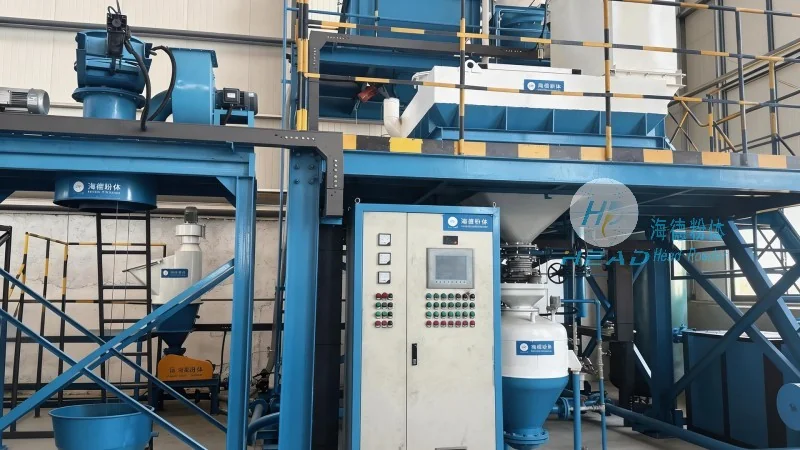
5. Hybrid Pneumatic Conveying Systems
Hybrid systems combine elements of both positive and negative pressure or dilute and dense phase designs to optimize the conveying process for sodium hydroxide powder. These systems are often used in complex industrial settings where multiple material sources and destinations are involved. A hybrid system might start with a positive pressure section to transport the powder from the source to a central point and then switch to a negative pressure section to distribute it to various receivers. This configuration allows for flexibility and efficiency in handling different material flow rates and distances. The components of a hybrid system include a combination of blowers, vacuum pumps, and specialized feeders and receivers. The hybrid design helps in reducing energy consumption and improving overall system performance by adapting to the specific requirements of the sodium hydroxide powder being transported. For example, a hybrid system can use a dilute phase for long-distance transport and then switch to a dense phase for short-distance delivery, ensuring that the material is handled with the appropriate pressure and velocity at each stage. This approach maximizes the system's efficiency and minimizes operational costs, making it a preferred choice for large-scale industrial applications.
6. Key Considerations for Selecting the Right Pneumatic Conveying Structure
When selecting the appropriate pneumatic conveying structure for sodium hydroxide powder, several factors must be considered to ensure optimal performance and safety. The first consideration is the distance and layout of the conveying line, as this determines whether a positive or negative pressure system is more suitable. For long distances, positive pressure systems are generally preferred due to their ability to maintain pressure and handle higher loads. The material characteristics of sodium hydroxide powder, such as its particle size, moisture content, and reactivity, also play a crucial role in system selection. Fine powders may require dilute phase or vacuum systems to prevent agglomeration, while cohesive powders may benefit from dense phase or hybrid designs. The capacity and flow rate requirements are another critical factor, as the system must be able to handle the desired throughput without causing pressure buildup or material degradation. Additionally, the environmental and safety considerations, such as dust control and explosion prevention, must be addressed in the design. Shandong HeadPowder Engineering Co., Ltd. offers comprehensive solutions that take into account all these factors, providing customized pneumatic conveying structures tailored to the specific needs of each client. By understanding the unique properties of sodium hydroxide powder and the operational requirements of the application, the company ensures that the chosen system delivers reliable, efficient, and safe transport of the material.