

Working Principle and Characteristics of Pneumatic Conveying for Lithium-Ion Battery Nanomaterials
HeadPowder, a leading provider of advanced material handling solutions, specializes in the pneumatic conveying of lithium-ion battery nanomaterials. Based in Shandong, China, the company leverages its expertise to deliver efficient and reliable systems for processing these critical components in the battery manufacturing industry.
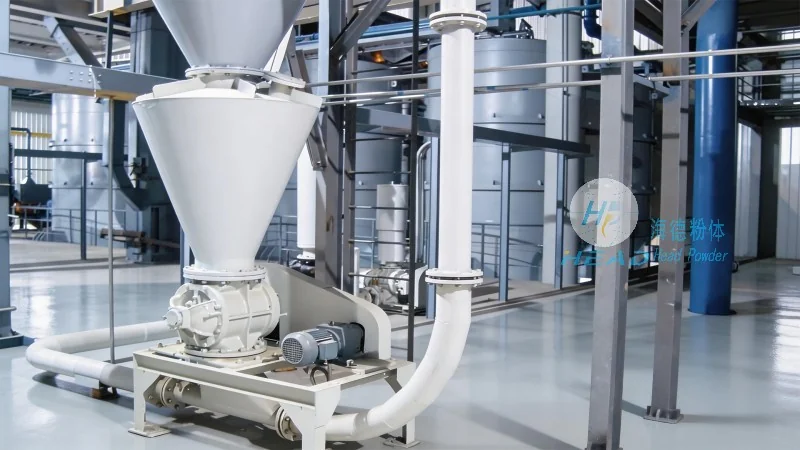
Working Principle of Pneumatic Conveying for Lithium-Ion Battery Nanomaterials
Pneumatic conveying operates by utilizing a stream of compressed air or gas to transport particulate materials through a pipeline system. In the context of lithium-ion battery nanomaterials, such as graphite, silicon, or other active materials, the process begins with the material being introduced into a hopper or feeder. The compressed air is then introduced into the system, creating a flow that lifts and propels the nanomaterial particles through the pipeline. The velocity and pressure of the air are carefully controlled to ensure the particles are transported without excessive abrasion or degradation, which is crucial for maintaining the purity and performance of the nanomaterials.
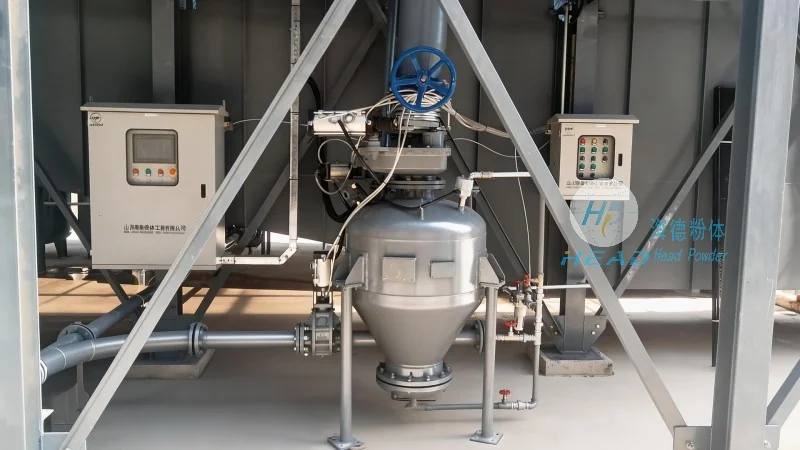
Key Characteristics of Pneumatic Conveying Systems for Lithium-Ion Battery Nanomaterials
One of the primary advantages of pneumatic conveying for lithium-ion battery nanomaterials is its ability to handle fine and sensitive particles with minimal contamination. Unlike mechanical conveying methods, which may involve direct contact with moving parts that can introduce impurities or cause particle agglomeration, pneumatic systems keep the material isolated within the air stream. This ensures that the nanomaterials remain in their original state, preserving their surface area and reactivity—essential properties for battery performance. Additionally, pneumatic conveying offers high flexibility in system design, allowing for complex layouts and integration with other processing equipment, such as mixers, classifiers, or drying units. The systems can be configured for both dilute-phase (where particles are suspended in the air) and dense-phase (where particles are more concentrated) conveying, providing versatility for different material types and processing requirements.
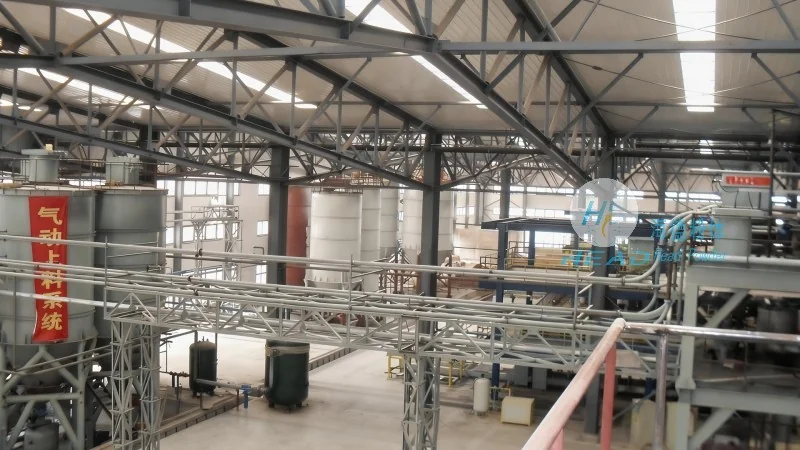
Efficiency and Scalability in Lithium-Ion Battery Nanomaterial Handling
For manufacturers of lithium-ion batteries, the efficiency of material handling directly impacts production throughput and cost-effectiveness. Pneumatic conveying systems offer high throughput rates, enabling continuous and automated material transfer from raw material storage to processing lines. This reduces downtime and labor costs associated with manual handling or traditional bulk transport methods. Moreover, the systems are scalable, allowing companies to expand their operations as demand for battery production grows. HeadPowder’s solutions are designed to accommodate varying material volumes and particle sizes, ensuring consistent performance even with fluctuations in production schedules. The use of advanced control systems further enhances operational efficiency, with real-time monitoring of air pressure, flow rates, and particle concentration to maintain optimal conveying conditions.
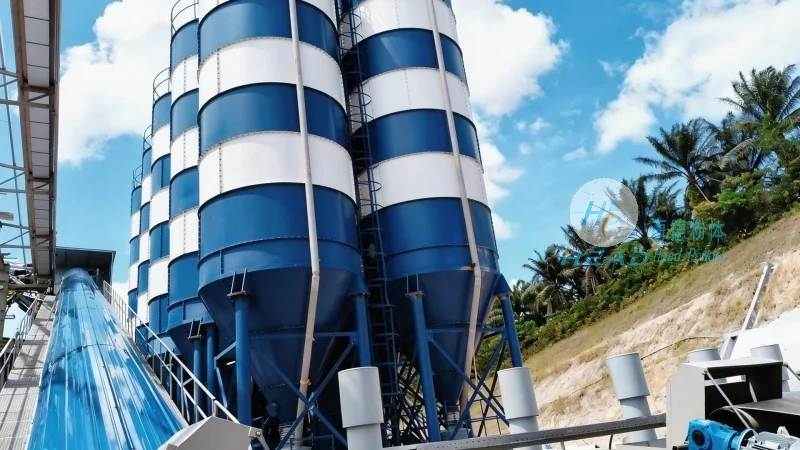
Preservation of Material Integrity and Quality Control
Nanomaterials used in lithium-ion batteries are highly sensitive to environmental factors, including moisture, oxygen, and physical stress. Pneumatic conveying minimizes exposure to these elements by maintaining a closed system, which is particularly important for moisture-sensitive materials like silicon anodes. The enclosed pipeline prevents contamination from external sources and reduces the risk of material degradation during transport. HeadPowder’s systems incorporate features such as air filtration and moisture control to further protect the nanomaterials. Additionally, the ability to monitor and adjust conveying parameters in real time allows for tight quality control, ensuring that only high-purity materials are delivered to the battery manufacturing process. This contributes to improved battery performance and reliability, which are critical for meeting market demands and regulatory standards.