

Principle and Working Scene Characteristics of Pneumatic Conveying for Manganese Sulfate Materials
HeadPowder, a leading engineering company based in Shandong, China, specializes in the design and implementation of advanced material handling systems. This article focuses on the pneumatic conveying technology for manganese sulfate materials, exploring its fundamental principles and the key characteristics of its operational scenarios.
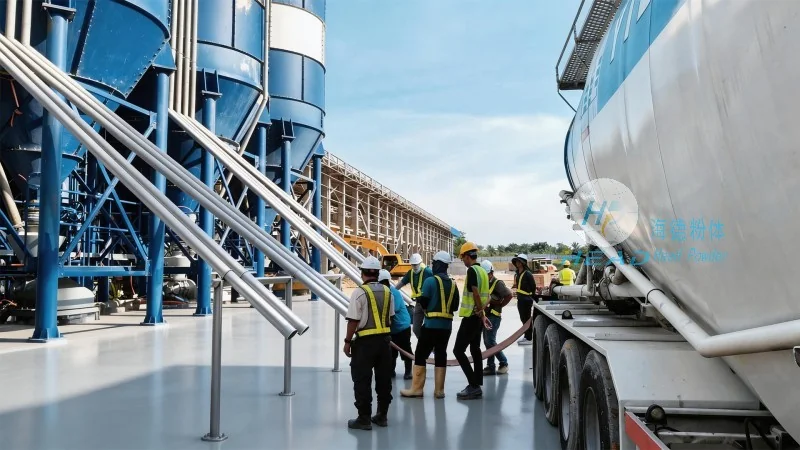
Introduction to Manganese Sulfate Pneumatic Conveying Systems
Manganese sulfate is a widely used chemical compound in various industrial applications, including battery manufacturing, water treatment, and agricultural fertilizers. The efficient and safe transportation of this material is crucial for maintaining production efficiency and ensuring product quality. Pneumatic conveying offers a reliable solution for handling manganese sulfate, especially in scenarios where traditional mechanical conveying methods may pose challenges due to the material's properties or the operational environment.
Principle of Pneumatic Conveying for Manganese Sulfate
The core principle of pneumatic conveying involves using a stream of compressed air or other gases to transport solid particles through a pipeline. In the case of manganese sulfate, the system typically operates under positive pressure, where the air is forced through the pipeline at a velocity sufficient to lift and carry the solid particles. The conveying process relies on the balance between the air velocity and the particle size, density, and shape. Proper design of the conveying line, including the diameter, length, and bends, is essential to ensure stable and efficient transport without causing particle degradation or system blockages.
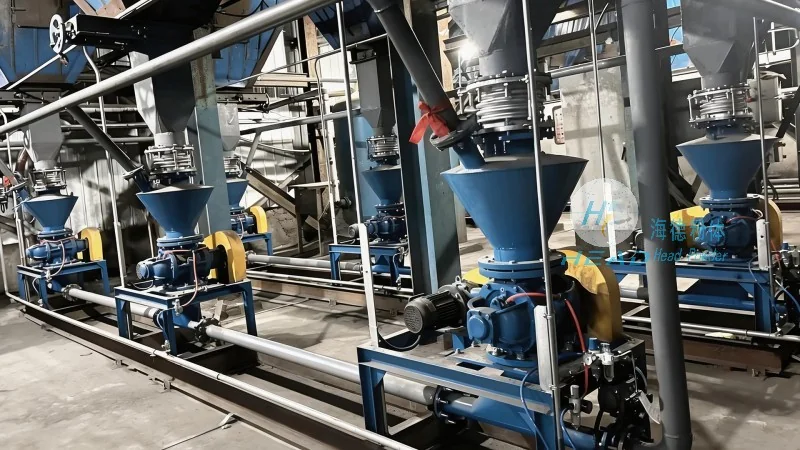
Key Characteristics of Working Scenarios for Manganese Sulfate Pneumatic Conveying
The operational scenarios for manganese sulfate pneumatic conveying vary based on the specific industrial application and the scale of the operation. Some common characteristics include:
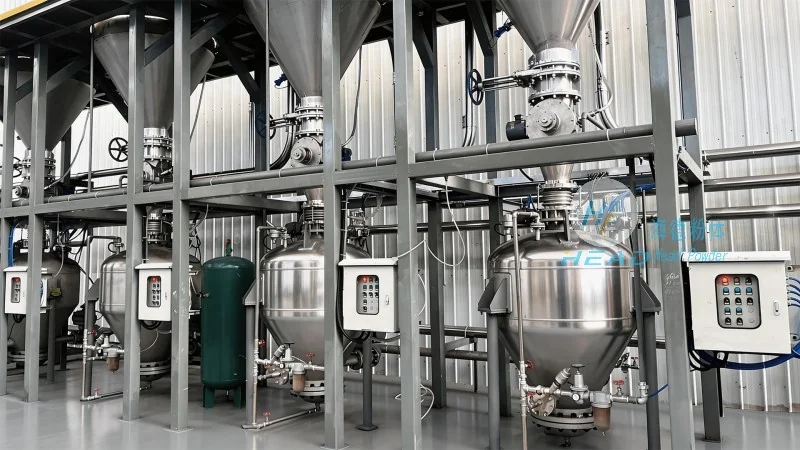
- Continuous and Bulk Handling: Pneumatic systems are well-suited for continuous, high-volume transport of manganese sulfate, which is often required in large-scale production facilities. The ability to handle large quantities without frequent stops enhances overall production throughput.
- Reduced Dust and Contamination: Unlike mechanical conveyors, pneumatic systems minimize dust generation and cross-contamination risks. This is particularly important for manganese sulfate, which may be used in sensitive applications such as food processing or pharmaceutical manufacturing, where product purity is critical.
- Flexibility in Layout: The modular nature of pneumatic conveying systems allows for flexible installation in various plant layouts. The pipeline can be routed around obstacles, and the system can be easily expanded or reconfigured to adapt to changing production needs.
- Long-Distance Transport: Pneumatic conveying can effectively transport manganese sulfate over significant distances, from a few meters to several hundred meters, without the need for intermediate transfer points. This capability is advantageous in large industrial complexes where material movement between different processing units is required.
- Energy Efficiency and Control: Modern pneumatic conveying systems incorporate advanced control technologies to optimize energy consumption and maintain consistent conveying performance. Variable frequency drives and pressure sensors help regulate air flow and particle velocity, ensuring efficient operation while minimizing energy waste.
Application Examples and Operational Considerations
HeadPowder has extensive experience in implementing pneumatic conveying solutions for manganese sulfate in diverse industrial settings. For instance, in battery manufacturing plants, the system is used to transport manganese sulfate from storage silos to mixing and processing units. In water treatment facilities, it facilitates the delivery of the chemical to dosing equipment for water purification. The success of these applications depends on careful consideration of several operational factors:
- Particle Size and Flowability: The size distribution and flow characteristics of manganese sulfate particles directly impact the conveying performance. Coarser particles may require higher air velocities or larger pipeline diameters to prevent blockages, while finer particles may need additional measures to prevent dust accumulation.
- System Pressure and Airflow Management: Maintaining the correct pressure and airflow rate is critical to avoid system inefficiencies or damage. Over-pressurization can lead to excessive energy consumption and potential equipment failure, while under-pressurization may result in incomplete particle transport.
- Material Compatibility and Wear: The selection of pipeline materials and components is essential to prevent corrosion or wear from the manganese sulfate and the conveying air. Stainless steel or specialized coatings are often used to ensure long-term system reliability.
Conclusion
Pneumatic conveying represents a sophisticated and effective method for handling manganese sulfate materials across various industrial applications. By understanding the fundamental principles and the specific characteristics of different working scenarios, companies can optimize their material handling processes, enhance operational efficiency, and ensure product quality. HeadPowder continues to innovate in this field, providing tailored pneumatic conveying solutions that meet the unique needs of its clients in Shandong and beyond.