

Principle and Working Scene Characteristics of Air-Driven Conveying for Cobalt Hydroxide Materials
Understanding the air-driven conveying of cobalt hydroxide materials is crucial for optimizing material handling processes in various industrial applications. This article delves into the fundamental principles behind such systems and highlights the key characteristics of their operational environments, providing insights into how these technologies enhance efficiency and reliability in material transport.
Introduction to Air-Driven Conveying Systems
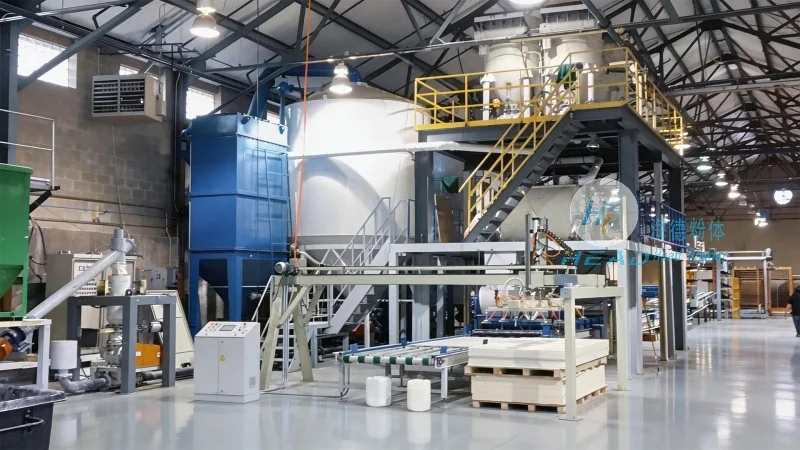
At the core of air-driven conveying for cobalt hydroxide materials lies a mechanism that utilizes pressurized or suction air to transport bulk materials through a pipeline. This method, commonly known as pneumatic conveying, offers a flexible and efficient alternative to traditional mechanical conveying methods, such as belt conveyors or screw conveyors. The system typically consists of a feeding device, a conveying pipeline, a separation or collection unit, and a control system. By integrating these components, the system can effectively move cobalt hydroxide powders or granules from one location to another with minimal human intervention.
Principle of Air-Driven Conveying for Cobalt Hydroxide
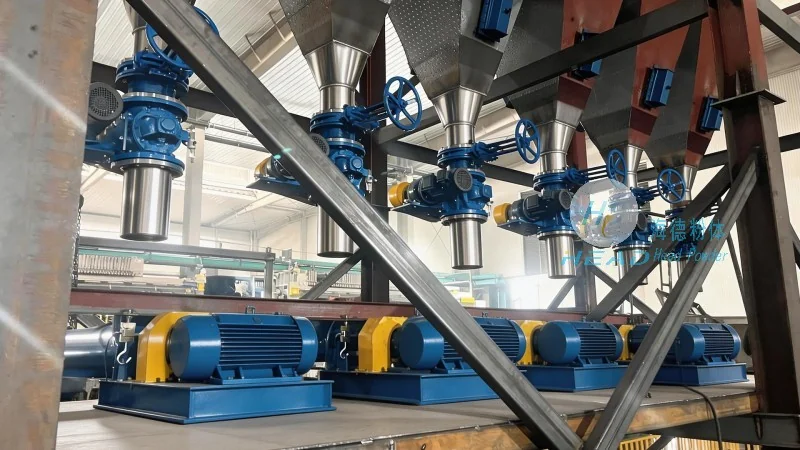
The fundamental principle of air-driven conveying for cobalt hydroxide materials revolves around the interaction between the material particles and the air flow within the pipeline. In an air-suspension conveying mode, the material is suspended in the air stream and transported as a dilute phase. This mode is particularly effective for fine powders like cobalt hydroxide, as it minimizes particle degradation and ensures a consistent flow rate. The conveying velocity and pressure within the system are carefully controlled to maintain the material in a suspended state, preventing clogging and ensuring smooth transport. Additionally, the system may employ different conveying modes, such as dense phase or dilute phase, depending on the material characteristics and the required transport distance.
Working Scene Characteristics of Air-Driven Conveying
The operational environment of air-driven conveying systems for cobalt hydroxide materials exhibits several distinct characteristics that influence their design and performance. Firstly, the material's physical properties, including particle size, density, and moisture content, play a critical role in determining the optimal conveying parameters. For instance, fine cobalt hydroxide powders may require higher air velocities to maintain suspension, while larger granules might benefit from denser phase conveying to reduce energy consumption. Secondly, the system's layout and the distance between the feeding and discharge points significantly impact the overall efficiency. Shorter transport distances often allow for higher conveying speeds, whereas longer distances may necessitate intermediate boosters or larger pipeline diameters to maintain material flow.
Application Scenarios and Operational Efficiency
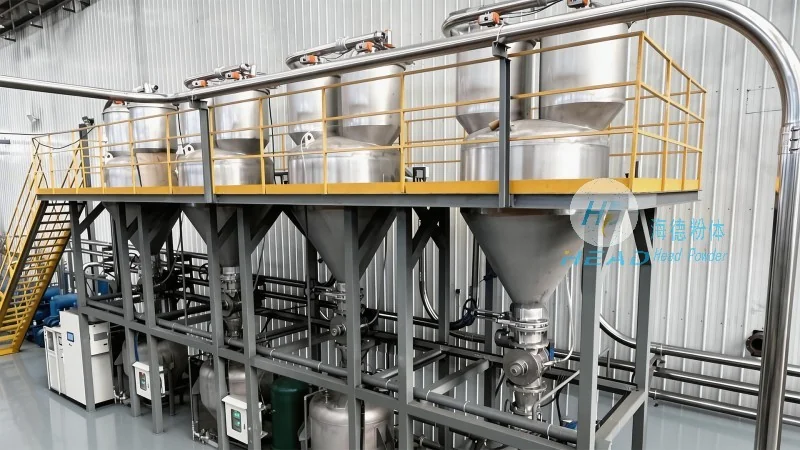
HeadPowder, a leading provider of material handling solutions, specializes in designing and implementing air-driven conveying systems tailored to the specific needs of cobalt hydroxide processing facilities. The company's expertise lies in optimizing the conveying process to enhance operational efficiency while ensuring product integrity. In industrial settings, such as battery material production plants, air-driven conveying is widely used to transport cobalt hydroxide from storage silos to processing equipment, such as ball mills or classifiers. The systems are designed to handle varying material flow rates, from low to high, and can be integrated with other process equipment to form a seamless material flow chain. By leveraging advanced control technologies, the systems can automatically adjust air pressure and flow rates based on real-time conditions, minimizing energy waste and maximizing throughput.
Advantages and Challenges in Cobalt Hydroxide Conveying
Compared to traditional mechanical conveying, air-driven conveying offers several advantages for cobalt hydroxide materials. These include reduced equipment wear and tear, as there are no moving parts in direct contact with the material, and the ability to transport materials in a closed system, minimizing dust emissions and environmental impact. However, the technology also presents certain challenges. For example, the system's performance can be affected by changes in material properties, such as moisture content or particle size distribution, which may require regular maintenance and adjustments. Additionally, the initial investment and energy consumption for air-driven systems can be higher than for mechanical alternatives, although the long-term operational costs are often lower due to reduced maintenance and higher efficiency.
Conclusion and Future Outlook
In conclusion, air-driven conveying systems provide an effective and efficient solution for handling cobalt hydroxide materials in various industrial applications. By understanding the fundamental principles and operational characteristics of these systems, industries can optimize their material transport processes, enhance productivity, and ensure product quality. As technology advances, further improvements in air-driven conveying systems are expected, potentially leading to even more efficient and sustainable material handling solutions. HeadPowder continues to innovate in this field, offering tailored solutions that meet the evolving needs of the battery and chemical industries.