

Operation Process and Working Principle of Rice Husk Powder Conveying System
The rice husk powder conveying system is a specialized equipment designed for the efficient and reliable transportation of rice husk powder. As a key component in the processing industry, this system plays a crucial role in ensuring the smooth flow of material from one stage to another. The operation process and working principle of the system are integral to its effectiveness and reliability.
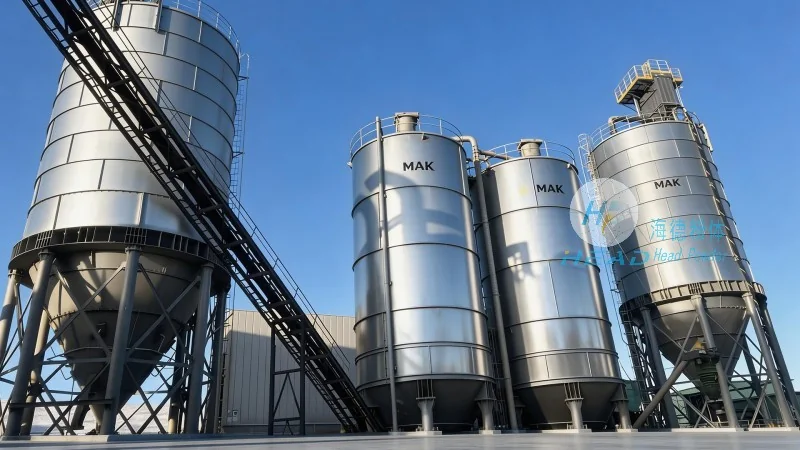
Company Overview: Shandong HeadPowder Engineering Co., Ltd.
HeadPowder, the manufacturer of this advanced conveying system, is a leading company in the field of powder handling technology. With a strong commitment to innovation and quality, HeadPowder has established itself as a trusted provider of industrial solutions. The company is headquartered in Shandong, China, and specializes in developing and manufacturing high-performance equipment for various industrial applications.
System Components and Their Functions
The rice husk powder conveying system consists of several key components, each playing a vital role in the overall operation. These components include the hopper, conveyor, control panel, and discharge mechanism. The hopper is responsible for storing the rice husk powder and feeding it into the conveyor. The conveyor, which can be of various types such as screw or pneumatic, transports the powder from the hopper to the desired location. The control panel allows operators to monitor and control the system's operation, ensuring optimal performance. The discharge mechanism then releases the powder into the next processing stage.
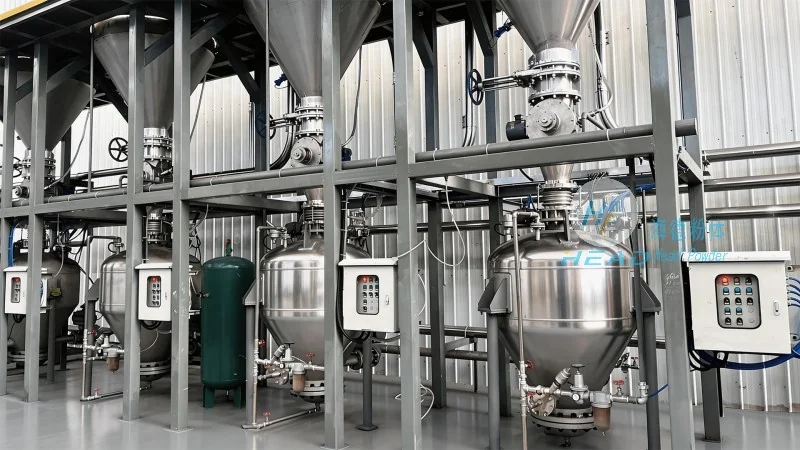
Operation Process of the Rice Husk Powder Conveying System
The operation process of the rice husk powder conveying system begins with the loading of rice husk powder into the hopper. The powder is then fed into the conveyor through the hopper's outlet. The conveyor then moves the powder along its path, transporting it to the discharge point. The control panel monitors the system's parameters, such as speed and pressure, to ensure that the powder is conveyed efficiently and without any blockages. Once the powder reaches the discharge point, it is released into the next processing stage, completing the operation cycle.
Working Principle of the Rice Husk Powder Conveying System
The working principle of the rice husk powder conveying system is based on the principles of powder handling technology. The system uses a combination of mechanical and pneumatic forces to transport the powder. The conveyor system applies a continuous force to move the powder along its path, while the control panel regulates the system's operation to maintain optimal conditions. The hopper provides a storage capacity for the powder, ensuring a steady supply to the conveyor. The discharge mechanism then releases the powder into the next stage, completing the cycle. This system is designed to handle the unique properties of rice husk powder, such as its light weight and tendency to flow, ensuring efficient and reliable transportation.
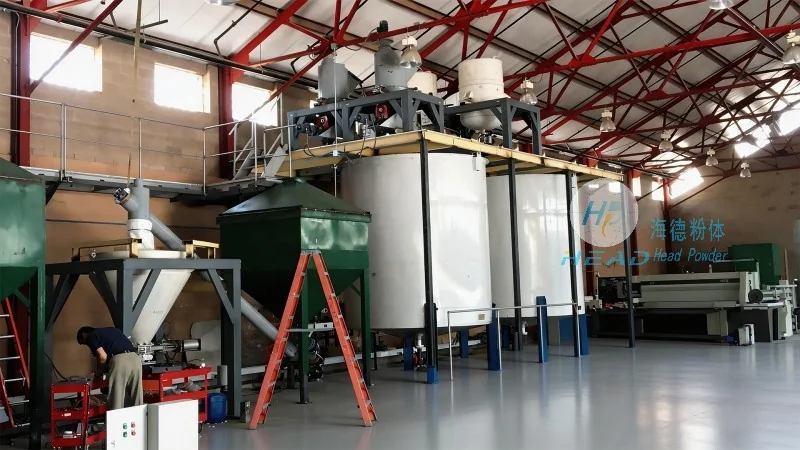
Advantages of the Rice Husk Powder Conveying System
The rice husk powder conveying system offers several advantages over traditional methods of powder transportation. These advantages include high efficiency, low maintenance, and reliability. The system is designed to handle large volumes of powder, reducing the time and labor required for transportation. The use of advanced materials and components ensures that the system is durable and long-lasting. Additionally, the system is easy to operate and maintain, reducing downtime and increasing productivity.
Applications of the Rice Husk Powder Conveying System
The rice husk powder conveying system is widely used in various industries, including food processing, chemical manufacturing, and pharmaceuticals. In the food industry, it is used to transport rice husk powder for use as a raw material in the production of rice bran oil and other products. In the chemical industry, it is used to transport rice husk powder for use as a raw material in the production of activated carbon and other chemical products. In the pharmaceutical industry, it is used to transport rice husk powder for use as a raw material in the production of medicinal products.