

Principle and Working Scene Characteristics of Powder Pneumatic Conveying Lines for Positive and Neg
HeadPowder, a leading engineering company based in Shandong, China, specializes in the design and implementation of advanced powder pneumatic conveying systems tailored for the handling of positive and negative electrode materials used in lithium-ion batteries. These systems are critical for ensuring efficient, safe, and reliable material transport within battery manufacturing facilities. The following sections explore the fundamental principles behind such systems and the key characteristics of their operational environments.
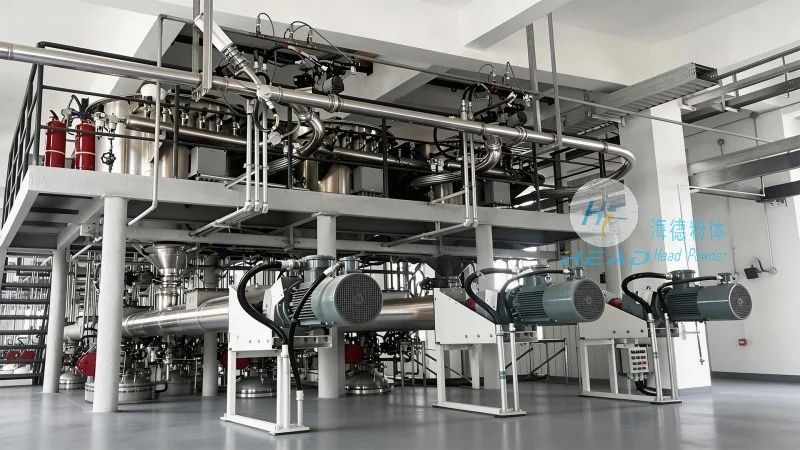
Company Overview: Shandong HeadPowder Engineering Co., Ltd.
HeadPowder is a professional engineering firm dedicated to providing comprehensive solutions for powder handling in the battery industry. With its headquarters in Shandong, China, the company leverages extensive industry experience and technical expertise to develop customized pneumatic conveying solutions that meet the stringent requirements of modern battery production. The company’s commitment to quality and innovation has established it as a trusted partner for manufacturers seeking to optimize their material handling processes.
Principle of Powder Pneumatic Conveying
Powder pneumatic conveying lines operate on the principle of transporting dry powders through a pipeline using a gas stream, typically air or other gases. The system consists of several key components, including a material feeding device, a conveying pipeline, a gas source (such as a blower or compressor), and a receiving hopper or storage unit. The process begins with the material being fed into the pipeline, where it is entrained by the high-velocity gas flow. As the gas moves through the pipeline, it carries the powder particles along, ensuring uniform and continuous transport. The design of the conveying line, including factors like pipeline diameter, gas velocity, and pressure, is crucial for achieving optimal performance and minimizing material degradation or loss.
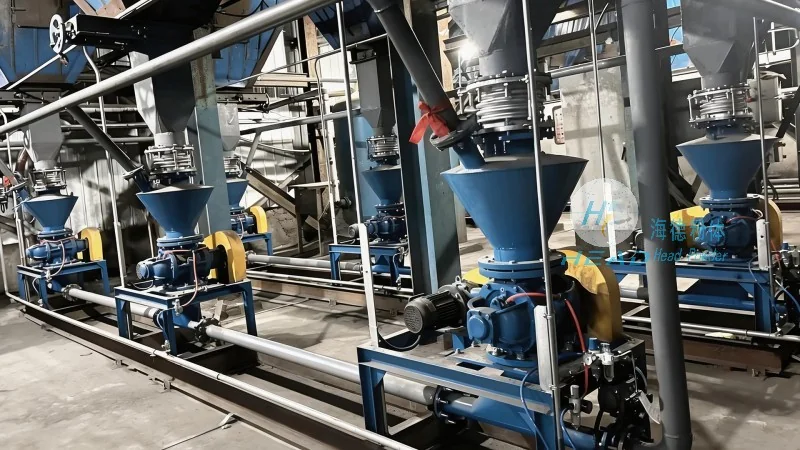
Working Scene Characteristics
The operational environment of powder pneumatic conveying lines for electrode materials is characterized by several key factors that influence system performance and reliability. Firstly, the materials being handled—such as lithium cobalt oxide (LCO), lithium iron phosphate (LFP), or other active materials—are often fine powders with specific physical properties, including particle size, density, and moisture content. These properties affect the conveying efficiency and require careful consideration during system design. Secondly, the manufacturing environment typically involves high cleanliness standards to prevent contamination of the electrode materials, which is why the conveying system must be designed to minimize dust generation and ensure a clean air flow. Thirdly, the system must be capable of handling varying material flow rates and batch sizes, as production processes often involve fluctuations in material demand. Additionally, the conveying line must be integrated with other production equipment, such as mixers, classifiers, and coating machines, to form a seamless material handling workflow. The working scene also includes considerations for space constraints and the need for flexible system configurations to accommodate different production layouts.
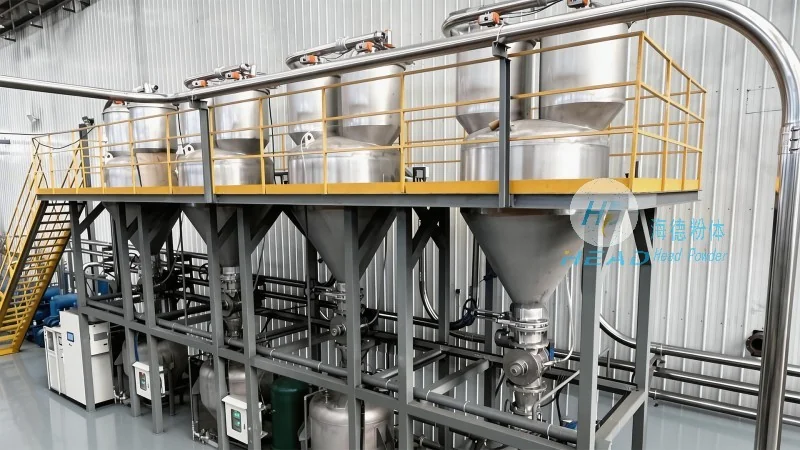
Key Features and Advantages
HeadPowder’s powder pneumatic conveying lines for positive and negative electrode materials offer several advantages that enhance operational efficiency and product quality. One of the primary benefits is the ability to transport materials over long distances without the need for mechanical components like belts or buckets, which reduces maintenance costs and minimizes the risk of material contamination. The system also provides a high degree of control over material flow, allowing for precise dosing and mixing. Furthermore, pneumatic conveying systems are capable of handling abrasive materials without causing excessive wear on components, thanks to the use of appropriate materials for the pipeline and components. The design of the system, including features like pressure relief valves and dust collection systems, ensures safety and compliance with industrial standards. Additionally, the modular nature of the system allows for easy expansion or modification as production needs evolve.
Application Scenarios
The applications of powder pneumatic conveying lines for electrode materials are diverse and critical to the battery manufacturing process. These systems are commonly used in the following scenarios: (1) Material transfer from raw material storage to the production line, ensuring a continuous supply of electrode powders. (2) Conveying materials between different processing stages, such as from a mixer to a classifier or from a dryer to a coating machine. (3) Transporting materials to storage hoppers or silos for later use in battery assembly. (4) Handling materials in quality control processes, where precise measurement and sampling are required. In each of these scenarios, the conveying system must be designed to meet the specific requirements of the process, including flow rate, pressure, and material compatibility. The effectiveness of the system directly impacts the overall productivity and quality of the battery production line.