

Operation Process and Working Principle of Gypsum Ash Pneumatic Conveying Line
Shandong HeadPowder Engineering Co., Ltd., commonly known as headpowder, is a professional manufacturer and supplier specializing in pneumatic conveying systems. The company is headquartered in Shandong, China, and has been committed to providing high-quality and efficient solutions for material handling in various industrial applications. With years of experience in the field, headpowder has established a strong reputation for its reliable products and excellent customer service.
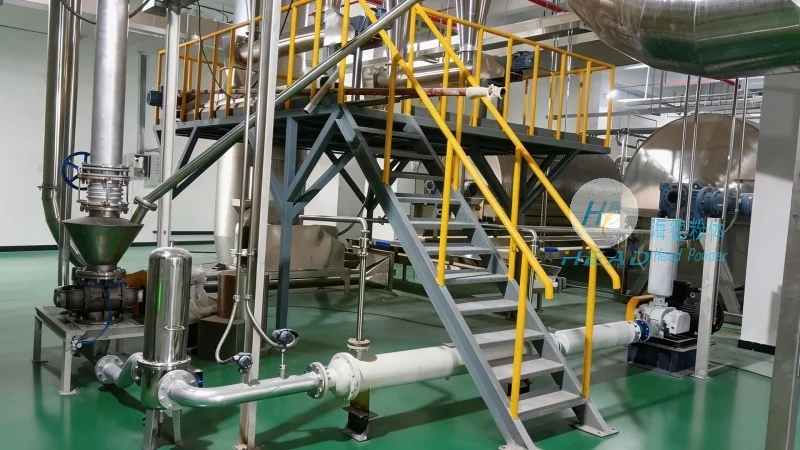
Gypsum Ash Pneumatic Conveying Line: An Efficient Solution for Material Transport
The gypsum ash pneumatic conveying line is a sophisticated system designed to transport gypsum ash and similar bulk materials over long distances with minimal loss and maximum efficiency. This system utilizes air pressure to move the material through a network of pipes, ensuring a clean and dust-free operation. The design is tailored to meet the specific requirements of industrial facilities, offering flexibility and adaptability to different production environments.
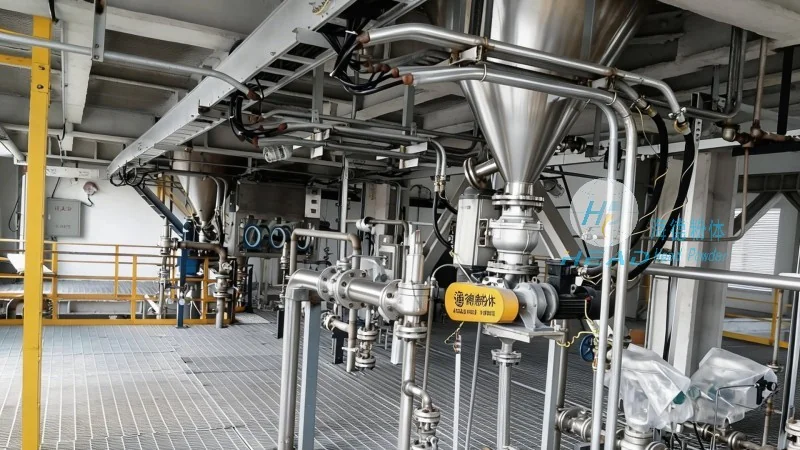
Operation Process of the Gypsum Ash Pneumatic Conveying Line
The operation of the gypsum ash pneumatic conveying line is a meticulously orchestrated process that ensures the efficient and reliable transport of gypsum ash from the source to the destination. The entire system begins with the material preparation stage, where the gypsum ash is stored in a silo or hopper. The feeder, typically a rotary valve or a screw feeder, regulates the flow of the material into the conveying line. This controlled feeding prevents overloading and ensures a consistent material supply. Once the material is fed into the line, the blower or compressor starts operating, generating a high-pressure air stream. The air is directed into the pipeline, creating a pressure differential that pulls the gypsum ash particles along with it. The conveying line is designed with appropriate pipe diameters and bends, which are strategically placed to minimize pressure loss and maintain the air velocity necessary for effective transport. The air and material mixture travels through the pipeline until it reaches the receiver, where the material is separated from the air. The receiver is equipped with a discharge valve that allows the gypsum ash to be collected in a storage bin or directly into the processing equipment. The exhaust air, now free of material particles, passes through a filter system to remove any residual dust before being released back into the environment or recirculated if necessary.
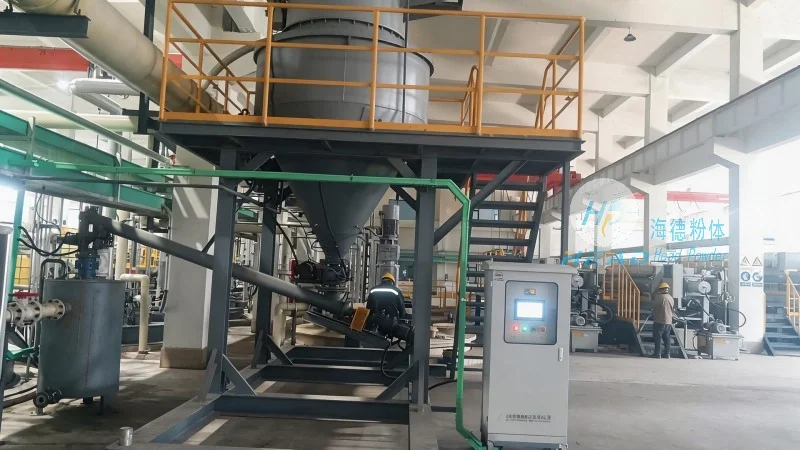
Working Principle of the Pneumatic Conveying Technology
The core of the gypsum ash pneumatic conveying line lies in the pneumatic transport mechanism, which relies on the interaction between air and solid particles. The system operates under positive pressure, where the blower or compressor supplies compressed air to the inlet of the conveying line. This high-pressure air creates a force that propels the gypsum ash particles through the pipeline. The velocity of the air is critical; it must be sufficient to overcome the gravitational force acting on the particles and to maintain their suspension in the air stream. The design of the system, including the pipe diameter, the length of the line, and the number of bends, is carefully calculated to ensure that the air velocity remains within the optimal range for the specific material being conveyed. The filter system is a vital component, as it prevents the accumulation of dust and particles in the air stream, which could otherwise lead to system blockages or damage to the equipment. The receiver at the end of the line uses a gravity or pressure drop to separate the material from the air, allowing the material to be collected efficiently. The entire process is automated, with sensors and control systems monitoring the pressure, flow rate, and material level to ensure that the system operates within safe and optimal parameters. This automation not only enhances the efficiency of the conveying process but also reduces the risk of human error and ensures consistent performance over time.