

Operation Process and Working Principle of Silicon Carbide Pneumatic Conveying Lines
HeadPowder, a leading engineering company based in Shandong, China, specializes in the design, manufacturing, and installation of advanced pneumatic conveying systems. This article provides a detailed overview of the operation process and working principle of silicon carbide (SiC) pneumatic conveying lines, highlighting the key components, operational procedures, and technical aspects that ensure efficient material handling in industrial applications.
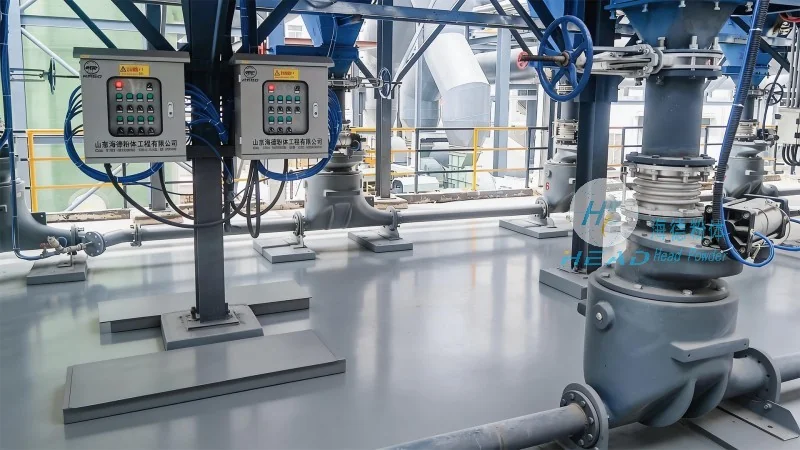
Company Profile and Location
HeadPowder Engineering Co., Ltd. is a reputable enterprise dedicated to providing high-quality engineering solutions for material handling and processing. With its headquarters located in Shandong, China, the company leverages local manufacturing capabilities and industry expertise to deliver reliable pneumatic conveying systems tailored to the needs of various industrial sectors. The company’s commitment to precision engineering and customer satisfaction has established it as a trusted partner in the field of bulk material transport.
Understanding Pneumatic Conveying Technology
Pneumatic conveying systems utilize air or gas to transport bulk materials from one location to another, offering a flexible and efficient alternative to traditional mechanical conveying methods. In the case of silicon carbide, a high-performance ceramic material widely used in refractory, abrasive, and semiconductor industries, pneumatic conveying ensures minimal material degradation, precise control over flow rates, and reduced maintenance requirements compared to other transport solutions.
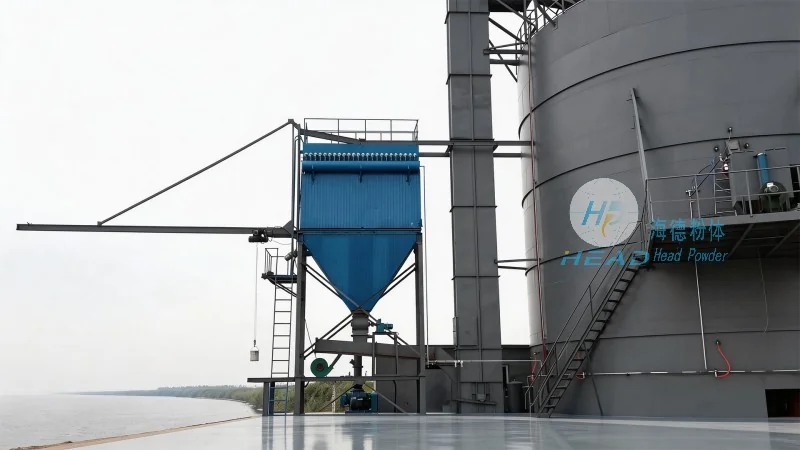
Key Components of a Silicon Carbide Pneumatic Conveying Line
The operation of a silicon carbide pneumatic conveying line involves several critical components that work in tandem to achieve smooth material transport. These components include the material hopper, which stores and feeds the silicon carbide powder; the air compressor or blower, which generates the necessary air pressure to move the material; the conveying line itself, typically made of durable materials such as stainless steel or special polymers to withstand the abrasive nature of SiC; and the control valves and sensors that regulate the flow and pressure of the system. Additionally, the system may incorporate dust collection and filtration units to maintain air quality and comply with environmental regulations.
The Operation Process: Step-by-Step Overview
The operation of a silicon carbide pneumatic conveying line follows a systematic process designed to ensure consistent and reliable material transport. The process begins with the loading of silicon carbide powder into the material hopper. As the hopper is filled, the air compressor starts, generating a flow of air that creates a vacuum or pressure differential within the conveying line. This differential forces the silicon carbide particles to be drawn or pushed through the line, depending on the system configuration (e.g., pressure or vacuum conveying). The material travels through the line at controlled velocities, minimizing particle breakage and ensuring uniform flow. At the discharge end, the silicon carbide is deposited into the receiving container, such as a silo or processing vessel. The system may also include intermediate cyclones or filters to separate any entrained air from the material, preventing dust accumulation and maintaining system efficiency.
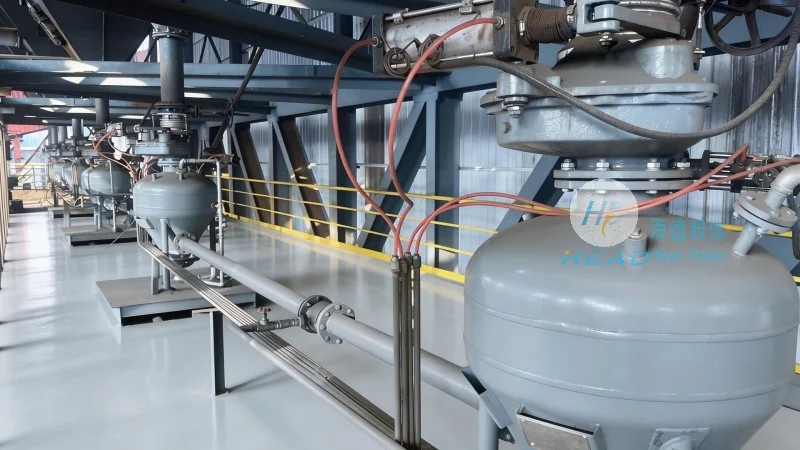
Working Principle: How the System Transfers Material
The working principle of a silicon carbide pneumatic conveying line is based on the fundamental physics of fluid dynamics and particle motion. When air is introduced into the conveying line, it creates a stream that interacts with the silicon carbide particles, lifting them from the hopper and transporting them to the discharge point. The key to efficient operation lies in maintaining the correct air-to-material ratio, which balances the velocity of the air stream with the size and density of the SiC particles. This ratio ensures that the particles remain suspended in the air stream without settling or clogging the line. The system’s control mechanisms, including pressure sensors and flow meters, continuously monitor these parameters to adjust the air supply as needed, optimizing the conveying process and preventing system failures.
Benefits and Applications of Silicon Carbide Pneumatic Conveying
Implementing a silicon carbide pneumatic conveying line offers numerous advantages for industrial operations. These benefits include reduced labor costs due to automated material handling, minimized material loss and contamination, improved safety by eliminating manual handling of abrasive materials, and enhanced process control through precise flow regulation. The technology is particularly well-suited for applications in the refractory industry, where silicon carbide is used as a raw material for high-temperature furnace linings, and in the abrasive industry, where it is used in grinding and polishing applications. Additionally, the system’s flexibility allows for integration with existing production lines, enabling seamless material transfer between processing stages.