

Operation Process and Working Principle of Industrial Salt Powder Conveying System
Shandong HeadPowder Engineering Co., Ltd. specializes in the design, manufacturing, and installation of industrial powder handling systems, including advanced solutions for transporting industrial salt. The company, known by the abbreviation "headpowder," is headquartered in Shandong, China, and has extensive experience in providing reliable and efficient equipment for various industrial applications.
Working Principle of the Industrial Salt Powder Conveying System
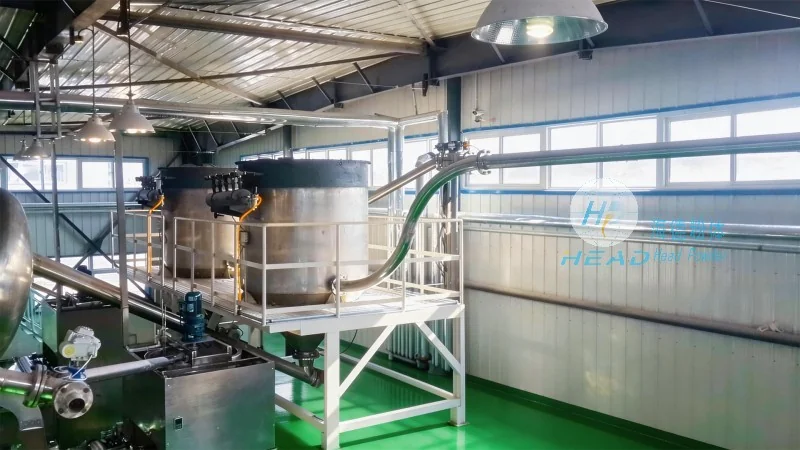
The industrial salt powder conveying system operates on the principle of mechanical transport, utilizing a combination of components to move bulk industrial salt from storage to processing or packaging areas. The system typically includes a hopper for material storage, a feeder to control the flow rate, a conveyor (such as a screw conveyor or pneumatic conveyor) to transport the salt, and a control system to regulate the entire process. The hopper ensures a consistent supply of salt, while the feeder maintains a steady flow, preventing overloading or underflow. The conveyor then transports the salt through a pipeline or along a trough, depending on the system design. A control panel monitors key parameters like pressure, flow rate, and temperature, ensuring the system runs smoothly and safely. This integrated approach allows for precise control over the conveying process, minimizing material loss and optimizing operational efficiency.
Operation Process of the Industrial Salt Powder Conveying System
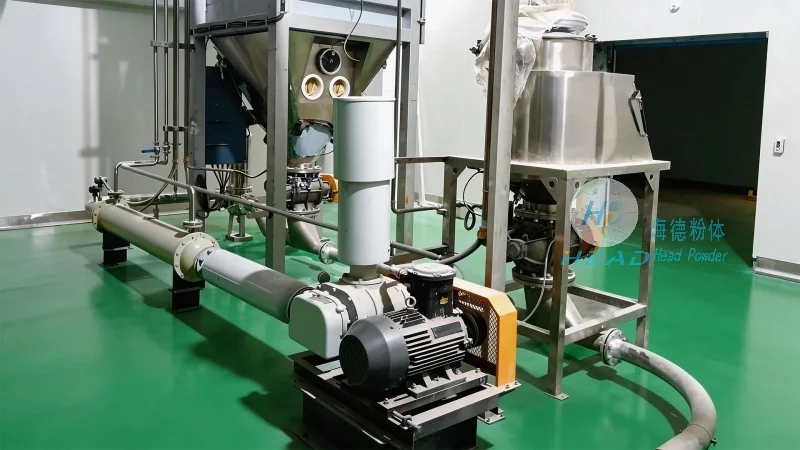
The operation process of the industrial salt powder conveying system begins with the loading of industrial salt into the hopper. The hopper is designed with a large capacity to accommodate bulk quantities of salt, ensuring a continuous supply for the conveying operation. Once the hopper is filled, the feeder activates, controlling the flow rate of the salt into the conveyor. The feeder may use a screw mechanism or a rotary valve to regulate the amount of material entering the conveyor, maintaining a consistent feed rate. The conveyor then transports the salt through the system, either via a screw conveyor that moves the material along a rotating shaft or a pneumatic conveyor that uses air pressure to push the salt through a pipeline. The control system continuously monitors the flow rate and pressure, adjusting the feeder speed or conveyor speed as needed to maintain optimal performance. At the discharge end, the salt is delivered to the next stage of the process, such as a mixer, packaging machine, or storage silo. The entire process is automated, with the control panel providing real-time data and alerts for any deviations from the set parameters. This automated operation ensures high efficiency, reduced labor costs, and consistent product quality.
Key Components and Their Functions
The industrial salt powder conveying system consists of several key components, each playing a critical role in the overall operation. The hopper is the primary storage unit, designed to hold large quantities of industrial salt and maintain a consistent material level. The feeder, often a screw feeder or a rotary valve, controls the flow rate of the salt from the hopper to the conveyor, ensuring a steady supply. The conveyor, which can be a screw conveyor or a pneumatic conveyor, is responsible for transporting the salt through the system. A screw conveyor uses a rotating screw to move the material along a trough, while a pneumatic conveyor uses compressed air to push the salt through a pipeline. The control system, including sensors and a control panel, monitors and regulates the operation of the feeder and conveyor, ensuring the system runs smoothly and safely. Additionally, the system may include a dust collection system to prevent dust emissions, a silencer to reduce noise, and a safety interlock to stop the system in case of an emergency. These components work together to provide a reliable and efficient solution for industrial salt powder handling.
Advantages of the Industrial Salt Powder Conveying System
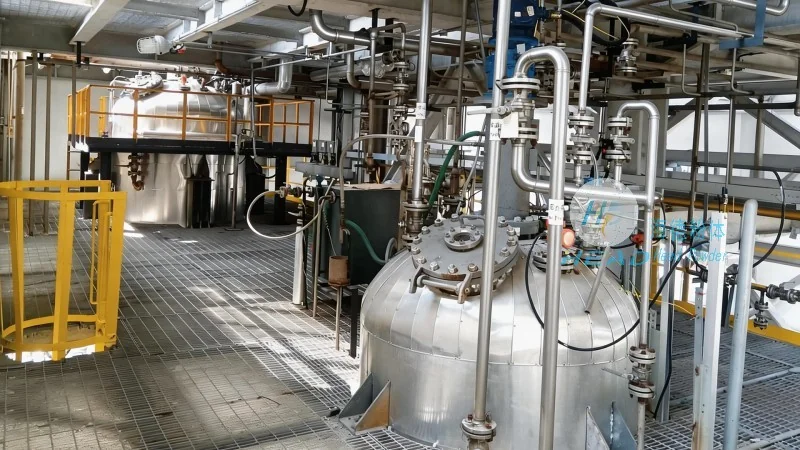
The industrial salt powder conveying system offers several advantages over traditional manual handling methods. First, it provides high efficiency and reliability, with automated control ensuring consistent operation. The system minimizes material loss and reduces labor costs by eliminating the need for manual handling. Additionally, the system improves safety by reducing the risk of accidents associated with manual handling of bulk materials. The precise control over flow rate and pressure ensures that the salt is transported without degradation or contamination. The system also allows for easy integration with other processing equipment, such as mixers or packaging machines, streamlining the overall production process. Finally, the system is designed for durability and low maintenance, with components that are resistant to corrosion and wear from the industrial salt. These advantages make the industrial salt powder conveying system an ideal solution for industrial applications requiring efficient and reliable bulk material transport.