

Operation Process and Working Principle of Phosphate Iron Powder Conveying System Equipment
Shandong HeadPowder Engineering Co., Ltd., a leading manufacturer based in Shandong, China, specializes in the design, development, and production of advanced powder handling systems. The phosphate iron powder conveying system equipment is a critical component in industrial applications where the efficient and reliable transport of phosphate iron powder is essential. This equipment is engineered to meet the stringent requirements of various industries, ensuring optimal performance and durability.
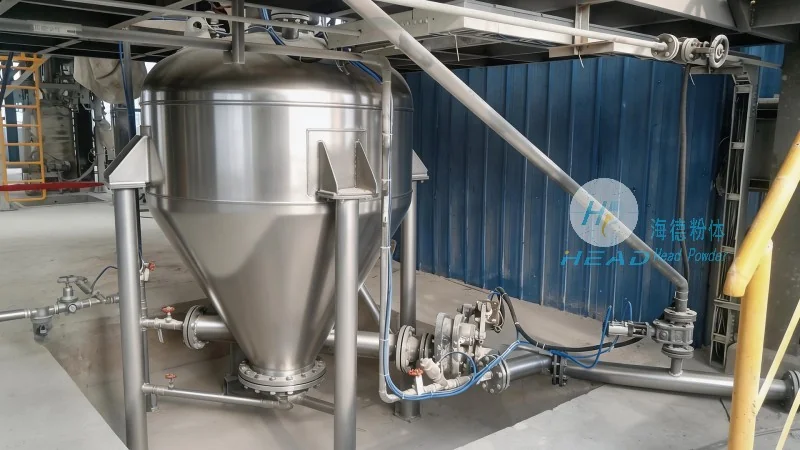
Key Components and Structure of the Conveying System
The phosphate iron powder conveying system typically consists of several key components that work in harmony to achieve seamless powder transport. These components include a hopper for material storage, a feeding mechanism to control the flow of powder, a conveyor system (such as a screw conveyor or pneumatic conveyor) to move the powder, and a control panel to monitor and adjust the operation. The design of the system is tailored to handle the specific properties of phosphate iron powder, including its particle size, density, and flow characteristics. The hopper is equipped with a discharge valve to regulate the material release, while the feeding mechanism ensures a consistent and controlled feed rate. The conveyor system is chosen based on the required throughput and the distance over which the powder needs to be transported. For example, a screw conveyor is suitable for short-distance, low-volume transport, while a pneumatic conveyor is ideal for longer distances or when the powder is prone to dust generation.
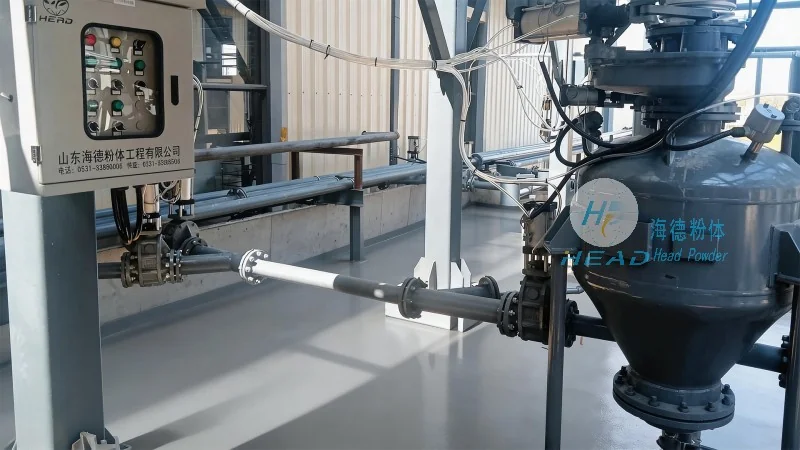
Operation Process of the Conveying System
The operation of the phosphate iron powder conveying system follows a systematic process to ensure efficient and safe material handling. The process begins with the loading of phosphate iron powder into the hopper. The hopper is designed with a capacity that matches the production requirements, allowing for continuous operation without frequent stops for refilling. Once the hopper is filled, the feeding mechanism activates, controlling the flow of powder into the conveyor system. The conveyor then transports the powder to the desired destination, such as a storage silo, a processing unit, or a packaging station. The control panel plays a crucial role in monitoring the system's performance, including the flow rate, pressure, and temperature. Operators can adjust the settings in real-time to maintain optimal operation. The system is equipped with safety features, such as overfill protection and emergency stop buttons, to prevent accidents and ensure the safety of personnel. The entire operation is automated to a large extent, reducing the need for manual intervention and minimizing the risk of human error.
Working Principle of the Conveying System
The working principle of the phosphate iron powder conveying system is based on the principles of fluidization and mechanical transport. The system uses a combination of air and mechanical forces to move the powder through the conveyor. In pneumatic conveying systems, compressed air is used to create a flow of air that carries the powder particles. The air velocity is carefully controlled to ensure that the powder particles are suspended and transported without causing blockages or damage to the equipment. The screw conveyor operates on the principle of screw rotation, which pushes the powder forward along the conveyor path. The pitch and diameter of the screw are designed to match the particle size and flow characteristics of the phosphate iron powder, ensuring smooth and continuous transport. The system also incorporates a dust collection system to capture any airborne particles, maintaining a clean and safe working environment. The control system uses sensors to monitor the pressure, flow rate, and temperature, and adjusts the air or screw speed accordingly to maintain stable operation. This feedback mechanism ensures that the system operates efficiently and reliably, even under varying load conditions.
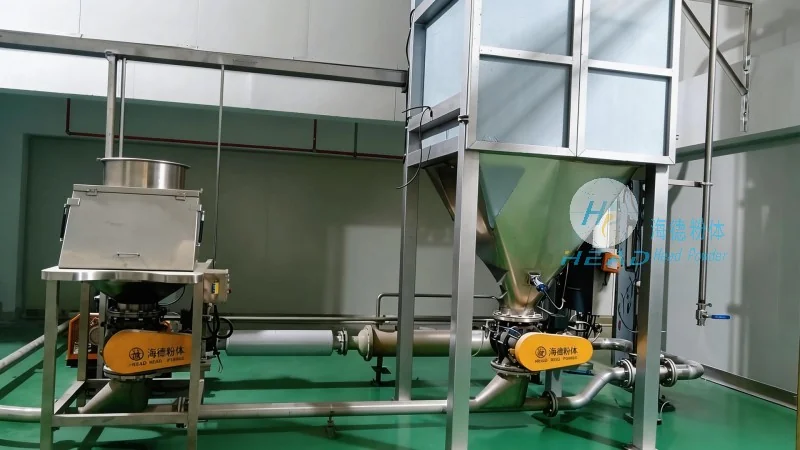
Advantages and Applications of the Conveying System
The phosphate iron powder conveying system offers several advantages that make it suitable for a wide range of industrial applications. One of the key advantages is its high efficiency, which allows for the continuous and reliable transport of large quantities of phosphate iron powder. The system is also designed for durability, with components made from corrosion-resistant materials to withstand the harsh conditions of industrial environments. Another advantage is its flexibility, as it can be customized to meet the specific requirements of different industries, such as pharmaceuticals, food processing, or chemical manufacturing. The system is also energy-efficient, with optimized designs that reduce power consumption while maintaining high performance. The phosphate iron powder conveying system is widely used in various applications, including the production of batteries, where phosphate iron powder is a key raw material. It is also used in the manufacturing of fertilizers, where the efficient transport of phosphate iron is critical for production efficiency. Additionally, the system is used in research and development laboratories, where precise and controlled transport of powder is required for experimental purposes.