

Design of a Pneumatic Conveying System for Graphite Powder
Graphite powder is a versatile material used across multiple industrial sectors, including refractory production, lubricant manufacturing, and battery technology. Efficient material handling is critical to maintaining production efficiency and product quality. A pneumatic conveying system provides an effective solution for transporting graphite powder from storage to processing units. This article outlines the key design considerations and essential components for developing a reliable pneumatic conveying system tailored to graphite powder applications.
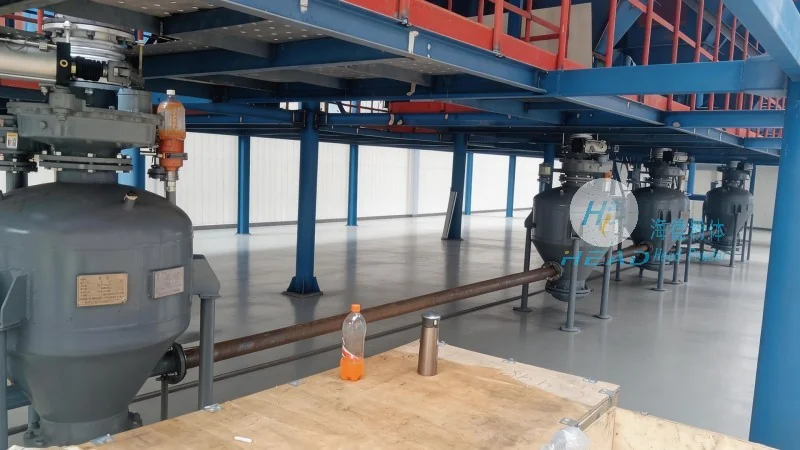
Introduction to Pneumatic Conveying for Graphite Powder
Pneumatic conveying systems utilize air or gas to transport bulk materials like graphite powder through a network of pipes. Unlike mechanical conveying methods, these systems offer advantages such as low maintenance requirements, flexible layout configurations, and the ability to handle materials with varying particle sizes and moisture content. For graphite powder, which is typically fine and can be prone to dusting, a well-engineered system is essential to prevent material degradation and ensure safe operation.
Key Design Factors for Graphite Powder Pneumatic Conveying
When designing a pneumatic conveying system for graphite powder, several critical factors must be evaluated to ensure optimal performance. The first consideration is the material's physical properties, including particle size distribution, density, and flowability. Graphite powder often exhibits a wide range of particle sizes, which influences the system's air velocity requirements and the choice between dilute phase or dense phase conveying. Additionally, the system must account for the material's tendency to agglomerate or form dust, requiring specialized equipment like rotary valves or airlocks to maintain consistent material flow.
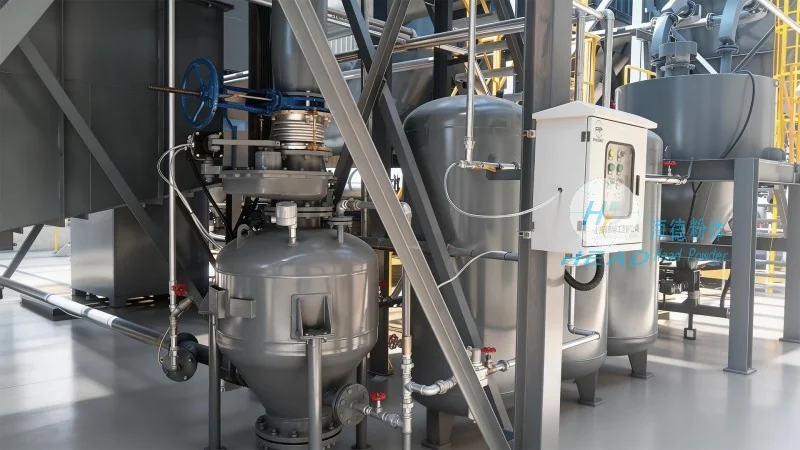
Another crucial design aspect is the system's pressure and air velocity. Dilute phase conveying typically uses higher air velocities to keep the powder suspended in the air stream, though this may increase energy consumption and wear on components. Dense phase conveying employs lower air velocities and higher material-to-air ratios, reducing wear and improving material handling efficiency. The selection between these methods depends on the conveying distance, material characteristics, and desired operational parameters.
Core Components of a Graphite Powder Pneumatic Conveying System
A typical pneumatic conveying system for graphite powder includes several essential components that work in unison. The primary components are a material feed hopper, a rotary valve or airlock for controlled material discharge, a conveying line (commonly made of stainless steel for corrosion resistance), a blower or compressor to generate air flow, and a receiver or discharge hopper at the destination. The feed hopper stores the graphite powder and provides a consistent feed rate, while the rotary valve ensures smooth material transfer into the conveying line.
The conveying line is a critical component, as it must withstand system pressure and temperature while maintaining a smooth material flow. Stainless steel is preferred due to its resistance to corrosion and abrasion from the graphite powder. The blower or compressor supplies the necessary air pressure and volume to move the material through the line. The receiver or discharge hopper collects the graphite powder and may include dust collection systems to ensure environmental compliance and material containment.
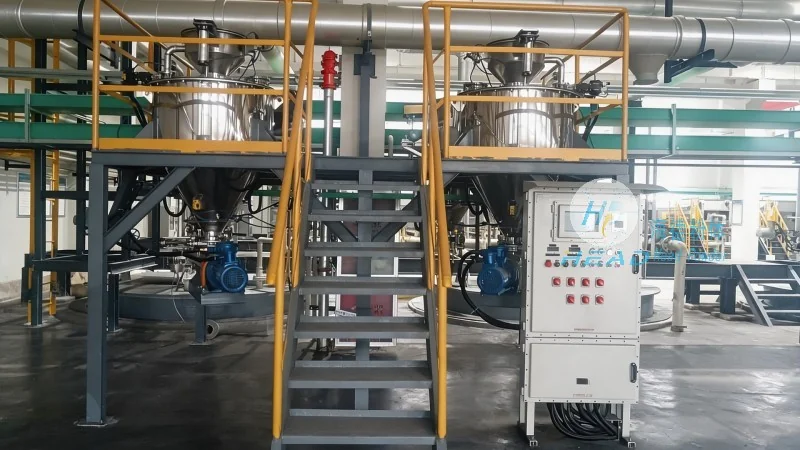
Application Examples and Performance Optimization
Graphite powder pneumatic conveying systems are widely used in industries such as refractory manufacturing, battery production, and lubricant formulation. For instance, in a refractory plant, the system may transport graphite powder from a storage silo to a mixing or molding machine. In battery manufacturing, it delivers graphite powder to coating or mixing lines for battery anode production. System performance can be optimized by monitoring air flow rate, pressure drop, and material flow rate. Regular maintenance, including line cleaning and component replacement, is vital to maintain efficiency and prevent downtime.
Shandong HeadPowder Engineering Co., Ltd., a leading provider of material handling solutions, specializes in designing and manufacturing customized pneumatic conveying systems for graphite powder applications. With extensive industry experience, the company offers comprehensive services including system design, equipment selection, and installation support. HeadPowder's expertise ensures systems meet specific client requirements, whether for small-scale laboratory use or large-scale industrial production. The company's commitment to quality and customer satisfaction has established it as a trusted partner for businesses seeking reliable and efficient material handling solutions.