

Pneumatic Conveying Design and Equipment Selection for Calcium Powder
HeadPowder, a leading engineering firm based in Shandong, China, specializes in the design and selection of pneumatic conveying systems tailored for calcium powder applications. This article provides a comprehensive overview of the key considerations and technical aspects involved in the design calculation and equipment selection process for calcium powder pneumatic conveying systems.
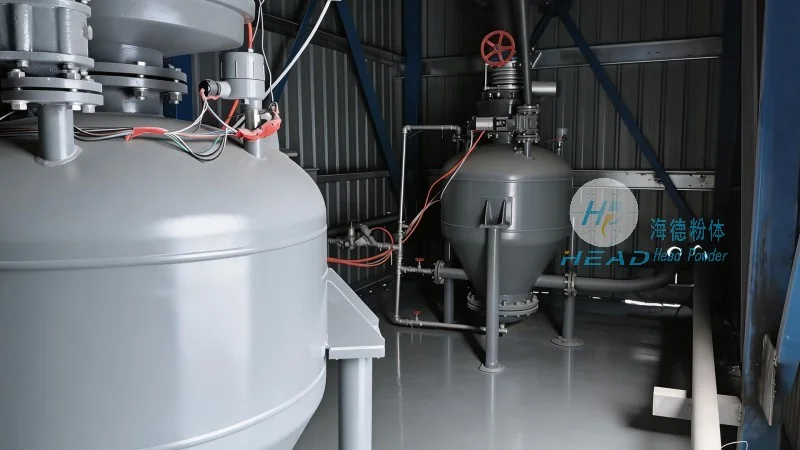
Key Design Considerations for Calcium Powder Pneumatic Conveying
When designing a pneumatic conveying system for calcium powder, several critical factors must be considered to ensure efficient and reliable operation. The first step is to assess the material properties of the calcium powder, including its particle size distribution, bulk density, and flowability. These properties directly impact the selection of the conveying method—whether it's a dilute phase or dense phase system. For calcium powder, which typically has a relatively fine particle size and moderate flowability, a dilute phase system is often preferred due to its lower pressure requirements and ability to handle longer conveying distances.
Calculation of Pneumatic Conveying Parameters
The design of a pneumatic conveying system involves several key calculations to determine the appropriate equipment and operating conditions. The first calculation is the determination of the required air velocity. This is crucial to prevent particle settling and ensure smooth material transport. The air velocity must be high enough to overcome the gravitational forces acting on the particles but low enough to avoid excessive pressure drop and energy consumption. The calculation typically involves the use of the Ergun equation or empirical correlations that relate the air velocity to the particle size and density. For calcium powder, the recommended air velocity is generally in the range of 20-30 m/s for dilute phase systems, depending on the specific particle characteristics.
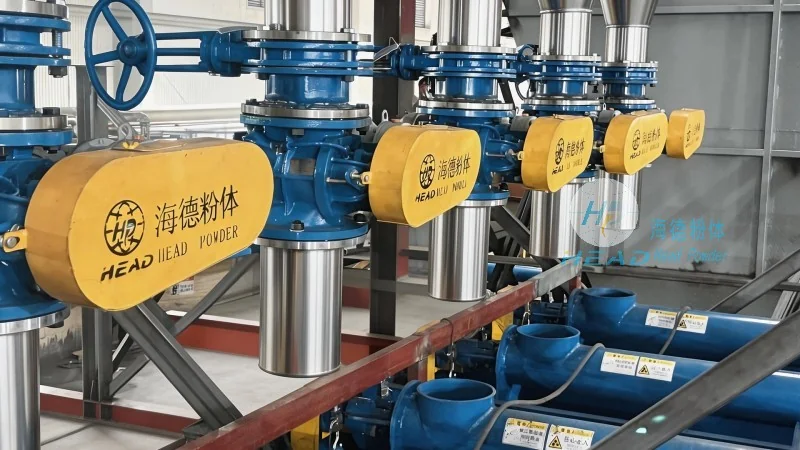
Equipment Selection for Calcium Powder Pneumatic Conveying
HeadPowder offers a range of equipment suitable for calcium powder pneumatic conveying, including rotary airlocks, feeders, and conveying pipelines. The rotary airlock is a critical component that prevents backflow of material and maintains a consistent flow rate. For calcium powder, a rotary airlock with a larger diameter and higher speed is recommended to handle the fine particles and prevent clogging. The feeder, such as a screw feeder or a rotary valve, is used to introduce the material into the conveying line at a controlled rate. The choice of feeder depends on the bulk density and flowability of the calcium powder. For cohesive or low-flowing materials, a screw feeder with variable speed control is preferred to ensure a stable feed rate. The conveying pipeline is typically made of stainless steel or plastic to prevent corrosion and material buildup. The pipeline diameter is determined based on the required air velocity and the material flow rate, with larger diameters used for higher flow rates to minimize pressure drop.
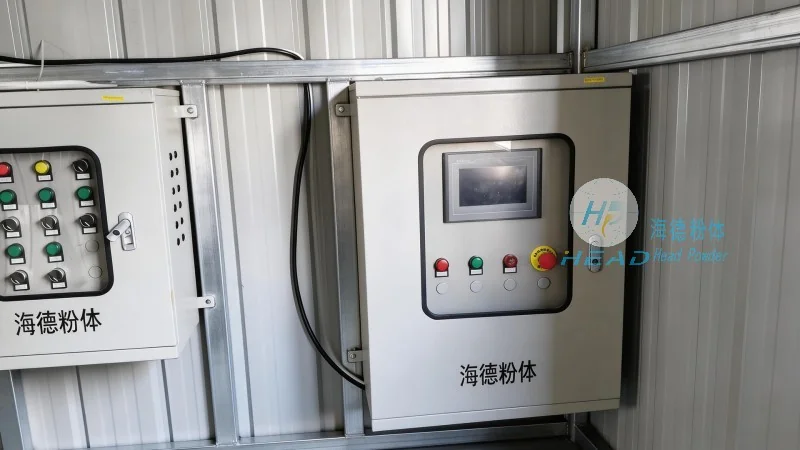
System Integration and Control
A well-designed pneumatic conveying system for calcium powder requires proper integration of all components and effective control mechanisms. The system should include a dust collection system to capture any airborne particles and prevent environmental contamination. The dust collector is typically a baghouse or a cartridge filter, depending on the dust load and operating conditions. The control system should monitor key parameters such as air pressure, flow rate, and material level, and adjust the operation accordingly to maintain optimal performance. HeadPowder provides comprehensive control solutions that integrate all components of the system, ensuring smooth and efficient operation.
Case Study: Successful Calcium Powder Pneumatic Conveying Implementation
HeadPowder has successfully implemented numerous calcium powder pneumatic conveying systems for various industrial applications. One notable case involved a client in the chemical industry who needed to transport calcium powder from a storage silo to a processing plant over a distance of 100 meters. The system was designed using a dilute phase pneumatic conveying system with a rotary airlock, screw feeder, and stainless steel pipeline. The air velocity was calculated to be 25 m/s, and the system was equipped with a dust collection system to meet environmental regulations. The implementation resulted in a significant reduction in material handling time and labor costs, with the system operating reliably for over two years with minimal maintenance.