

What is a Small Bag Dust-Free Feeding Station Material Pneumatic Conveying Line? And What Are Its De
A small bag dust-free feeding station material pneumatic conveying line is an automated conveying system specifically designed for handling small packaged materials, widely used in industries such as chemicals, pharmaceuticals, food, and feed. Through pneumatic conveying technology, this system transports bagged materials from storage areas to production equipment while ensuring the entire conveying process is dust-free and maintaining a clean working environment. For factories handling large volumes of small bag materials, this conveying line significantly improves production efficiency, reduces manual operation risks, and meets modern industrial requirements for environmental protection and hygiene.
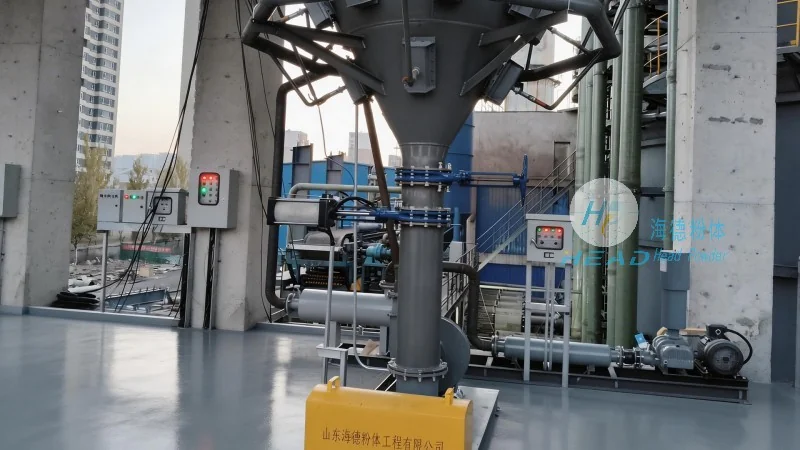
HeadPowder (Shandong HeadPowder Engineering Co., Ltd.) as a professional manufacturer in the industry, is committed to providing high-quality small bag dust-free feeding station material pneumatic conveying line solutions to customers worldwide. The company is located in Shandong, China, with rich industry experience and advanced R&D capabilities, able to customize conveying systems according to customer needs, ensuring stable performance and reliability while complying with international environmental standards.
Basic Composition and Working Process of the Small Bag Dust-Free Feeding Station Material Pneumatic Conveying Line
The small bag dust-free feeding station material pneumatic conveying line typically consists of several key components, including material receiving devices, pneumatic conveying pipelines, separators, filters, conveying fans, and control units. Its working process mainly involves the following steps: first, bagged materials are placed in the material receiving hopper of the feeding station by manual or mechanical means; then, the conveying fan starts, generating airflow to draw materials from the receiving hopper into the conveying pipeline; materials move along the pipeline with the airflow, separated from air by a separator; separated materials fall into a hopper and are then conveyed to production equipment by subsequent devices; while air passes through a filter to capture dust before being discharged, ensuring no pollution. The entire process uses negative or positive pressure conveying, selecting the appropriate pressure and airspeed based on material characteristics to achieve efficient and stable material transport.
Design Principles of Dust-Free Environment Control Technology
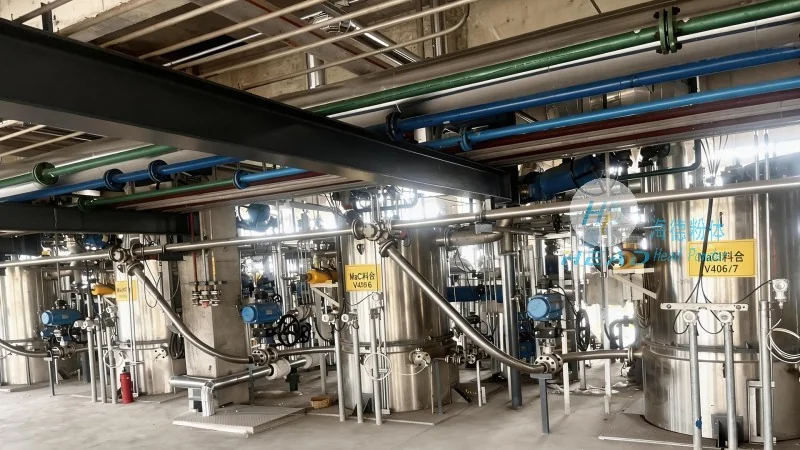
The core of the dust-free feeding station lies in its environmental control technology, aiming to minimize dust dispersion during material conveying. The system adopts a sealed design, with all material-contacting parts made of anti-dust materials like stainless steel or special plastics to prevent dust leakage. When using negative pressure conveying, the entire system is in a negative pressure state, preventing external air from entering and avoiding dust spread. Additionally, local exhaust systems are installed in material receiving and unloading areas to further reduce local dust concentration. Equipped with efficient dust collection devices such as cyclone separators and bag filters, the system effectively captures dust generated during conveying, ensuring emissions meet environmental standards. This design not only protects operator health but also meets modern industrial requirements for clean production environments.
Design Principles and Optimization of the Pneumatic Conveying System
The design principles of the pneumatic conveying system are based on fluid mechanics and material property analysis. First, the appropriate conveying method (suction or pressure) is selected based on material density, particle size, and moisture. For small bag materials, suction is typically used as it has lower pressure, causing less impact on materials and suitable for handling fragile or sensitive materials. System design involves calculating pipeline diameter, length, and fan power to ensure stable material transport. Additionally, pipeline layout and airflow velocity are optimized to avoid material accumulation or blockage. HeadPowder conducts detailed fluid dynamics simulations during design to optimize pipeline layout and airflow speed, reducing energy consumption and improving transport efficiency. Moreover, the system is equipped with automatic control devices that adjust fan speed based on material flow and pressure changes to maintain stable conveying and reduce energy consumption.
Advantages and Application Scenarios of the Small Bag Dust-Free Feeding Station Material Pneumatic Conveying Line
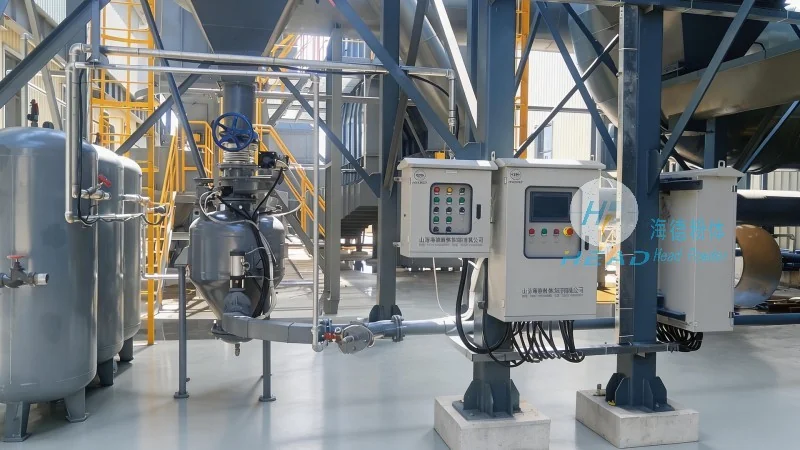
Compared to traditional manual or mechanical conveying methods, the small bag dust-free feeding station material pneumatic conveying line has several significant advantages. First, it enables automated and continuous material transport, greatly improving production efficiency and reducing manual operation time and labor intensity. Second, the system's dust-free design effectively controls dust pollution, improving the working environment and reducing health risks for operators. Furthermore, pneumatic conveying systems have strong adaptability to various material properties, handling multiple types of small bag materials including powders, granules, or bulk materials. Additionally, the system operates stably with low maintenance costs, reducing total ownership costs over the long term. In practical applications, this conveying line is widely used in chemical enterprises for raw material feeding, pharmaceutical factories for drug packaging material transport, food processing plants for feed handling, and feed enterprises for additive addition, providing efficient and environmentally friendly material transport solutions for different industries.
HeadPowder's Small Bag Dust-Free Feeding Station Material Pneumatic Conveying Line Solutions
Shandong HeadPowder Engineering Co., Ltd. (HeadPowder) leverages its professional knowledge and rich experience in industrial conveying equipment to provide customized small bag dust-free feeding station material pneumatic conveying line solutions for customers. The company not only offers standardized conveying equipment but also designs systems according to special customer needs, such as designing more efficient filtration systems for high-dust materials or explosion-proof conveying devices for flammable and explosive materials. HeadPowder's conveying lines are manufactured with high-quality materials like food-grade stainless steel, ensuring safety and hygiene for material-contacting parts. Additionally, the company provides comprehensive after-sales service and technical support, including equipment installation, commissioning, training, and long-term maintenance, ensuring customers can fully utilize equipment performance to maximize production efficiency. By adopting HeadPowder's small bag dust-free feeding station material pneumatic conveying line, enterprises can not only enhance production efficiency and reduce operating costs but also meet modern industrial requirements for environmental protection and hygiene, strengthening market competitiveness.