

Operation Process and Working Principle of Pneumatic Conveying System for Positive and Negative Elec
The pneumatic conveying system designed for positive and negative electrode powder materials is a specialized equipment used in the battery manufacturing industry. This system efficiently handles the transportation of fine powders, ensuring high precision and minimal material loss during the process. As a key component in the production line, it plays a crucial role in maintaining the quality and consistency of electrode materials, which are essential for the performance of lithium-ion batteries. The system is engineered to meet the stringent requirements of modern battery production, where the purity and uniformity of electrode powders directly impact the efficiency and lifespan of the final battery products.
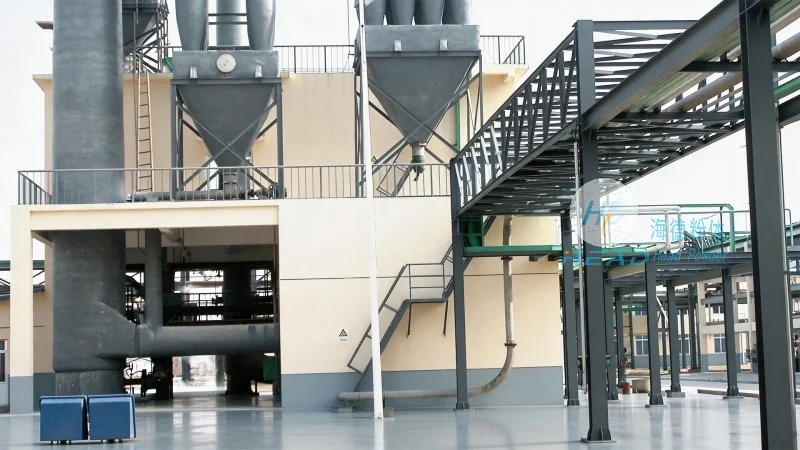
Company Overview: Shandong HeadPowder Engineering Co., Ltd.
HeadPowder, the developer and manufacturer of this advanced pneumatic conveying system, is a leading company in the field of powder handling technology. With its headquarters located in Shandong, China, the company specializes in engineering solutions tailored to the specific needs of the battery and material processing industries. The company's expertise lies in designing and implementing systems that enhance operational efficiency, safety, and product quality for clients worldwide. As a trusted partner in the battery supply chain, HeadPowder has established a reputation for delivering high-performance equipment that meets international standards and client-specific requirements.
System Components and Working Principle
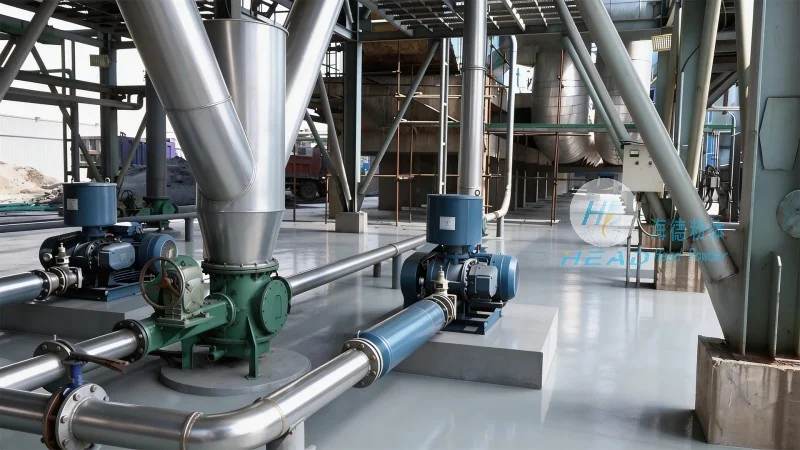
The pneumatic conveying system for electrode powders typically consists of several key components, including a material hopper, a rotary airlock valve, a conveying pipeline, a dust collection unit, and a discharge hopper. The working principle involves the use of compressed air to create a flow that transports the powder from the source to the destination. When the material is introduced into the hopper, it is fed into the conveying line through the rotary airlock valve, which controls the flow rate and prevents backflow. The compressed air, often supplied by an air compressor, creates a pressure differential that propels the powder particles through the pipeline. The system may employ different conveying modes, such as dilute-phase or dense-phase, depending on the material characteristics and the required transport distance. In dilute-phase conveying, the powder is suspended in the air stream, while in dense-phase conveying, the powder is transported in a more compact form, reducing the risk of particle degradation.
Operation Process of the System
The operation process of the pneumatic conveying system for positive and negative electrode powders begins with the loading of the powder material into the hopper. The rotary airlock valve then regulates the feed rate, ensuring a consistent flow of powder into the conveying line. Compressed air is introduced at the inlet of the pipeline, creating a high-velocity airflow that entrains the powder particles. As the mixture travels through the pipeline, it reaches the discharge hopper at the receiving end. The air and powder are separated in the dust collector, where the air is filtered and the powder is collected for further processing. This process is automated and can be controlled via a programmable logic controller (PLC), allowing for precise control over the conveying parameters such as air pressure, flow rate, and material feed rate. The system also includes safety features like pressure relief valves and overfill protection to ensure safe operation and prevent equipment damage.
Advantages and Applications
The pneumatic conveying system offers several advantages over traditional methods like bucket elevators or belt conveyors. It provides a dust-free and enclosed environment, reducing the risk of material contamination and improving workplace safety. The system also minimizes material degradation due to reduced friction and impact during transportation. Additionally, it can handle a wide range of powder characteristics, including different particle sizes, densities, and moisture contents. In the battery manufacturing industry, this system is widely used for transporting active materials like lithium cobalt oxide (LCO), lithium iron phosphate (LFP), and other electrode powders, ensuring that the materials are delivered to the next production stage in a clean and efficient manner. The system's ability to maintain the integrity of the powder particles is critical for achieving high battery performance, as any contamination or degradation can significantly affect the battery's energy density and cycle life.
Technical Specifications and Customization
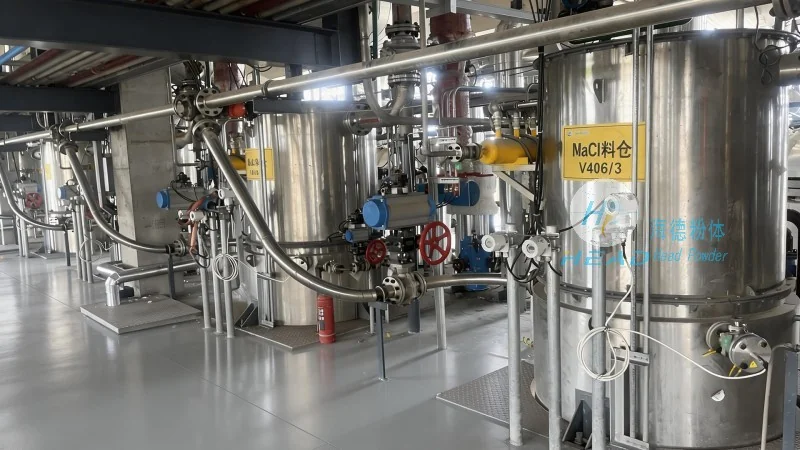
HeadPowder's pneumatic conveying system for electrode powders is available in various configurations to suit different production requirements. The system can be customized in terms of pipeline length, material hopper capacity, and air compressor capacity. For example, for short-distance transport, a dilute-phase system may be sufficient, while for longer distances, a dense-phase system with higher air pressure is recommended. The company also offers optional features such as temperature control, moisture removal, and particle size classification to further enhance the system's performance. These customizations ensure that the system is optimized for the specific material being handled and the production environment, providing clients with a tailored solution that meets their operational needs.
Maintenance and Service
To ensure the long-term reliability and efficiency of the pneumatic conveying system, regular maintenance is essential. HeadPowder provides comprehensive maintenance services, including routine inspections, cleaning of the conveying line and dust collector, and replacement of worn parts. The company's technical team is trained to handle various maintenance tasks, from simple cleaning to complex repairs. By adhering to a regular maintenance schedule, clients can minimize downtime and maximize the system's operational life. Additionally, HeadPowder offers technical support and training to clients, ensuring that operators are well-equipped to handle any issues that may arise during system operation. This comprehensive service approach helps clients maintain the system's performance and extend its lifespan, providing a cost-effective solution for their powder handling needs.