

Operation Process and Working Principle of Phosphorus Pentoxide Powder Pneumatic Conveying Line
Phosphorus pentoxide (P₂O₅) is a critical chemical compound widely used in various industrial applications, including chemical synthesis, pharmaceuticals, and as a drying agent. The efficient and safe transportation of P₂O₅ powder is essential for industrial processes, and pneumatic conveying systems offer a reliable solution. This article provides an in-depth look at the operation process and working principle of a P₂O₅ powder pneumatic conveying line, highlighting the key components, operational steps, and technical considerations.
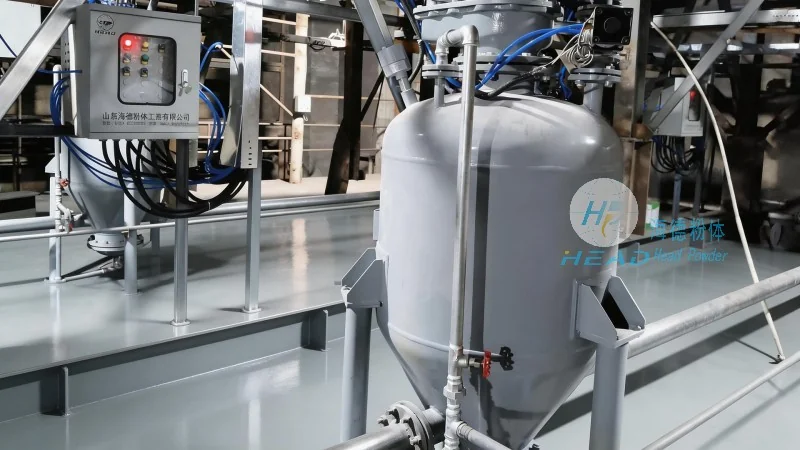
Key Components of the Pneumatic Conveying System
The P₂O₅ powder pneumatic conveying line typically consists of several essential components that work in tandem to ensure smooth material transport. These components include the material hopper, feeder, air compressor, conveying pipe, and dust collector. Each component plays a crucial role in the overall system performance.
The material hopper is designed to store the P₂O₅ powder and maintain a consistent feed rate. It often features a conical bottom to facilitate smooth discharge and prevent material bridging. The feeder, usually a rotary valve or a screw feeder, controls the flow of powder from the hopper into the conveying line. The air compressor generates the necessary air pressure to move the powder particles through the system. The conveying pipe, made of materials resistant to chemical corrosion (such as stainless steel or special plastics), transports the powder-air mixture. Finally, the dust collector removes any fine particles from the exhaust air, ensuring compliance with environmental regulations and maintaining a clean working environment.
Working Principle of the Pneumatic Conveying Process
The operation of the P₂O₅ powder pneumatic conveying line follows a systematic process. The sequence begins with the powder being fed from the hopper into the feeder. The feeder then releases the powder into the conveying pipe at a controlled rate. Simultaneously, the air compressor supplies compressed air into the pipe, creating a flow that carries the powder particles. The powder-air mixture travels through the pipe to the destination point, such as a storage silo or processing unit. At the receiving end, the powder is separated from the air, often using a cyclone separator or a filter, and the air is then discharged or recirculated.
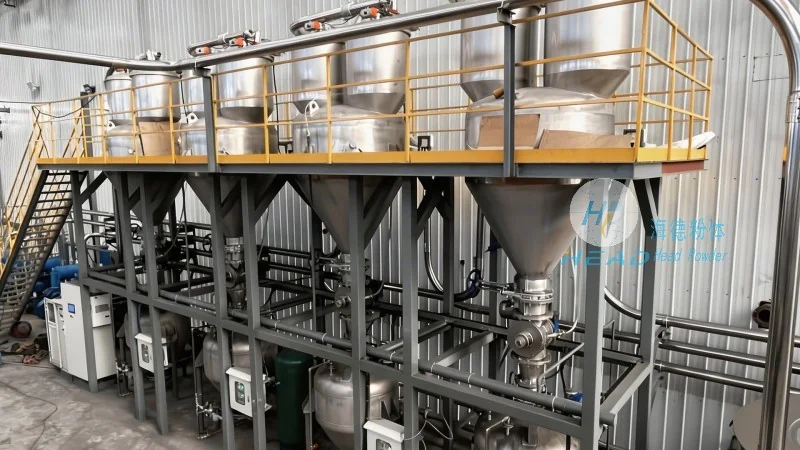
During the conveying process, the air velocity must be maintained above the minimum fluidization velocity of the P₂O₅ powder to prevent particle settling and blockages. The system also incorporates pressure relief valves and check valves to manage pressure fluctuations and ensure safe operation. The dust collector is an integral part of the system, as P₂O₅ is a fine powder that can generate significant dust, posing health and safety risks if not properly contained.
Operational Steps and Process Flow
The operational steps of the P₂O₅ powder pneumatic conveying line are as follows: 1. Material loading: The P₂O₅ powder is loaded into the hopper from a bulk storage or production line. 2. Feeding control: The rotary valve or screw feeder regulates the powder flow into the conveying pipe. 3. Air compression: The air compressor generates compressed air, which is introduced into the pipe. 4. Conveying: The powder-air mixture travels through the pipe to the destination. 5. Separation: At the receiving end, the powder is separated from the air using a separator. 6. Dust collection: The exhaust air is passed through the dust collector to remove fine particles. 7. System monitoring: Continuous monitoring of pressure, flow rate, and air temperature ensures optimal performance and early detection of any issues.
Each step is critical to the overall efficiency and safety of the system. Proper control of the feeder speed and air pressure is essential to maintain a stable conveying rate and prevent overloading or underloading of the system. The system also includes safety features such as pressure relief valves to prevent over-pressurization and emergency shut-off valves in case of equipment failure.
Technical Considerations and Optimization
Several technical factors must be considered to optimize the performance of the P₂O₅ powder pneumatic conveying line. The particle size and density of the P₂O₅ powder affect the air velocity required for effective conveying. Larger or denser particles may require higher air velocities or different conveying pipe diameters. The system design must also account for the chemical properties of P₂O₅, which is hygroscopic and can react with moisture or air. Materials of construction, such as stainless steel or corrosion-resistant plastics, are used to prevent degradation of the equipment and ensure product purity.
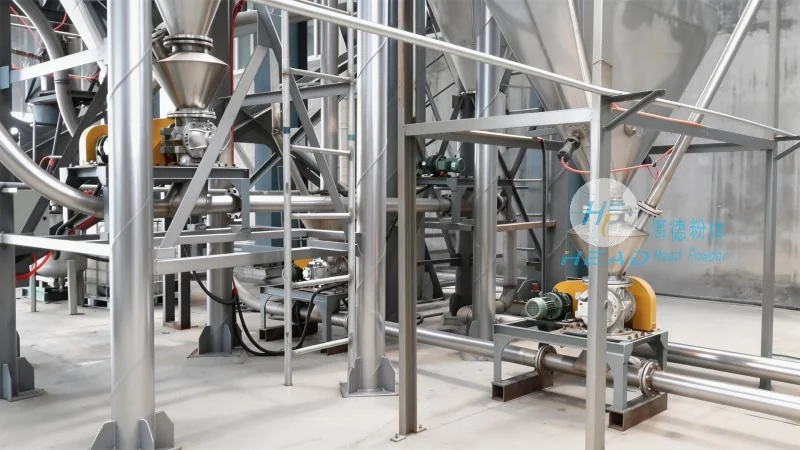
System maintenance is another important aspect of optimizing performance. Regular cleaning of the hopper, feeder, and conveying pipe is necessary to prevent material buildup and blockages. The air compressor and dust collector require periodic maintenance to ensure they operate efficiently and within specifications. Monitoring the system's performance parameters, such as pressure drop and flow rate, helps identify any degradation or inefficiencies early, allowing for timely adjustments or repairs.
Company Profile: Shandong HeadPowder Engineering Co., Ltd.
Shandong HeadPowder Engineering Co., Ltd., commonly known as headpowder, is a leading manufacturer and supplier of industrial pneumatic conveying systems. With a focus on innovation and quality, the company specializes in designing and manufacturing customized solutions for various powder handling applications, including the P₂O₅ powder pneumatic conveying line. Headpowder's expertise lies in understanding the unique properties of different powders and tailoring the system components to meet specific operational requirements.
The company's facilities are located in Shandong, China, where it employs a team of experienced engineers and technicians dedicated to research, development, and production. Headpowder adheres to international quality standards and provides comprehensive after-sales support, including installation, training, and maintenance services. By leveraging advanced technology and a customer-centric approach, headpowder ensures that its pneumatic conveying systems deliver reliable performance and contribute to the efficiency of industrial processes.