

Operation Process and Working Principle of Titanium Dioxide Powder Material Pneumatic Conveying
HeadPowder, a leading provider in the field of material handling solutions, specializes in the design, manufacturing, and implementation of advanced pneumatic conveying systems for titanium dioxide powder. This article delves into the operational process and underlying principles of such systems, highlighting the technical aspects and practical applications that ensure efficient and reliable material transport.
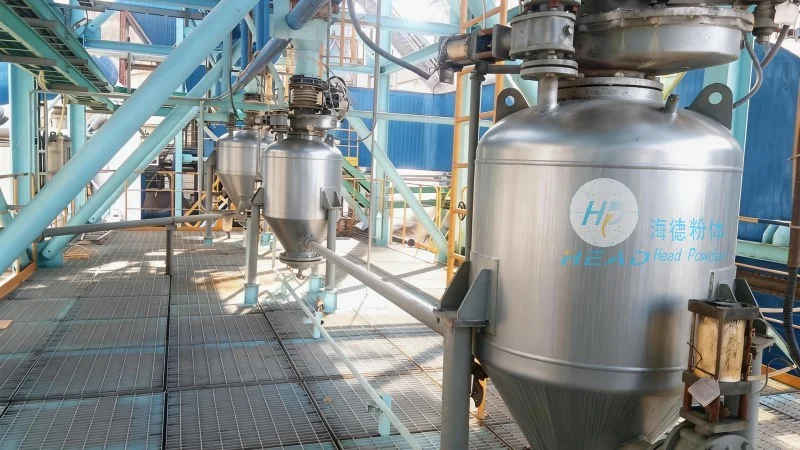
Introduction to Pneumatic Conveying Systems for Titanium Dioxide
Titanium dioxide (TiO₂) is a critical white pigment widely used in various industries, including coatings, plastics, paper, and cosmetics. Its fine particle size and high bulk density make traditional mechanical conveying methods inefficient and often problematic due to issues like dust generation, blockages, and material degradation. Pneumatic conveying offers a superior alternative, enabling the safe, clean, and continuous transport of TiO₂ powder from storage silos to processing units or packaging areas.
Key Components of a Pneumatic Conveying System
The pneumatic conveying system for titanium dioxide powder typically consists of several essential components, each playing a crucial role in the overall operation. These include:
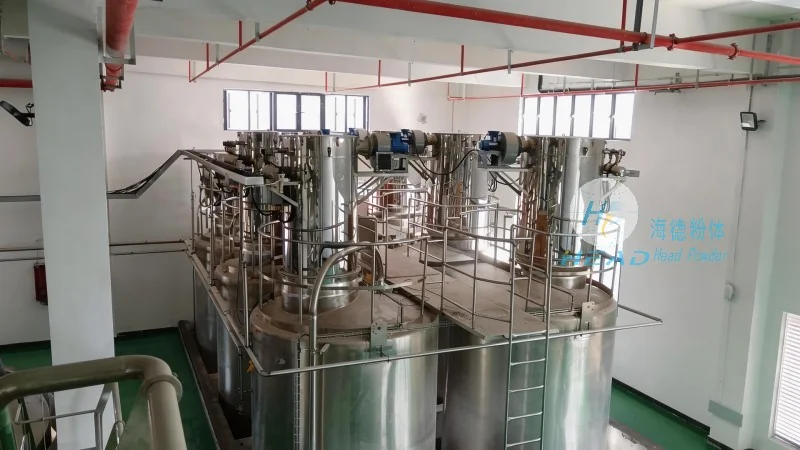
- Feed Hopper: A storage vessel that holds the titanium dioxide powder, equipped with a discharge valve to control the flow rate.
- Conveying Line: A pipeline system, often made of stainless steel or other corrosion-resistant materials, designed to withstand the abrasive nature of TiO₂ particles.
- Air Supply System: Compressors and air treatment units that generate and condition the air used for conveying, ensuring it meets the required pressure and purity standards.
- Control Valves and Regulators: Devices that manage the air flow and pressure within the system, allowing for precise control over the conveying rate and preventing overpressurization.
- Receiver or Discharge Hopper: The final storage or processing vessel where the titanium dioxide powder is deposited after being conveyed.
The Operational Process of Pneumatic Conveying
The operation of a pneumatic conveying system for titanium dioxide powder involves a series of coordinated steps, starting from the initial feeding of the material to the final discharge. The process can be broken down as follows:
- Material Loading: The titanium dioxide powder is loaded into the feed hopper from bulk storage containers or production lines. The hopper is designed to maintain a consistent material level, preventing overfilling or underfilling.
- Air Compression and Conditioning: The air supply system compresses ambient air and conditions it by filtering out moisture and particulates. This ensures that the conveying air is clean and free from contaminants that could affect the quality of the TiO₂ powder.
- Material Discharge and Air Injection: When the system is activated, the discharge valve in the feed hopper opens, allowing the titanium dioxide powder to flow into the conveying line. Simultaneously, compressed air is introduced at the inlet of the line, creating a flow that entrains the powder particles and propels them through the pipeline.
- Powder Transport: The air and powder mixture travels through the conveying line at a controlled velocity, typically ranging from 20 to 40 meters per second, depending on the system design and material characteristics. The high velocity ensures that the powder particles remain suspended and are transported efficiently without settling or clogging.
- Deceleration and Separation: As the mixture approaches the receiver or discharge hopper, the air velocity is reduced, causing the titanium dioxide powder to separate from the air stream. The powder then falls into the receiver, while the air is either vented to the atmosphere or recycled back to the system.
- System Termination: Once the material has been fully conveyed, the system is shut down, and the air pressure is released. The receiver is then emptied, and the process can be repeated as needed.
Working Principle of Pneumatic Conveying
The fundamental principle behind pneumatic conveying of titanium dioxide powder is the use of air as a medium to transport solid particles. This process relies on the interaction between the air flow and the powder particles, which can be categorized into two main types: dilute-phase and dense-phase conveying.
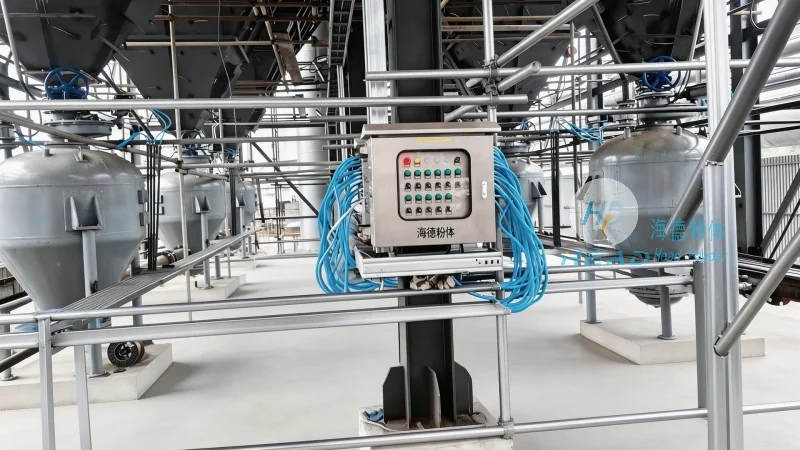
Dilute-Phase Conveying: In this mode, the powder particles are suspended in the air stream as individual particles, with a low solid-to-air ratio (typically less than 0.1 kg of powder per kg of air). This method is characterized by high conveying velocities and relatively low pressure drops, making it suitable for long-distance transport and applications where minimal pressure is required.
Dense-Phase Conveying: Conversely, dense-phase conveying involves a higher solid-to-air ratio (typically 0.2 to 0.5 kg of powder per kg of air) and lower conveying velocities. The powder particles are carried in a more compact manner, often as a slurry or a dense stream, which reduces the risk of particle degradation and clogging. This mode is preferred for short-distance transport or when handling sensitive materials.
The choice between dilute-phase and dense-phase conveying depends on factors such as the distance between the feed and discharge points, the particle size and density of the titanium dioxide powder, and the required system pressure. Both methods are effective, but dense-phase conveying is generally more suitable for handling fine powders like TiO₂, as it minimizes the risk of particle attrition and ensures a more stable and controlled transport process.
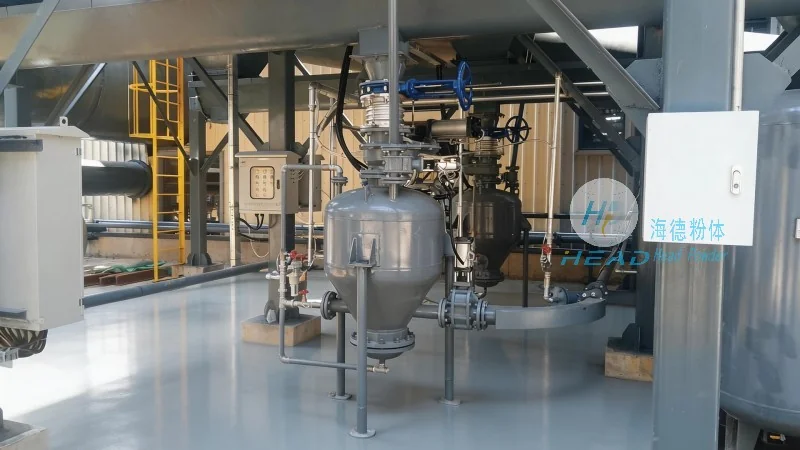
Advantages of Pneumatic Conveying for Titanium Dioxide
Pneumatic conveying systems offer several significant advantages over traditional mechanical conveying methods, making them the preferred choice for handling titanium dioxide powder:
- Efficiency and Reliability: The continuous operation of pneumatic systems ensures a steady flow of material, reducing downtime and improving overall production efficiency.
- Cleanliness and Hygiene: The enclosed pipeline system prevents dust contamination and environmental pollution, maintaining a clean working environment and ensuring the quality of the TiO₂ powder remains uncompromised.
- Flexibility and Scalability: Pneumatic conveying systems can be easily modified or expanded to accommodate changes in production volume or process requirements, providing long-term flexibility for industrial applications.
- Reduced Maintenance: Compared to mechanical systems, pneumatic conveying has fewer moving parts, resulting in lower maintenance costs and longer service life.
- Energy Efficiency: Modern pneumatic systems are designed to optimize air usage, minimizing energy consumption while maintaining high conveying performance.
Conclusion
HeadPowder's expertise in designing and implementing pneumatic conveying systems for titanium dioxide powder highlights the importance of advanced material handling solutions in modern industrial processes. By understanding the operational process and working principles of such systems, industries can achieve efficient, reliable, and cost-effective transport of TiO₂ powder, ensuring optimal performance and product quality. With a focus on innovation and customer-centric solutions, HeadPowder continues to lead the way in providing tailored material handling solutions that meet the evolving needs of the titanium dioxide industry.