

Operation Process and Working Principle of Fine Powder Pneumatic Conveying System Equipment
HeadPowder, a leading manufacturer based in Shandong, China, specializes in the design, production, and installation of advanced fine powder pneumatic conveying systems. These systems are engineered to efficiently transport fine powders such as cement, flour, and other dry bulk materials over long distances with minimal loss and high reliability. This article delves into the operational process and underlying working principles of these critical industrial equipment, providing a comprehensive understanding for professionals in the field.
Overview of Fine Powder Pneumatic Conveying Systems
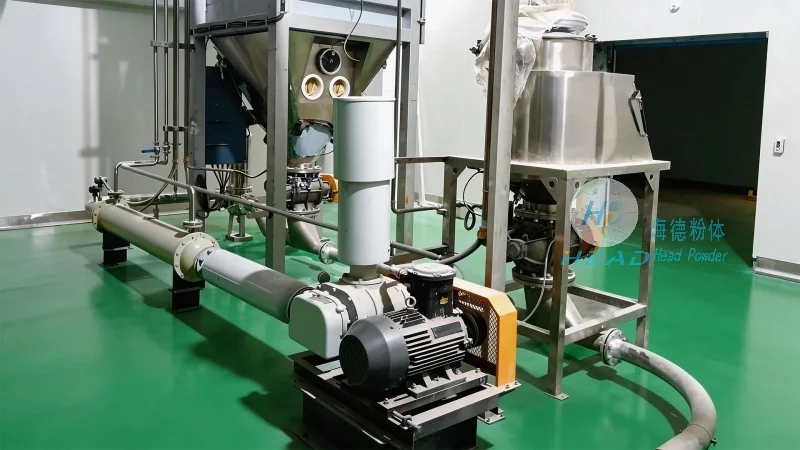
Fine powder pneumatic conveying systems are sophisticated industrial solutions that utilize air or gas as the conveying medium to transport dry bulk materials. Unlike traditional mechanical conveyors, these systems offer advantages such as low maintenance, ability to handle fragile or sensitive materials, and flexibility in layout. The core components of a typical system include a material hopper, a feeding device, a conveying pipeline, a control unit, and a dust collection system. Each component plays a crucial role in ensuring the smooth and efficient operation of the entire system.
Key Components and Their Functions
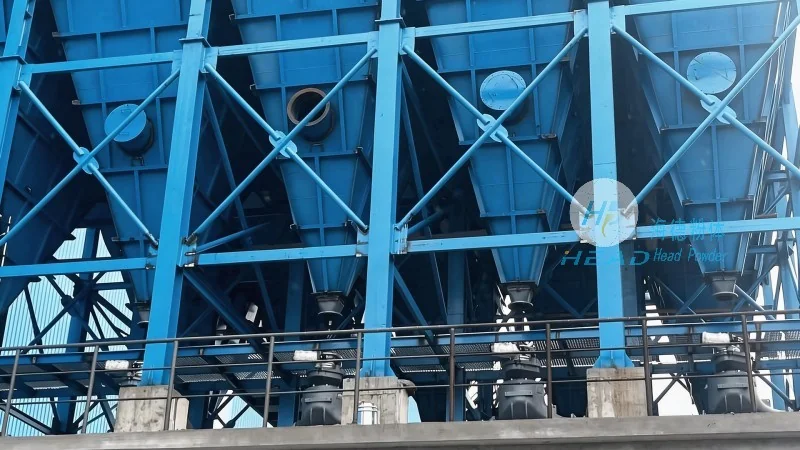
The performance of a fine powder pneumatic conveying system heavily relies on the integration and proper functioning of its key components. The material hopper serves as the storage container for the dry bulk material, ensuring a consistent supply to the feeding mechanism. The feeding device, often a rotary valve or a screw feeder, regulates the flow rate of the material into the conveying pipeline. The conveying pipeline, typically made of stainless steel or other corrosion-resistant materials, transports the material and air mixture. The control unit manages the air pressure, flow rate, and other operational parameters to maintain optimal conveying conditions. Finally, the dust collection system captures any fine particles that may escape during the process, ensuring environmental compliance and product purity.
The Operational Process: Step-by-Step
The operation of a fine powder pneumatic conveying system follows a systematic sequence to ensure efficient material transport. The process begins with the material being loaded into the hopper. The feeding device then starts to discharge the material at a controlled rate into the conveying pipeline. Simultaneously, the system's air compressor generates compressed air, which is introduced into the pipeline at the inlet. The air and material mixture travels through the pipeline under pressure, with the air velocity sufficient to lift and transport the fine powder particles. As the mixture moves, it may encounter expansion or contraction sections in the pipeline, which are designed to adjust the air flow and material distribution. At the discharge end, the material is separated from the air, often through a cyclone separator or a filter, and collected in the receiving hopper. The air, now free of dust, is either recirculated back into the system or released through a vent.
Working Principle: The Physics Behind Conveying
The working principle of fine powder pneumatic conveying systems is based on the fundamental physics of fluid dynamics and particle motion. The core concept is to create a high-velocity air stream within the conveying pipeline that can overcome the gravitational force acting on the fine powder particles. The air velocity must be greater than the terminal velocity of the particles, which is the maximum speed at which a particle can be suspended in the air stream. This suspension allows the particles to be carried along the pipeline without settling. The system's design, including the air pressure, flow rate, and pipeline diameter, is carefully optimized to achieve this suspended state. Additionally, the system may employ different conveying modes, such as dilute phase or dense phase, depending on the material characteristics and required conveying distance. Dilute phase conveying uses higher air velocities and lower material concentrations, while dense phase conveying uses lower air velocities and higher material concentrations, offering different advantages in terms of energy efficiency and material handling.
Advantages and Applications
Fine powder pneumatic conveying systems offer numerous advantages over traditional conveying methods, making them ideal for a wide range of industrial applications. These systems are highly efficient in transporting fine powders over long distances with minimal material loss and degradation. They are also capable of handling fragile or sensitive materials without causing breakage or contamination. The systems are versatile and can be customized to suit various production requirements, including different material types, conveying distances, and throughput capacities. Common applications include the transportation of cement in construction industries, flour in food processing, and various chemicals in pharmaceutical and chemical manufacturing. The systems are also used in industries where dust control and environmental compliance are critical, as they effectively capture and manage dust emissions.
Maintenance and Operational Considerations
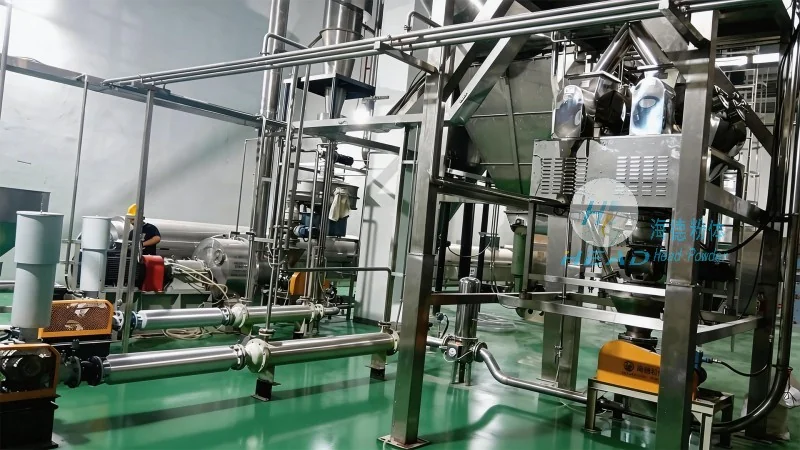
Proper maintenance and operational considerations are essential to ensure the long-term reliability and efficiency of fine powder pneumatic conveying systems. Regular inspection and cleaning of the material hopper, feeding device, and conveying pipeline are necessary to prevent clogging and material buildup. The air compressor and control unit should be checked regularly for proper operation and maintenance. The dust collection system must be maintained to ensure effective filtration and prevent dust accumulation. Operational parameters, such as air pressure and flow rate, should be monitored and adjusted as needed to maintain optimal conveying conditions. Additionally, training of operators on the proper use and maintenance of the system is crucial to prevent accidents and ensure smooth operation.
Conclusion
Fine powder pneumatic conveying systems are advanced industrial equipment that play a vital role in the efficient and reliable transport of dry bulk materials. The operational process, which involves material feeding, air compression, and pipeline transport, is carefully designed to ensure optimal performance. The working principle, based on fluid dynamics and particle suspension, enables the system to handle fine powders with precision and efficiency. With their numerous advantages and versatile applications, these systems are indispensable in various industries. Proper maintenance and operational management are essential to maximize the system's lifespan and performance. As a leading manufacturer based in Shandong, China, HeadPowder continues to innovate and provide high-quality fine powder pneumatic conveying systems to meet the evolving needs of the industrial sector.