

Operation Process and Working Principle of Thermoplastic Polyurethane Pneumatic Conveying System Equ
Thermoplastic polyurethane (TPU) pneumatic conveying systems represent a sophisticated solution for material handling in various industrial applications. These systems are engineered to efficiently transport bulk materials through an air-driven mechanism, offering advantages such as low maintenance, high reliability, and adaptability to diverse operational environments. The equipment, developed by Shandong HeadPowder Engineering Co., Ltd., is designed to meet the stringent demands of modern manufacturing processes, ensuring seamless material transfer from source to destination.
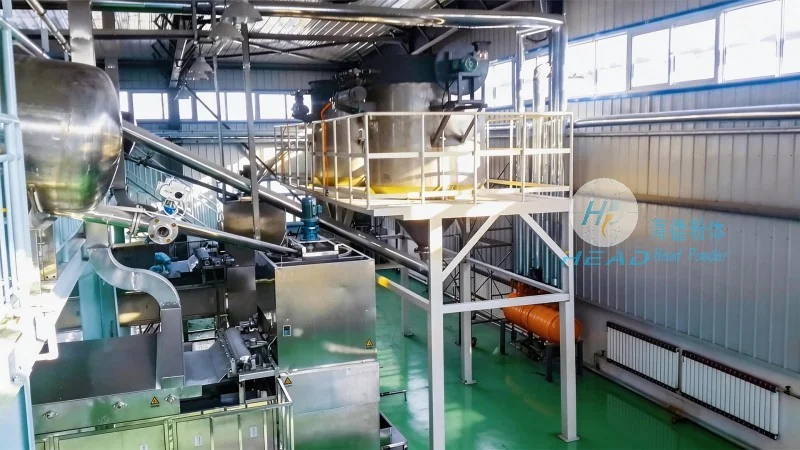
Overview of the Thermoplastic Polyurethane Pneumatic Conveying System
The thermoplastic polyurethane pneumatic conveying system is a closed-loop or open-loop system that utilizes compressed air to move bulk materials like powders, granules, or fine particles. The system comprises several key components, including a material hopper, a conveying line, a control valve, and a receiver. The material is fed into the hopper, where it is then drawn into the conveying line by the air flow generated by a blower or compressor. This process ensures that the material is transported without direct contact with mechanical parts, reducing wear and tear and maintaining product integrity.
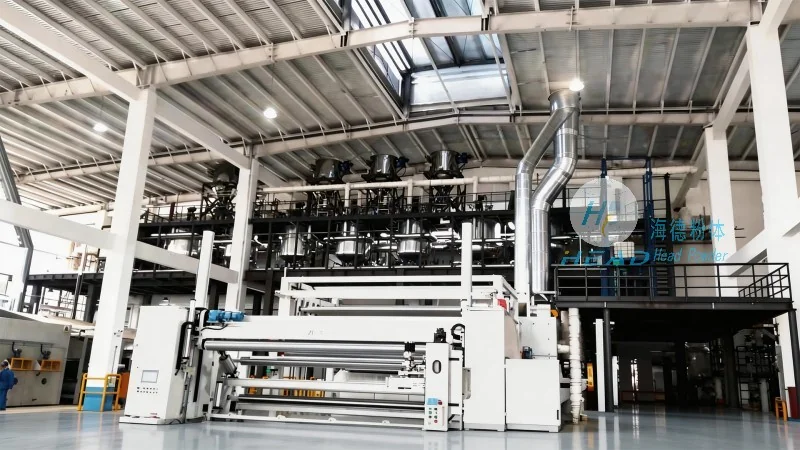
Operation Process of the System
The operation of the thermoplastic polyurethane pneumatic conveying system follows a systematic sequence to ensure efficient material transfer. Initially, the material is stored in the hopper, which is equipped with a feeding mechanism that controls the flow rate. The system then activates the blower, which generates a high-pressure air stream. This air stream is directed into the conveying line, creating a vacuum or pressure differential that pulls the material from the hopper into the line. As the material travels through the line, it is suspended in the air stream and transported to the receiver. The receiver collects the material and may include a discharge valve to regulate the outflow. The entire process is controlled by a programmable logic controller (PLC) or a manual control system, allowing for precise adjustment of the conveying rate and pressure. The system operates continuously or in batches, depending on the production requirements, and can be integrated with other processing equipment for a fully automated material handling solution.
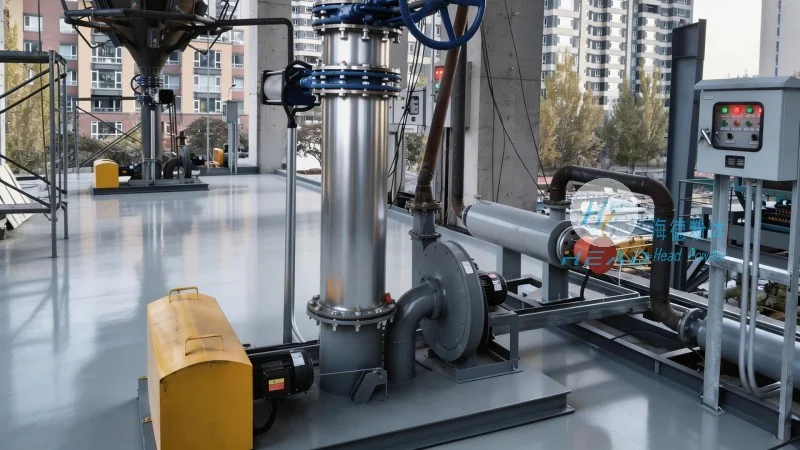
Working Principle of the System
The working principle of the thermoplastic polyurethane pneumatic conveying system is based on the principles of fluid dynamics and particle transport. The system utilizes the kinetic energy of the air stream to lift and move the material particles. The air flow is generated by a blower, which can be a centrifugal or positive displacement type, depending on the system design. The conveying line is typically made of thermoplastic polyurethane, which offers excellent resistance to abrasion, corrosion, and temperature variations. This material choice ensures that the line can withstand the abrasive nature of the conveyed materials without degradation. The system operates under either positive pressure or negative pressure (vacuum) conditions. In positive pressure systems, the blower pushes air into the conveying line, forcing the material through the line. In negative pressure systems, the blower draws air out of the line, creating a vacuum that pulls the material from the hopper. The choice between positive and negative pressure depends on the material characteristics, such as dustiness or moisture content, and the distance to be conveyed. The system also includes a filter and a dust collector to remove any particles from the air stream, ensuring that the environment remains clean and safe. The control system monitors the pressure, flow rate, and material level, providing real-time feedback to maintain optimal operation. This feedback loop allows for automatic adjustments to maintain consistent conveying performance, even with varying material loads or conditions.
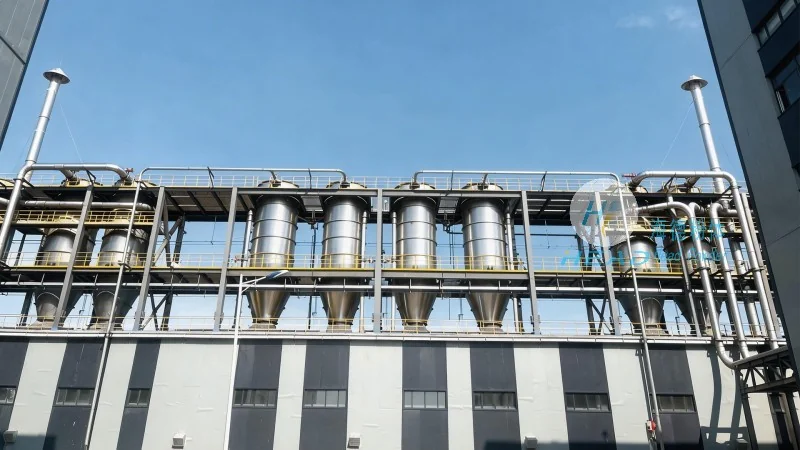
Key Components and Their Functions
The thermoplastic polyurethane pneumatic conveying system consists of several critical components, each playing a vital role in the overall operation. The material hopper is the primary storage unit, designed to hold the bulk material and provide a controlled feeding mechanism. The hopper is equipped with a gate valve or a rotary valve that regulates the material flow into the conveying line. The conveying line is the main pathway for the material and air, typically made of flexible or rigid thermoplastic polyurethane tubing. The line is connected to the blower and the receiver, forming a closed loop. The blower is the power source, generating the air flow necessary for conveying. It can be a centrifugal blower for high-volume applications or a positive displacement blower for low-volume, high-pressure applications. The control valve, often a butterfly or ball valve, is used to regulate the air flow and pressure within the system. The receiver is the final destination for the conveyed material, equipped with a discharge valve to allow the material to be discharged into the next processing step. The filter and dust collector are essential for maintaining air quality and preventing dust accumulation in the system. The control system, which may include a PLC or a manual control panel, monitors and controls all the components, ensuring that the system operates within safe and efficient parameters.