

Operation Process and Working Principle of Dry Mix Mortar Powder Pneumatic Conveying Line
Dry mix mortar powder pneumatic conveying lines are sophisticated systems designed to efficiently transport dry powders, such as those used in construction applications. These systems are integral to the production and distribution of dry mix mortars, ensuring consistent quality and reliable performance. The technology behind these lines combines pneumatic principles with mechanical components to achieve seamless material handling. HeadPowder, a leading manufacturer based in Shandong, China, specializes in designing and supplying such systems, catering to the needs of the construction industry.
Key Components of a Pneumatic Conveying System
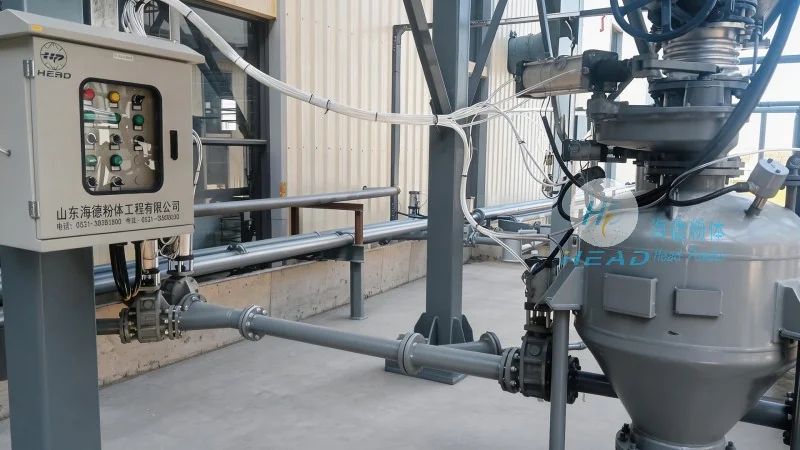
The dry mix mortar powder pneumatic conveying line typically consists of several core components that work in tandem to facilitate material transport. These include the hopper, feeder, conveying pipe, air compressor, and control system. Each component plays a critical role in the overall functionality of the system.
The hopper is the initial storage vessel where dry mortar powders are loaded. It is designed to hold a substantial quantity of material and features a discharge outlet connected to the feeder. The feeder, often a rotary valve or a screw feeder, regulates the flow of powder from the hopper into the conveying line. This controlled discharge prevents overloading and ensures a steady feed rate.
The conveying pipe is the main channel through which the powder is transported. It is usually made of stainless steel or other corrosion-resistant materials to withstand the abrasive nature of dry mortar powders. The pipe is equipped with bends, elbows, and other fittings that guide the material along the desired path. To maintain efficient flow, the pipe is often inclined slightly upward from the hopper to the discharge point.
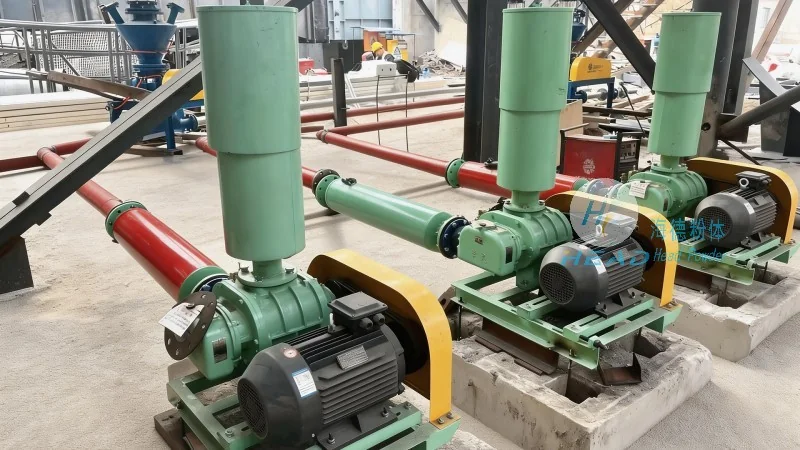
The air compressor generates the necessary air pressure to move the powder particles through the pipe. It supplies a continuous stream of compressed air that creates a vacuum or pressure differential, propelling the powder forward. The compressor is typically connected to the system via a filter and regulator to ensure clean, dry air is used, which is crucial for preventing system blockages and maintaining performance.
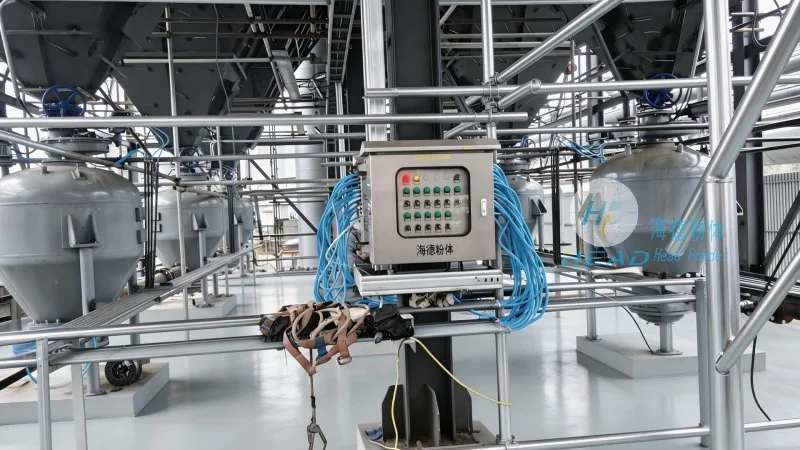
The control system monitors and regulates the operation of the entire conveying line. It includes sensors to detect the level of material in the hopper, the pressure in the conveying pipe, and the flow rate of the powder. The control system adjusts the feeder speed and compressor output as needed to maintain optimal performance and prevent overloading or underflow.
Operation Process of the Pneumatic Conveying Line
The operation of a dry mix mortar powder pneumatic conveying line begins with the loading of the hopper. The dry mortar powders are fed into the hopper from a bulk storage or production line. Once the hopper is filled, the feeder starts to discharge the material at a controlled rate. The feeder’s rotation or screw action pushes the powder into the conveying pipe.
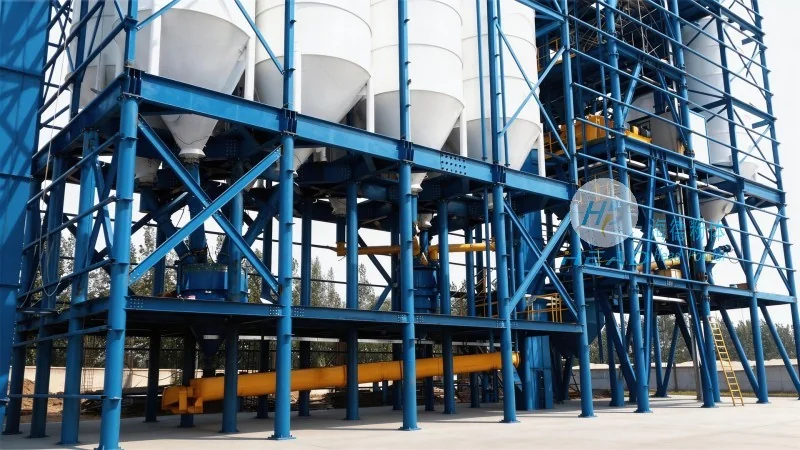
Simultaneously, the air compressor starts operating, supplying compressed air to the conveying pipe. The air flows through the pipe, creating a flow of air that carries the powder particles along with it. As the powder moves through the pipe, it is propelled by the air pressure, overcoming gravity and any resistance from the pipe fittings.
The powder travels through the conveying pipe, passing through bends and other components. The design of the pipe and fittings is crucial to minimize pressure loss and ensure smooth flow. The system may include a series of pipes that connect the hopper to the discharge point, which could be a storage silo, a mixing plant, or a packaging unit.
At the discharge end, the powder is released from the pipe into a collection vessel or directly into the next processing stage. The air continues to flow through the pipe and is typically filtered and returned to the compressor or released into the atmosphere, depending on the system design. The control system continuously monitors the process, adjusting the feeder speed and compressor output to maintain a consistent flow rate and prevent any blockages or inefficiencies.
Working Principle of Pneumatic Conveying
The working principle of a dry mix mortar powder pneumatic conveying line is based on the principles of fluid dynamics and particle transport. The system utilizes compressed air to create a flow that transports the dry powder particles through the conveying pipe. This process can be categorized into two main types: pressure and vacuum systems.
In a pressure system, the air compressor supplies compressed air to the conveying pipe, creating a positive pressure that pushes the powder forward. The powder is suspended in the air stream and moves along the pipe due to the pressure differential between the inlet and outlet. Pressure systems are typically used for short to medium distance conveying and are effective for handling abrasive or sticky powders.
In a vacuum system, the air compressor creates a vacuum at the discharge end, drawing the powder from the hopper into the pipe. The negative pressure pulls the powder along the pipe, with the air flowing from the compressor to the hopper to maintain the vacuum. Vacuum systems are commonly used for longer distances and are suitable for handling lighter powders that may be prone to settling.