

Operation Process and Working Principle of Expanded Clay Aggregate Pneumatic Conveying System
HeadPowder, a leading provider of industrial material handling solutions, specializes in the design, manufacturing, and installation of advanced pneumatic conveying systems. HeadPowder is Shandong HeadPowder Engineering Co., Ltd., headquartered in Shandong, China. This article focuses on the operation process and working principle of a pneumatic conveying system specifically engineered for expanded clay aggregate, a lightweight, porous material widely used in construction, horticulture, and other industries.
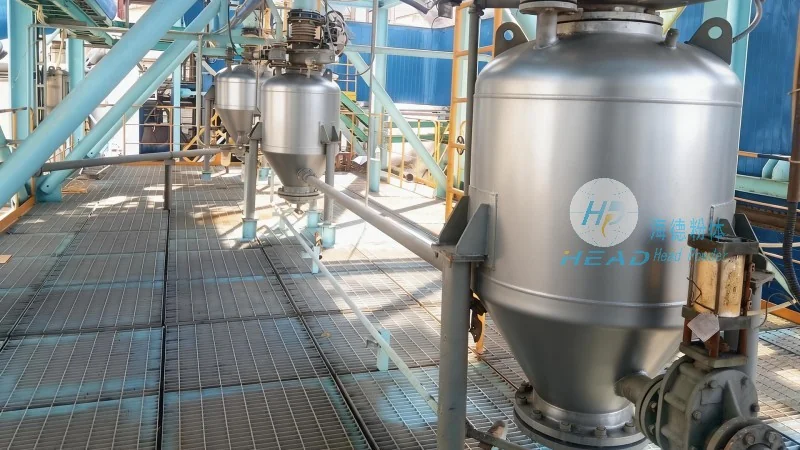
System Overview and Key Components
The pneumatic conveying system for expanded clay aggregate typically consists of several critical components that work in tandem to ensure efficient material transport. These components include a hopper for material storage, a feeder to control the flow rate, a conveying line (often equipped with bends and straight sections), a dust collector to manage air and particulate matter, and a discharge unit for material release. The system operates using compressed air as the primary medium to move the aggregate through the pipeline.
Operation Process: Step-by-Step Execution
The operation of the expanded clay aggregate pneumatic conveying system follows a systematic sequence to ensure smooth and continuous material transport. The process begins with the loading of expanded clay aggregate into the hopper. The feeder then regulates the material flow, feeding a controlled amount of aggregate into the conveying line. Simultaneously, compressed air is introduced into the system, creating a flow that propels the aggregate particles through the pipeline. As the material travels, it may encounter bends or changes in direction, which are designed to maintain the flow without causing blockages or material degradation. The dust collector plays a crucial role by capturing any airborne particles, ensuring compliance with environmental regulations and maintaining system efficiency. Finally, the aggregate is discharged from the system at the designated destination, completing the transport cycle.
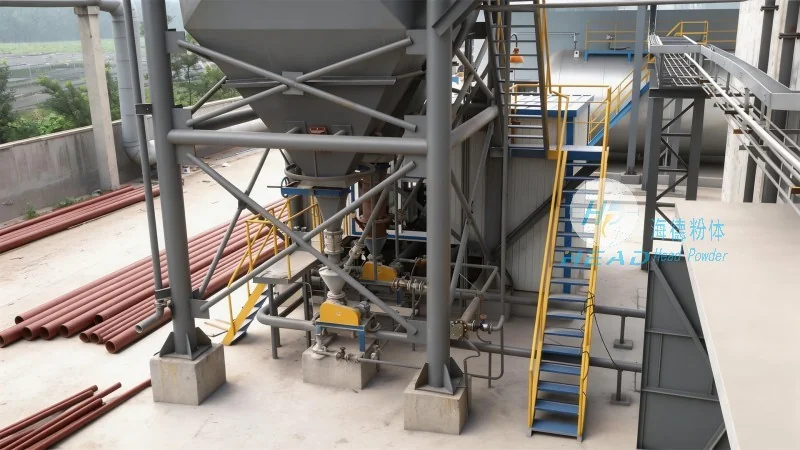
Working Principle: How the System Transfers Material
The core working principle of the pneumatic conveying system relies on the interaction between the material (expanded clay aggregate) and the air stream. There are two primary modes of pneumatic conveying: dilute-phase and dense-phase. For expanded clay aggregate, the system often utilizes a dilute-phase operation, where the material is suspended in the air stream as individual particles. The compressed air provides the necessary kinetic energy to move the particles through the pipeline. The velocity of the air and the size of the aggregate particles are carefully balanced to prevent clogging and ensure stable transport. The system's design, including the diameter of the conveying line and the angle of the bends, is optimized to minimize pressure drop and energy consumption while maximizing material throughput. This principle allows for a continuous, low-maintenance operation that is ideal for industrial applications where reliability and efficiency are paramount.
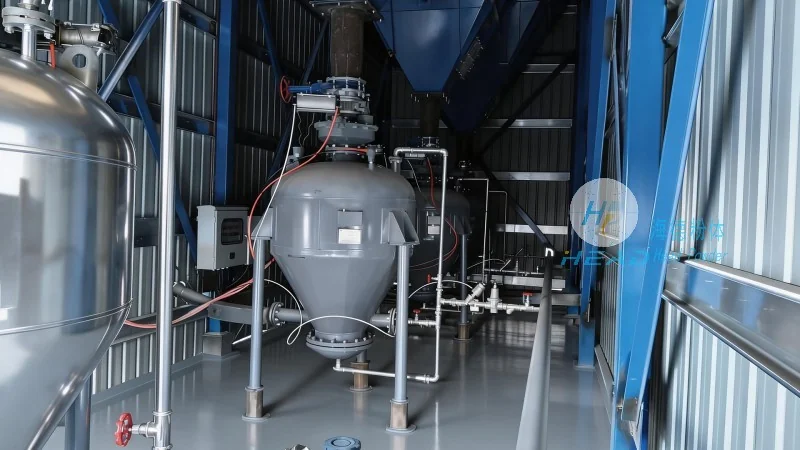
Advantages and Applications
The pneumatic conveying system for expanded clay aggregate offers several advantages over traditional mechanical conveying methods. These include reduced labor costs, minimized material handling risks, and the ability to transport materials over long distances without the need for intermediate storage or transfer points. The system is particularly suitable for applications in the construction industry, where expanded clay aggregate is used as a lightweight aggregate in concrete and masonry products. It is also widely used in horticulture for soil amendment and in industrial processes that require the precise delivery of lightweight, porous materials. The system's flexibility allows it to be adapted to various production scales, from small-scale operations to large industrial facilities.
HeadPowder's expertise in engineering and manufacturing ensures that their pneumatic conveying systems are tailored to meet the specific needs of each client. By leveraging advanced technology and rigorous quality control, HeadPowder delivers reliable and efficient solutions that enhance productivity and reduce operational costs for businesses dealing with expanded clay aggregate.