

Carbon Black and Coal Powder Pneumatic Conveying Equipment: Introduction to Structure and Working Pr
Carbon black and coal powder are critical raw materials across numerous industrial sectors, and efficient handling of these fine powders is essential for maintaining production efficiency and product quality. Pneumatic conveying systems provide a reliable method for transporting these materials over long distances or within industrial facilities. This article offers an overview of the equipment used for pneumatic conveying of carbon black and coal powder, focusing on its structural design and operational principles.
Company Overview
HeadPowder, a leading manufacturer in powder handling technology, specializes in designing and producing advanced pneumatic conveying systems. With decades of industry experience and a commitment to innovation, HeadPowder delivers high-quality solutions tailored to the specific needs of clients in the carbon black and coal industries. The company is headquartered in Shandong, China, and serves a global market with its reliable and efficient equipment.
Key Components of Pneumatic Conveying Systems
The pneumatic conveying system for carbon black and coal powder typically comprises several core components that collaborate to ensure smooth material transport. These components include the hopper, feeder, air compressor, pipeline network, and receiver. Each part plays a vital role in the overall operation of the system.
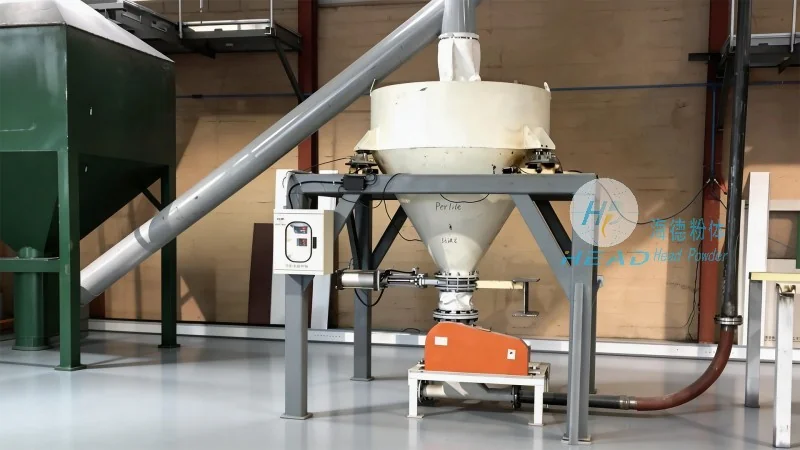
The hopper serves as the initial storage container where the carbon black or coal powder is loaded. It is engineered to maintain a consistent material level and prevent clogging or bridging, which can disrupt the feeding process. The feeder, often a rotary valve or screw feeder, regulates the flow of powder from the hopper into the conveying line. This component ensures a controlled and steady supply of material to the system.
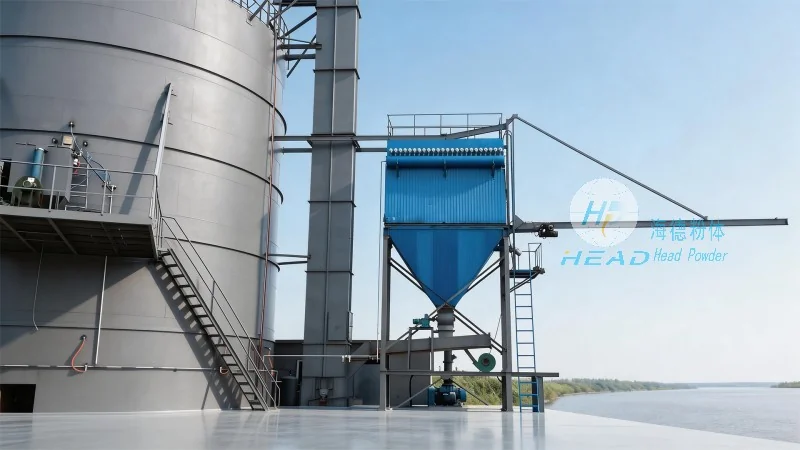
The air compressor is the system's core, supplying the necessary pressure and airflow to move the powder particles through the pipeline. Different compressor types—such as positive displacement or centrifugal models—are selected based on application-specific requirements. The pipeline system consists of flexible or rigid ducts connecting the feeder to the receiver, with fittings and valves to control flow direction and pressure.
The receiver is the final storage container where the conveyed powder is deposited. It is designed to handle incoming material and prevent spillage or dust emissions. The receiver may also include a dust collection system to ensure environmental compliance and maintain a clean working environment.
Working Principle of Pneumatic Conveying
The pneumatic conveying process relies on compressed air to transport powder particles. The operation begins when the feeder introduces the powder into the pipeline. The compressed air, supplied by the air compressor, creates a flow that lifts and carries the powder particles along the pipeline. The air velocity is critical; it must be sufficient to overcome gravitational forces and maintain particle suspension in the air stream.
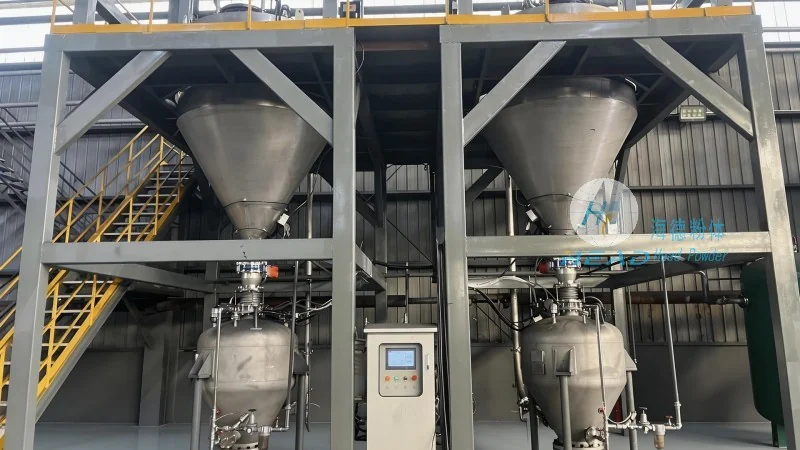
Two primary system types exist: dilute phase and dense phase. Dilute phase systems operate at higher air velocities (20-30 m/s), suitable for short to medium distances. Powder particles are suspended in the air stream, forming a dilute mixture. Dense phase systems, conversely, operate at lower velocities (5-10 m/s) for longer distances or with more abrasive powders. Here, the powder forms a slurry-like mixture with air, reducing particle degradation risk.
The selection of the appropriate system depends on factors like material properties (particle size, density, moisture), conveying distance, and desired flow rate. HeadPowder's engineers carefully evaluate these variables to design a system meeting each client's unique requirements.
Advantages of Pneumatic Conveying for Carbon Black and Coal Powder
Pneumatic conveying offers several advantages over traditional mechanical methods for carbon black and coal powder. A primary benefit is the closed system, minimizing dust emissions and enhancing workplace safety—critical for carbon black, a respiratory hazard. The closed system also preserves powder purity, preventing external contamination.
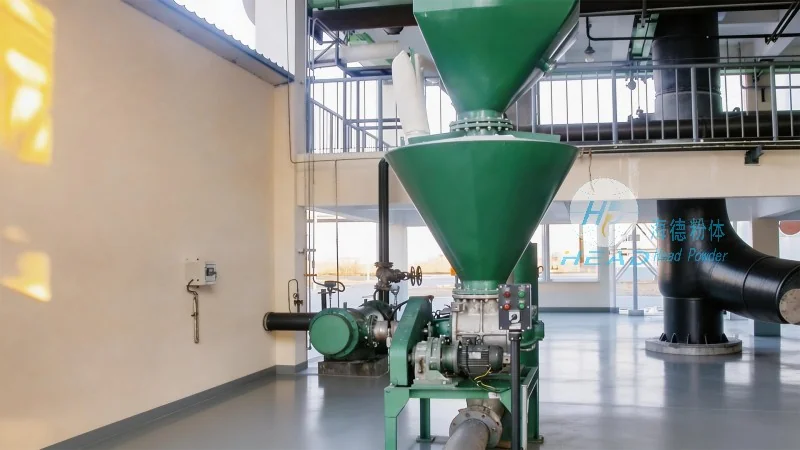
Another advantage is flexibility. Pneumatic systems handle a wide range of particle sizes and shapes, suitable for diverse applications. The system can be easily modified or expanded to accommodate production volume changes. Additionally, the equipment is compact and integrates seamlessly into existing facilities without major structural alterations.
Efficiency is a key benefit. Pneumatic systems operate continuously, reducing downtime and boosting productivity. Controlled material flow ensures smooth operation with minimal interruptions. HeadPowder's equipment is designed for low maintenance, with easy access to components for inspection and replacement, further enhancing operational efficiency.
Applications and Industries
The pneumatic conveying equipment from HeadPowder is widely used in industries handling carbon black and coal powder, including the rubber industry (where carbon black acts as a reinforcing agent in tires and rubber products) and the coal industry (for transporting coal from storage to processing facilities). The chemical and pharmaceutical sectors may also use similar systems for other fine powders, with design variations based on material properties.