

Several Solutions for the Pneumatic Conveying of Urea Granules
Urea granules are widely used in agricultural and industrial applications, and efficient transportation is crucial for their distribution. Pneumatic conveying offers a reliable method for moving these granules from production sites to storage or processing facilities. This article explores several effective solutions for the pneumatic conveying of urea granules, highlighting the technical aspects and practical considerations involved.
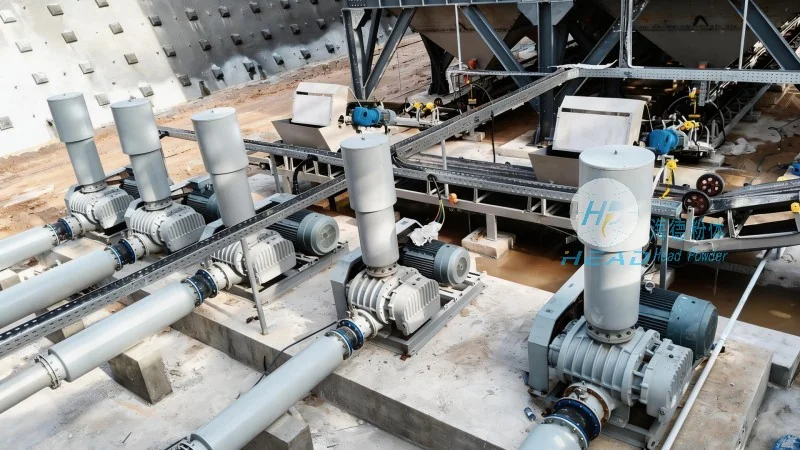
Overview of Pneumatic Conveying Systems
Pneumatic conveying systems use air or other gases to transport bulk materials like urea granules through a pipeline network. These systems can be categorized into two main types: pressure and vacuum systems. Pressure systems generate air pressure at the inlet to push the material forward, while vacuum systems create a negative pressure at the outlet to draw the material. The choice between these systems depends on factors such as the distance to be covered, the material's properties, and the desired flow rate.
Key Considerations for Urea Granule Conveying
When designing a pneumatic conveying system for urea granules, several key considerations must be addressed to ensure optimal performance and longevity of the equipment. First, the material's particle size, density, and flowability are critical. Urea granules typically have a particle size ranging from 1 to 4 millimeters, with a bulk density of around 0.9 to 1.0 g/cm³. These characteristics affect the air velocity required for proper transport and the risk of blockages. Second, the system must be designed to handle the potential for dust generation and corrosion, as urea can be hygroscopic and may cause wear on metal components. Proper filtration and material handling practices are essential to mitigate these issues.
Solution 1: Positive Pressure Conveying with a Screw Feeder
One common solution for urea granule pneumatic conveying is the use of a positive pressure system combined with a screw feeder. In this setup, a screw feeder feeds the urea granules into a pressure vessel, which then releases the material into a pipeline under pressurized air. The screw feeder ensures a consistent and controlled feed rate, preventing overloading of the system and reducing the risk of blockages. This method is particularly effective for short to medium distances, typically up to 100 meters, and is suitable for applications where a high degree of control over the material flow is required.
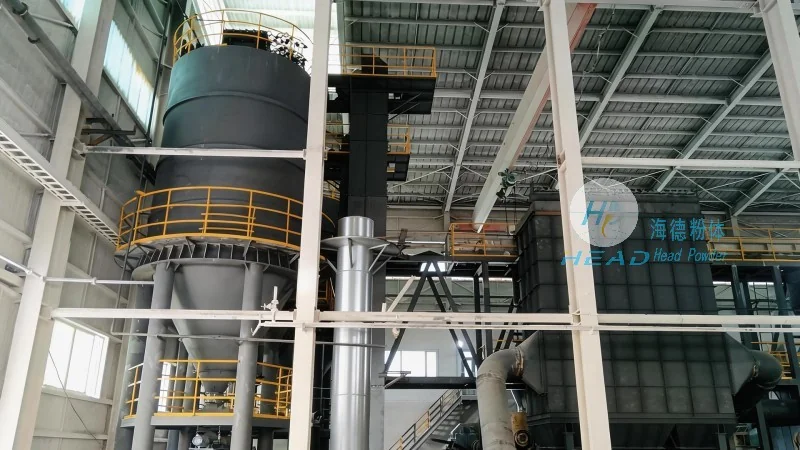
Solution 2: Vacuum Conveying with a Cyclone Separator
For longer conveying distances or when the material needs to be transported from multiple sources, a vacuum conveying system with a cyclone separator is often preferred. This system uses a vacuum pump to create a negative pressure at the receiving end, drawing the urea granules from the source into the pipeline. The cyclone separator at the end of the line separates the granules from the air, allowing the air to be recirculated or discharged. This approach is efficient for distances up to several hundred meters and is ideal for applications where the material is sourced from multiple points or needs to be collected from a large area.
Solution 3: Hybrid Conveying System
A hybrid system combines elements of both pressure and vacuum conveying to optimize performance for specific applications. For example, a hybrid system might use a pressure system for the initial transport from the production site to a central collection point, followed by a vacuum system to distribute the granules to various storage or processing locations. This approach allows for flexibility in the conveying network and can handle varying flow rates and distances more effectively. The hybrid system is particularly useful in large-scale operations where the urea granules need to be transported over a wide area.
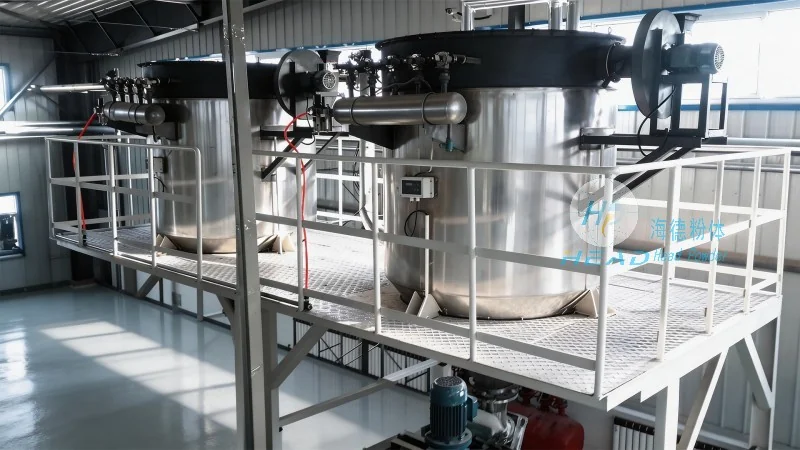
Equipment Selection and Maintenance
Choosing the right equipment is crucial for the success of a pneumatic conveying system for urea granules. Key components include the feeder, pipeline, air compressor or vacuum pump, and separation equipment. The feeder must be capable of handling the urea granules' characteristics without causing excessive wear or blockages. The pipeline should be made of materials resistant to corrosion and abrasion, such as stainless steel or special coatings. The air compressor or vacuum pump must be sized to provide sufficient air volume and pressure to maintain the desired flow rate. Regular maintenance is essential to ensure the system operates efficiently and to prevent downtime. This includes cleaning the pipeline and separation equipment, checking for wear on components, and monitoring air pressure and flow rates.
Case Study: Application by Shandong HeadPowder Engineering Co., Ltd.
Shandong HeadPowder Engineering Co., Ltd., a leading provider of bulk material handling solutions, has successfully implemented pneumatic conveying systems for urea granules in various industrial settings. One of their projects involved the design and installation of a positive pressure conveying system for a large fertilizer plant in China. The system was configured with a screw feeder and a pressure vessel, capable of transporting urea granules over a distance of 80 meters at a flow rate of 10 tons per hour. The system has been in operation for over two years, demonstrating high efficiency and reliability. The company's expertise in material handling and pneumatic conveying has enabled them to tailor solutions to meet the specific needs of their clients, ensuring optimal performance and cost-effectiveness.
Conclusion
Pneumatic conveying offers several effective solutions for the transportation of urea granules, each with its own advantages and applications. The choice of system depends on factors such as distance, material properties, and operational requirements. Proper design, equipment selection, and maintenance are essential to ensure the system operates efficiently and reliably. Companies like Shandong HeadPowder Engineering Co., Ltd. play a vital role in providing tailored solutions that meet the needs of the agricultural and industrial sectors, contributing to the efficient distribution of urea granules and supporting global food production.