

Design Considerations for Gas-Pneumatic Conveying Systems of Lithium-Ion Battery Materials
HeadPowder, a leading engineering firm based in Shandong, China, specializes in the design and implementation of advanced gas-pneumatic conveying systems tailored for lithium-ion battery material handling. This article outlines key design considerations for such systems, emphasizing efficiency, safety, and material integrity.
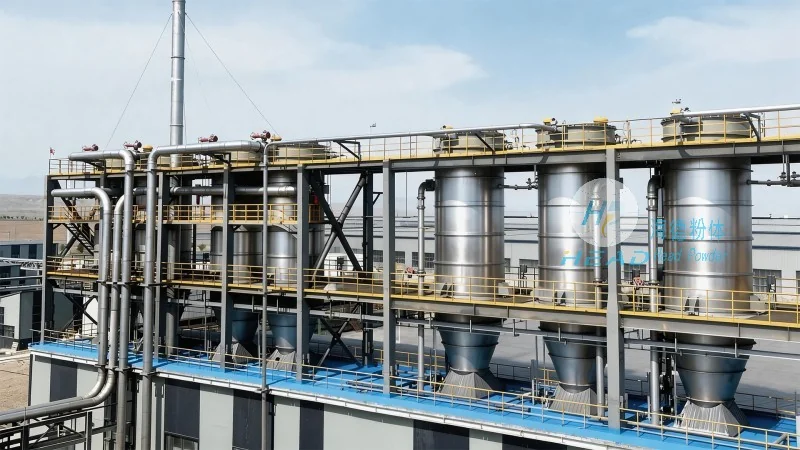
Key Design Elements for Lithium-Ion Battery Material Conveying Systems
When designing a gas-pneumatic conveying system for lithium-ion battery materials, several critical factors must be addressed to ensure optimal performance and reliability. The first consideration is the physical and chemical properties of the materials being handled. Lithium-ion battery powders, such as cathode active materials (e.g., lithium cobalt oxide, lithium nickel manganese cobalt oxide) and anode materials (e.g., graphite, silicon), often have fine particle sizes and are sensitive to moisture and oxygen exposure. These characteristics require specialized equipment to prevent agglomeration, oxidation, or degradation during transport.
System Configuration and Components
The core components of a gas-pneumatic conveying system include the hopper, feeder, conveying line, and discharge equipment. For lithium-ion battery materials, the hopper must be designed to minimize material buildup and prevent caking. A well-designed hopper with appropriate aeration and moisture control helps maintain material flowability. The feeder, typically a rotary valve or vibratory feeder, ensures a consistent material feed rate, which is crucial for maintaining system pressure and preventing surges or blockages. The conveying line, often made of stainless steel or other corrosion-resistant materials, must be sized appropriately to handle the specific particle size distribution and flow rate of the lithium-ion battery powders. Additionally, the line should incorporate features like bends and elbows that minimize pressure drop and maintain material velocity to prevent settling.
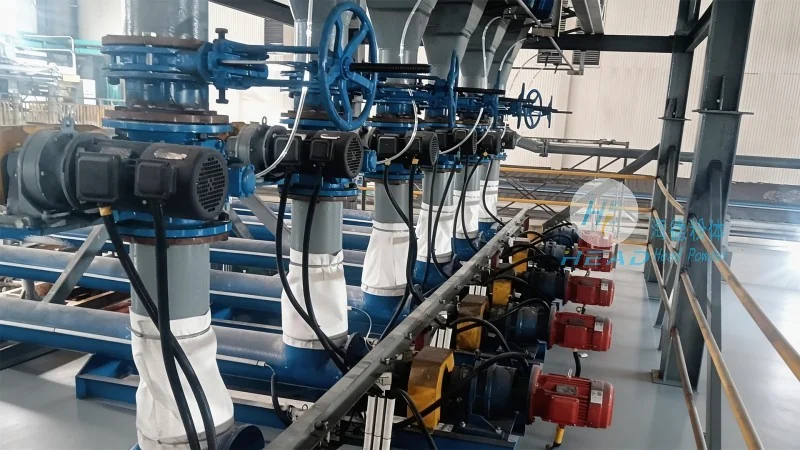
Material Handling Efficiency and Safety
Efficiency in material handling is paramount for lithium-ion battery manufacturers, as these materials are often expensive and have strict quality control requirements. A well-designed gas-pneumatic system can achieve high throughput while minimizing material loss and contamination. Safety is another critical aspect, as lithium-ion battery powders can be flammable or reactive under certain conditions. The system must include explosion-proof components, such as spark arrestors and flame arrestors, to prevent fire or explosion risks. Additionally, proper ventilation and dust collection systems are essential to maintain a safe working environment and comply with environmental regulations.
Environmental and Regulatory Compliance
Conveying lithium-ion battery materials must adhere to strict environmental and regulatory standards. The system should incorporate dust suppression measures, such as cyclone separators and baghouse filters, to capture and collect fine particles, preventing air pollution. Furthermore, the design must consider the potential for material contamination and ensure that the system is easy to clean and maintain to prevent cross-contamination between different material batches. Compliance with local and international regulations, such as those related to hazardous materials handling, is also a key design consideration.
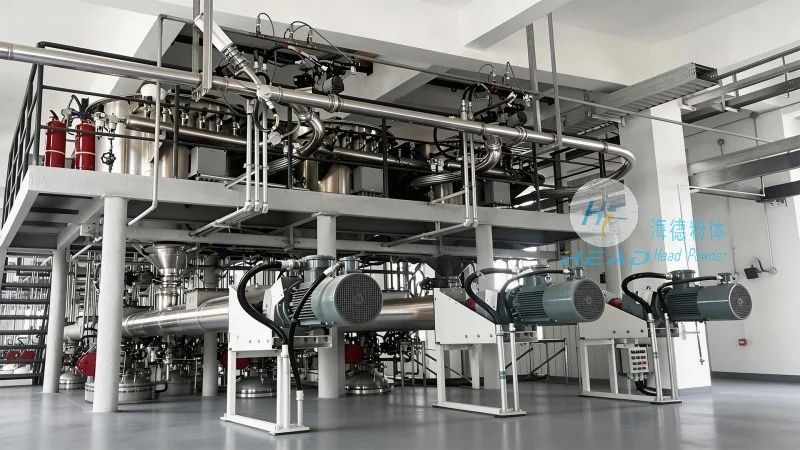
Customization and Scalability
HeadPowder recognizes that each lithium-ion battery manufacturing facility has unique requirements. Therefore, our gas-pneumatic conveying systems are customizable to meet specific production needs. Whether the facility requires a small-scale system for laboratory testing or a large-scale system for high-volume production, our engineering team can design a solution that optimizes material flow, reduces downtime, and enhances overall operational efficiency. The systems are also scalable, allowing for future expansion as production capacity increases. This flexibility ensures that our clients can adapt to changing market demands without significant capital investment.
Conclusion
Designing an effective gas-pneumatic conveying system for lithium-ion battery materials requires a comprehensive understanding of material properties, system components, and operational requirements. HeadPowder, with its expertise in engineering and material handling, provides tailored solutions that address the unique challenges of lithium-ion battery manufacturing. By focusing on efficiency, safety, and compliance, our systems help manufacturers improve productivity, reduce costs, and maintain the highest standards of material quality. For companies in the lithium-ion battery industry seeking reliable and efficient material handling solutions, HeadPowder offers a proven approach to optimizing their production processes.