

Operation Process and Working Principle of a Calcium Hydroxide Material Pneumatic Conveying Line
For industrial applications involving the handling of calcium hydroxide, a pneumatic conveying line offers an efficient and reliable method to transport the material from one location to another. This system is particularly valuable in manufacturing processes where the material needs to be moved over short to medium distances with precision and minimal loss. The following content provides a detailed overview of the operation process and working principle of such a line, along with key aspects of its implementation.
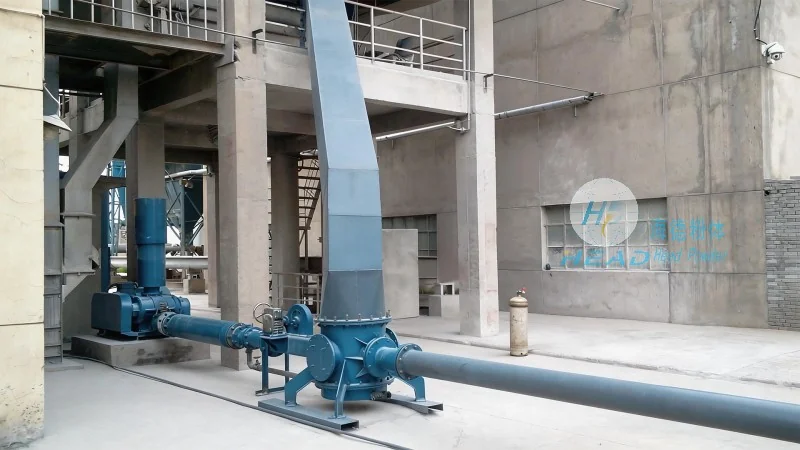
Company Overview
HeadPowder, a leading provider in the field of material handling solutions, specializes in designing and manufacturing advanced pneumatic conveying systems. As a subsidiary of Shandong HeadPowder Engineering Co., Ltd., based in Shandong, China, the company leverages decades of industry experience to deliver high-performance equipment tailored to the specific needs of clients. The company’s commitment to quality and innovation ensures that its products meet the rigorous standards required for industrial applications.
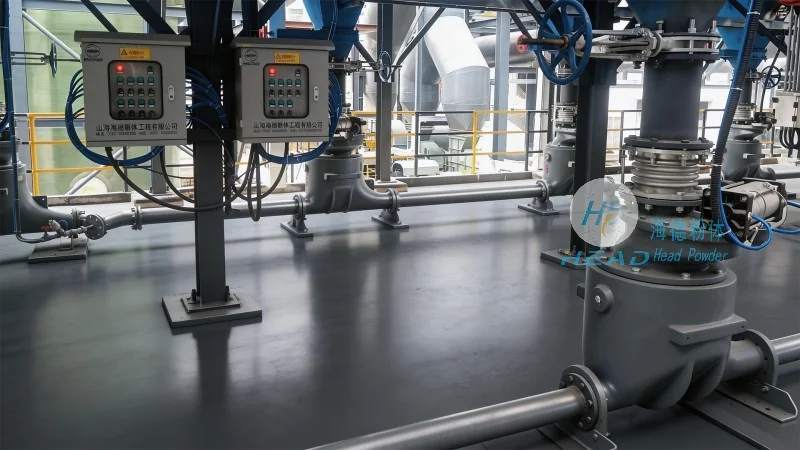
The Operation Process of the Pneumatic Conveying Line
The operation of a calcium hydroxide pneumatic conveying line typically involves several sequential steps. The process begins with the material being fed into a hopper or silo where it is stored before being introduced into the conveying system. From the hopper, the material is drawn into a venturi or a rotary airlock valve, which controls the flow rate and ensures a consistent supply of material to the system. The material then travels through a pipeline under the force of compressed air, which propels it to the destination point, such as a storage tank, processing unit, or packaging area. At the receiving end, the material is discharged into a container or a hopper, and the air is filtered and recycled back into the system to maintain efficiency and reduce waste.
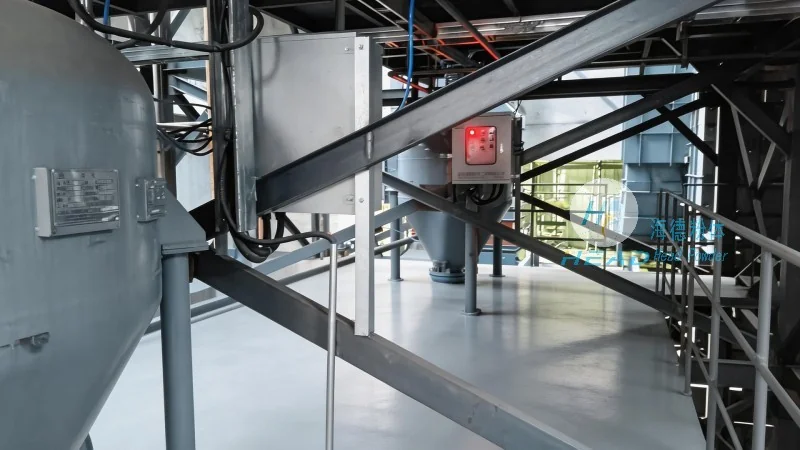
Working Principle of the System
The core working principle of a pneumatic conveying line is based on the use of compressed air to transport solid materials. In this system, the calcium hydroxide particles are suspended in the air stream, allowing them to be moved through the pipeline. The system operates under positive pressure, where the air pressure is higher than the ambient pressure, ensuring that the material is continuously propelled forward. The venturi or the airlock valve plays a critical role in regulating the flow of both material and air, maintaining the optimal ratio to prevent blockages and ensure smooth operation. The compressed air is generated by a blower or a compressor, which provides the necessary force to move the material through the pipeline. The system also includes filtration and separation components to remove any dust or particles from the air before it is recycled, ensuring environmental compliance and system longevity.
Key Components and Their Functions
Several key components are integral to the proper functioning of a calcium hydroxide pneumatic conveying line. The hopper or silo serves as the storage and feeding unit, providing a consistent supply of material. The rotary airlock valve acts as a gate to control the flow of material into the pipeline, preventing backflow and maintaining a steady rate. The venturi or the pipeline itself is where the material is conveyed, with the compressed air creating the necessary force to move the particles. The receiving hopper or tank collects the material at the end of the line, and the filter system removes any contaminants from the air, ensuring that the air is clean before it is recirculated. Each component is designed to work in harmony, ensuring the overall efficiency and reliability of the system.
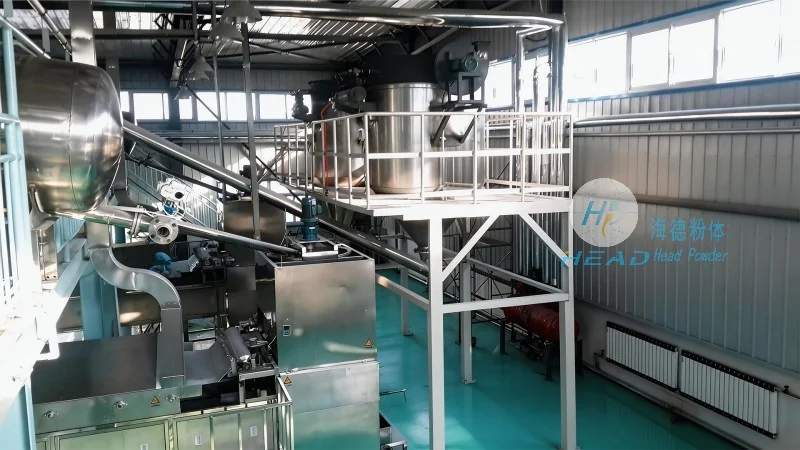
Benefits of Using This System for Calcium Hydroxide Handling
Implementing a pneumatic conveying line for calcium hydroxide offers numerous advantages over traditional methods such as belt conveyors or manual handling. One of the primary benefits is the ability to transport the material in a closed system, which minimizes dust exposure and improves safety for operators. The system also reduces material loss and contamination, as the material is contained within the pipeline throughout the entire process. Additionally, the pneumatic conveying line allows for precise control over the flow rate and pressure, ensuring that the material is delivered to the desired location without spillage or blockages. The closed system also helps in maintaining the quality of the calcium hydroxide, as it is protected from moisture and other environmental factors. Overall, the use of a pneumatic conveying line enhances operational efficiency, reduces labor costs, and improves the overall safety and hygiene of the material handling process.