

Operation Process and Working Principle of Stearic Acid Sodium Material Pneumatic Conveying Line
Stearic acid sodium, a widely used chemical additive in various industrial applications, often requires efficient and reliable material handling solutions. The pneumatic conveying line designed for stearic acid sodium is a specialized system that ensures safe and effective transportation of this material from storage to processing units. This article provides an in-depth look at the operation process and working principle of such a system, highlighting the key components and the step-by-step procedure involved.
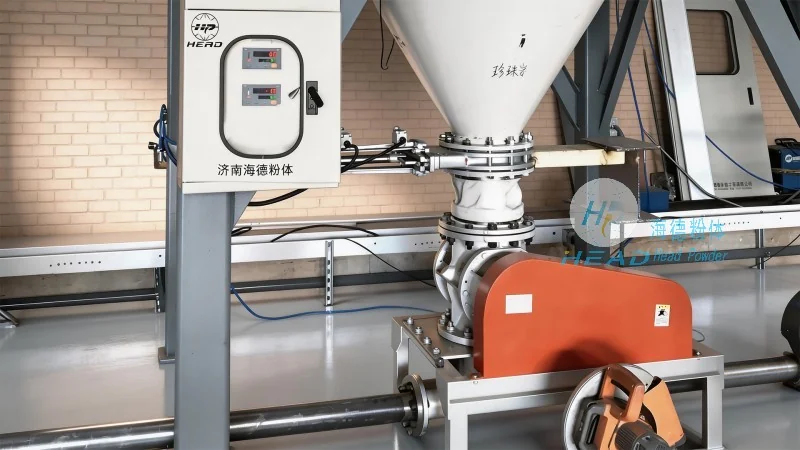
Introduction to the Pneumatic Conveying System for Stearic Acid Sodium
HeadPowder, a leading engineering company based in Shandong, China, specializes in the design and implementation of advanced material handling solutions. The company's expertise in pneumatic conveying technology is showcased through systems tailored for materials like stearic acid sodium. The system typically comprises several critical components, including a hopper for material storage, a feeder to control the flow rate, a conveying line with appropriate ductwork, and a receiver for the delivered material. Each component plays a vital role in ensuring the smooth and efficient operation of the entire line.
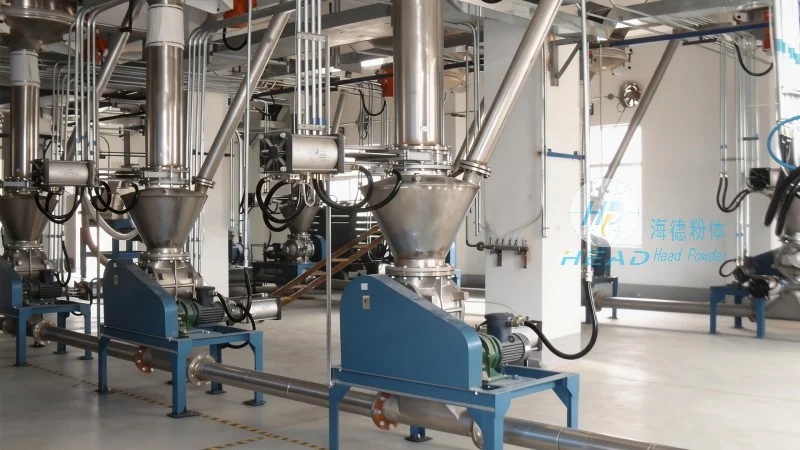
Key Components of the Stearic Acid Sodium Pneumatic Conveying Line
The pneumatic conveying line for stearic acid sodium is engineered with precision to handle the specific properties of the material. The hopper is designed to store the bulk material and provide a consistent feed to the system. It is equipped with a discharge valve or a rotary valve to regulate the material flow. The feeder, often a screw or a rotary valve, ensures that the material is fed at a controlled rate, preventing overloading or underfeeding that could affect the conveying efficiency. The conveying line itself is made of materials resistant to the chemical properties of stearic acid sodium, such as stainless steel or specialized plastics, to avoid corrosion and material contamination. The ductwork is designed with appropriate bends and elbows to minimize pressure loss and ensure the material is conveyed smoothly. The receiver is a container that collects the material at the end of the line, and it may include a dust collection system to maintain air quality and prevent material loss.
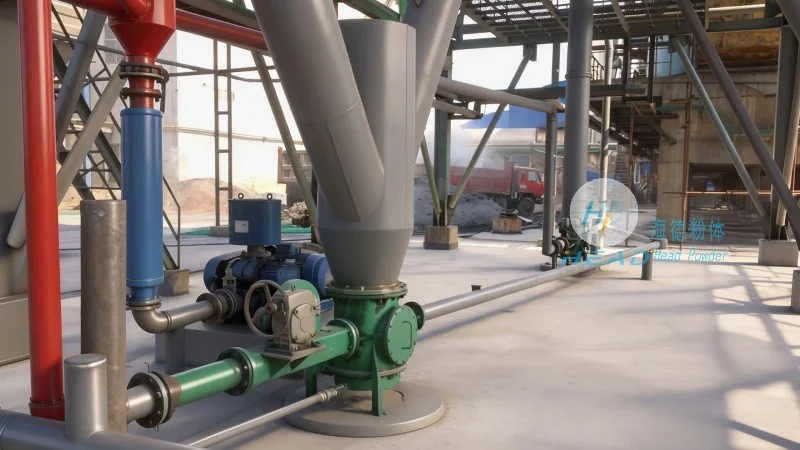
Operation Process of the Stearic Acid Sodium Pneumatic Conveying Line
The operation of the stearic acid sodium pneumatic conveying line involves a series of sequential steps that ensure the material is transported from the storage hopper to the processing unit. The process begins with the material being loaded into the hopper. The feeder then starts to rotate or move, feeding the material into the conveying line at a controlled rate. Simultaneously, the air compressor or blower generates a flow of air that is introduced into the conveying line. The air and the material particles form a mixture known as a two-phase flow. This mixture is then propelled through the ductwork by the air pressure. As the mixture travels through the line, it passes through bends and other components, which may cause some separation of air and material. The receiver at the end of the line captures the material, while the air is either filtered and recirculated or vented to the atmosphere. The entire process is automated and monitored to maintain consistent flow rates and pressure levels, ensuring optimal performance and minimal downtime.
Working Principle of the Pneumatic Conveying System
The working principle of the pneumatic conveying line for stearic acid sodium is based on the principles of fluid dynamics and particle transport. The system can operate under either positive pressure (pressure conveying) or negative pressure (suction conveying), depending on the application and the distance to be covered. In positive pressure conveying, the air compressor supplies compressed air to the conveying line, creating a pressure higher than the ambient air pressure. This pressure pushes the material particles along the line, ensuring a continuous flow. In negative pressure conveying, the blower creates a vacuum at the receiver end, drawing the material and air mixture through the line. The choice between positive and negative pressure depends on factors such as the material's properties, the distance, and the system's design. The key to the system's efficiency is the balance between the air flow rate and the material feed rate. If the air flow is too low, the material may not be fully entrained and could settle in the line, leading to blockages. Conversely, if the air flow is too high, it may cause excessive pressure loss and energy consumption. The system is designed to maintain this balance through precise control of the feeder and the air supply.
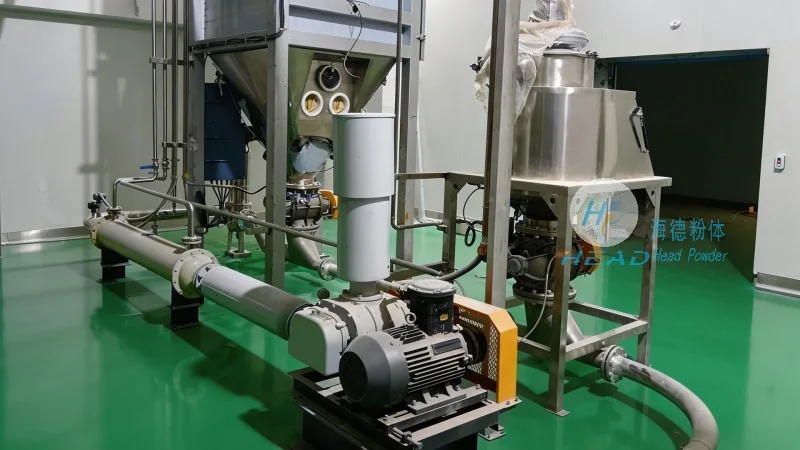
Benefits and Applications of Stearic Acid Sodium Pneumatic Conveying Lines
The pneumatic conveying line for stearic acid sodium offers several advantages over traditional material handling methods. It eliminates the need for mechanical conveyors, which can be prone to material contamination and maintenance issues. The system is also more flexible, as it can be easily reconfigured to handle different material types or to change the delivery point. The enclosed design of the line prevents dust and material loss, ensuring a clean and safe working environment. This is particularly important for stearic acid sodium, which is often used in food and pharmaceutical industries where hygiene is critical. The system is also energy-efficient compared to other methods, as it uses compressed air, which can be generated from a central source and reused. The applications of such systems are widespread, including in chemical manufacturing, food processing, and pharmaceutical production, where the safe and efficient handling of stearic acid sodium is essential for maintaining product quality and operational efficiency.