

Principle and Classification Application of Iron Powder Pneumatic Conveying
HeadPowder, a leading enterprise in the field of powder handling technology, specializes in the design, manufacturing, and implementation of pneumatic conveying systems for various industrial applications. This article provides an in-depth exploration of the fundamental principles behind iron powder pneumatic conveying, along with an overview of its classification and practical applications. By understanding these aspects, industries can better leverage this technology to enhance efficiency, safety, and operational reliability in material handling processes.
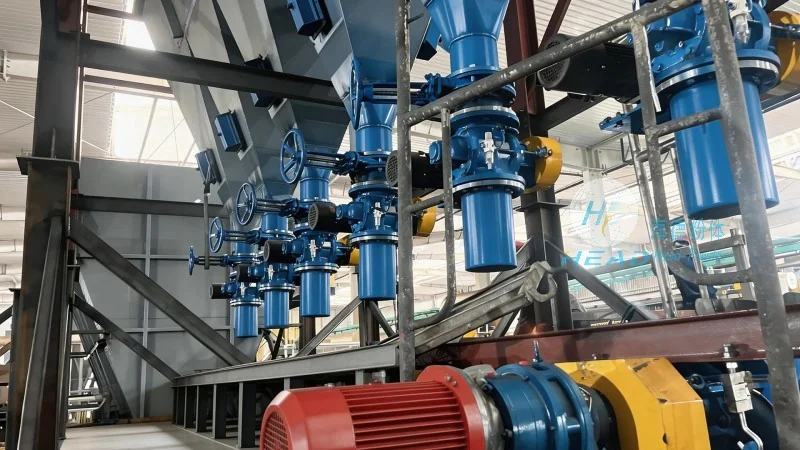
Understanding Pneumatic Conveying: The Core Mechanism
Pneumatic conveying, also known as pneumatic transport, is a method of transporting bulk materials, such as iron powder, through a pipeline using a gas stream, typically air or other gases. The process involves creating a pressure differential within the system to move the material from the source to the destination. There are two primary modes of pneumatic conveying: dilute-phase and dense-phase. Dilute-phase conveying operates at higher velocities, with particles suspended in the gas stream, while dense-phase conveying uses lower velocities and higher pressure to push the material in a more compact form. The choice between these modes depends on factors like material properties, distance, and system constraints. For iron powder, which is often fine and abrasive, the selection of the appropriate conveying mode is crucial to prevent particle degradation and system wear.
Classification of Iron Powder Pneumatic Conveying Systems
Iron powder pneumatic conveying systems can be classified based on several key parameters, including the conveying principle, pressure level, and operational characteristics. The most common classifications are:
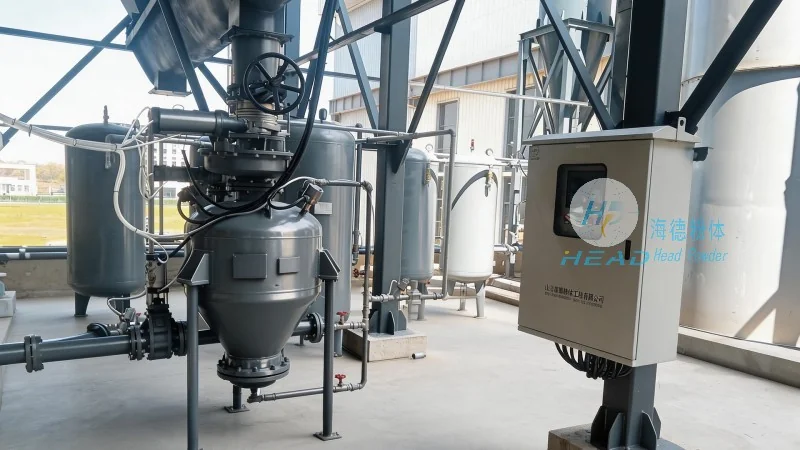
- Positive Pressure Conveying: This system uses compressed air to push the material through the pipeline. It is suitable for short to medium distances and is often used in applications where the material is sensitive to vacuum or where the system needs to operate in a closed environment.
- Negative Pressure (Vacuum) Conveying: In this mode, a vacuum is created at the receiving end to draw the material from the source. It is ideal for applications requiring material collection from multiple points or for long-distance transport where the material needs to be pulled rather than pushed.
- Combined Pressure-Vacuum Conveying: This hybrid system combines elements of both positive and negative pressure, allowing for more flexible operation across varying distances and material characteristics. It is particularly useful for complex conveying routes that involve both pushing and pulling segments.
Additionally, systems can be categorized by the type of gas used—air is the most common, but inert gases like nitrogen may be employed for materials that are reactive or require an oxygen-free environment. The design of the system, including the choice of pipeline diameter, gas velocity, and pressure drop, directly impacts the efficiency and effectiveness of iron powder transport.
Key Components and Their Roles in Iron Powder Conveying
Effective iron powder pneumatic conveying relies on a series of interconnected components, each playing a critical role in the overall system performance:
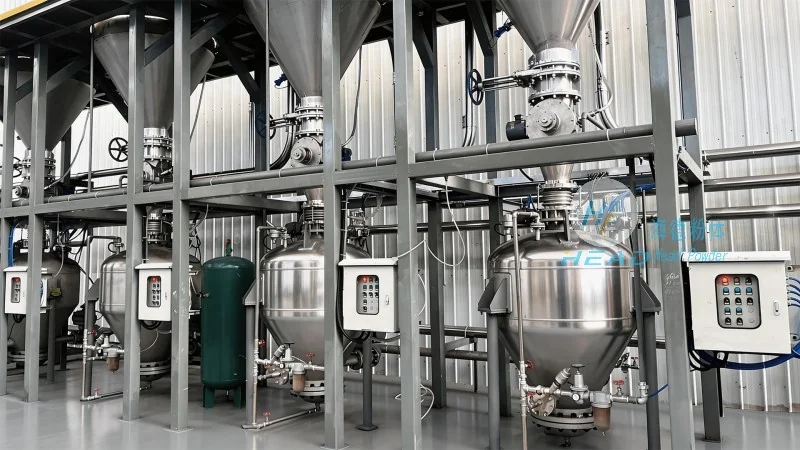
- Feeder: The feeder is responsible for accurately metering and feeding the iron powder into the conveying line. For fine powders like iron powder, a rotary valve or a screw feeder is commonly used to ensure a consistent flow rate and prevent blockages.
- Conveying Pipeline: The pipeline serves as the transport medium, with its diameter and material (often stainless steel or plastic) selected based on the particle size, flow rate, and pressure requirements. Proper pipeline design minimizes pressure losses and reduces the risk of particle deposition.
- Gas Supply System: This includes the compressor or vacuum pump, filters, and regulators that provide the necessary air or gas at the required pressure and flow rate. The quality of the gas is crucial, as contaminants can affect the material and the system components.
- Control and Monitoring Systems: Modern pneumatic conveying systems are equipped with sensors and control panels to monitor pressure, flow, and temperature. These systems help maintain optimal operating conditions and alert operators to any deviations or potential issues.
Applications of Iron Powder Pneumatic Conveying
The versatility of iron powder pneumatic conveying makes it suitable for a wide range of industrial applications:
- Steel and Metal Processing: In steel mills and metal fabrication plants, iron powder is used in various processes, including powder metallurgy, where it is combined with other metals to produce sintered parts. Pneumatic conveying ensures a clean and efficient transfer of the powder to the mixing and sintering equipment.
- Chemical and Pharmaceutical Industries: Iron powder is used in the production of iron-based chemicals and pharmaceuticals. The ability to handle fine powders without contamination is essential, and pneumatic conveying provides a hygienic and controlled method for material transport.
- Electronics Manufacturing: In the electronics sector, iron powder is used in the production of magnetic components and coatings. The precision required in these applications makes pneumatic conveying an ideal choice, as it minimizes particle agglomeration and ensures consistent material quality.
- Environmental and Recycling Applications: Iron powder is often recovered from waste streams or recycled materials. Pneumatic conveying systems are used to transport recovered iron powder back into the production cycle, contributing to sustainable manufacturing practices.
Benefits and Considerations for Iron Powder Pneumatic Conveying
Implementing iron powder pneumatic conveying offers several advantages, including:
- Enhanced Safety: By eliminating the need for manual handling of iron powder, the system reduces the risk of dust exposure and related health hazards.
- Improved Efficiency: Automated conveying systems can operate continuously, reducing downtime and increasing overall production throughput.
- Reduced Maintenance: Compared to mechanical conveying systems, pneumatic systems have fewer moving parts, leading to lower maintenance costs and longer equipment life.
- Flexibility: Pneumatic conveying systems can be easily reconfigured or expanded to accommodate changes in production needs or facility layout.
However, there are also considerations to keep in mind. For example, the abrasive nature of iron powder can lead to wear on system components, requiring regular inspection and replacement of parts like pipelines and valves. Additionally, the system's energy consumption must be managed to ensure cost-effectiveness, especially for large-scale operations.
Conclusion
Iron powder pneumatic conveying is a sophisticated and efficient method for handling fine, abrasive materials like iron powder. By understanding the underlying principles, classifying the appropriate system for specific applications, and selecting the right components, industries can achieve optimal performance and reliability. As a leading provider in this field, Shandong HeadPowder Engineering Co., Ltd. offers tailored solutions that address the unique challenges of iron powder handling, ensuring that clients can leverage this technology to enhance their operational capabilities and meet their production goals.