

Principle and Application Scenarios of Low-Pressure Continuous Powder Pneumatic Conveying Equipment
HeadPowder, a leading manufacturer based in Shandong, China, specializes in the design and production of low-pressure continuous powder pneumatic conveying systems. These systems are engineered to efficiently transport bulk powders over medium to long distances with minimal pressure differentials, making them ideal for various industrial applications where traditional mechanical conveying methods may be less suitable.
Principle of Low-Pressure Continuous Pneumatic Conveying
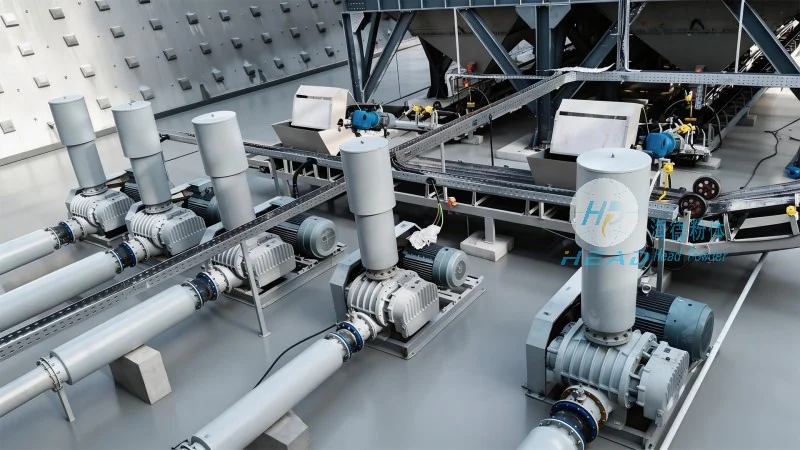
The core principle of low-pressure continuous powder pneumatic conveying involves the use of a low-pressure air stream to move powder particles through a pipeline. Unlike high-pressure systems that rely on high velocity air (often exceeding 50 m/s), low-pressure systems operate at lower air velocities, typically ranging from 10 to 30 m/s. This lower velocity reduces energy consumption and minimizes wear on system components, such as pipelines and valves. The system operates by feeding powder from a hopper into a rotary airlock valve, which controls the flow rate and prevents backflow. The powder is then discharged into the conveying pipeline, where it is entrained by the air stream. The air-powder mixture travels through the pipeline to a receiver, where the two are separated. The air is either recirculated back into the system or vented to the atmosphere, while the powder is collected for further processing or storage.
Key Features and Advantages
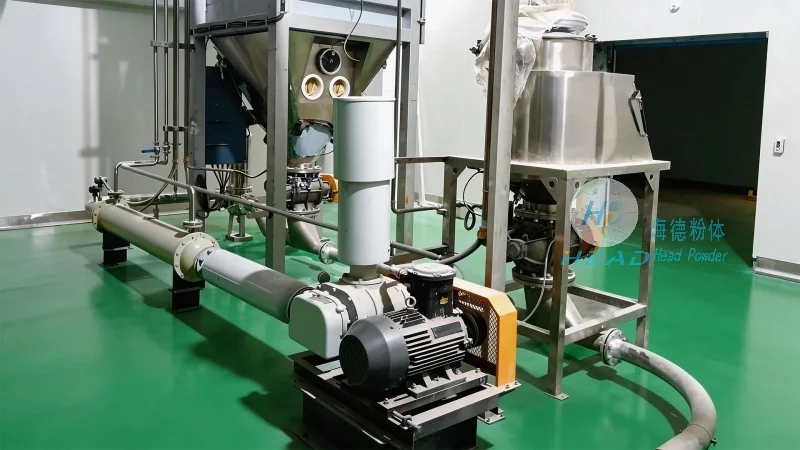
Low-pressure continuous powder pneumatic conveying systems offer several advantages that make them a preferred choice in many industries. These include: efficient and reliable powder transport over long distances; minimal product degradation due to low air velocities and gentle handling; reduced maintenance costs as the system operates at lower pressures, which minimizes wear on components; and the ability to handle a wide range of powder types, including fine, abrasive, and corrosive powders. The continuous operation of these systems also ensures a steady flow of material, which is crucial for maintaining production efficiency in manufacturing processes.
Typical Application Scenarios
Low-pressure continuous powder pneumatic conveying equipment is widely used in various industrial sectors. In the chemical industry, it is used to transport raw materials such as powders, granules, and solids for processing. In the food and pharmaceutical industries, these systems are employed to handle sensitive materials that require gentle handling to maintain product quality and safety. The construction industry also utilizes low-pressure pneumatic conveying for transporting cement, sand, and other bulk materials to different parts of a construction site. Additionally, in the mining and mineral processing sectors, these systems are used to transport ore and other mineral powders from processing plants to storage or further processing facilities.
System Components and Design Considerations
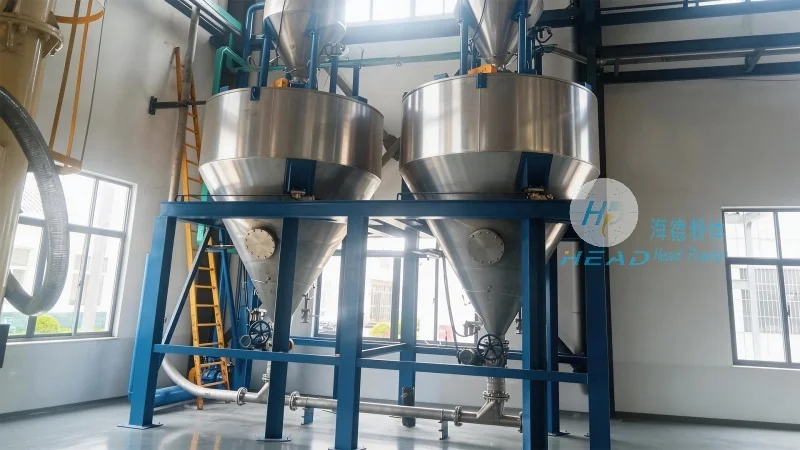
The design of a low-pressure continuous powder pneumatic conveying system involves careful consideration of several components to ensure optimal performance. The feeding hopper is designed to hold the bulk material and provide a consistent feed rate to the system. The rotary airlock valve is a critical component that controls the flow of powder into the pipeline, preventing backflow and ensuring a continuous feed. The conveying pipeline is typically made of materials such as stainless steel or plastic, depending on the type of powder being transported, to resist corrosion and wear. The receiver is designed to separate the air and powder mixture, with the air being discharged through a filter or vent, and the powder collected in a hopper or silo. The system also includes a blower or fan that provides the low-pressure air stream, which is sized to ensure sufficient air velocity to entrain the powder particles while minimizing energy consumption.