

Operation Process and Working Principle of Soap Granule Powder Pneumatic Conveying Line
For industries dealing with soap granules, efficient material handling is crucial for maintaining production efficiency and product quality. The pneumatic conveying line is a key solution that enables the safe and reliable transport of soap granules from one location to another within a manufacturing facility. This article provides an in-depth look at the operation process and working principle of a soap granule powder pneumatic conveying line, highlighting its components, operational steps, and the technical aspects that ensure optimal performance.
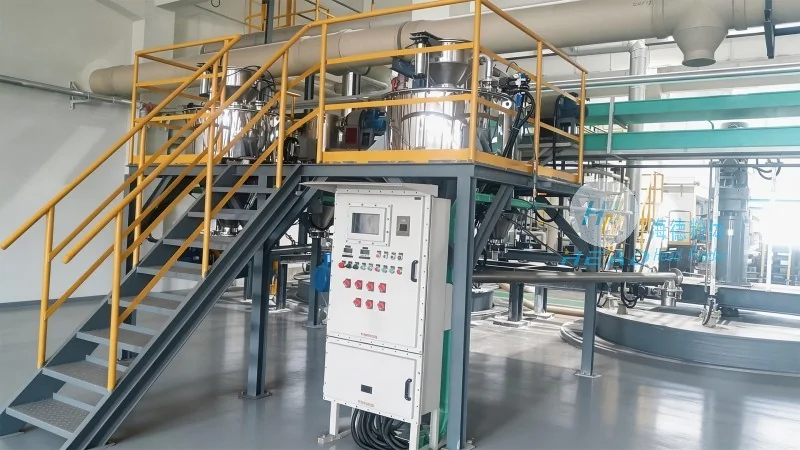
Overview of the Pneumatic Conveying System for Soap Granules
The pneumatic conveying line for soap granules is a closed system designed to transport dry powder materials, such as soap granules, using compressed air. Unlike traditional mechanical conveyors, this system eliminates the need for physical contact between the material and the conveyor components, reducing the risk of contamination and product degradation. The system typically consists of several key components, including a hopper for material storage, a feeder to control the flow rate, a conveying pipe network, a dust collector to capture airborne particles, and a discharge unit for delivering the material to its final destination.
Key Components and Their Functions
Each component of the pneumatic conveying line plays a vital role in the overall operation. The material hopper is responsible for storing the soap granules and providing a consistent feed to the system. The feeder, often a rotary valve or a screw feeder, regulates the flow of granules into the conveying pipe, ensuring a steady and controlled supply. The conveying pipe is the main channel through which the soap granules are transported, and it is typically made of materials like stainless steel or plastic to prevent corrosion and material buildup. The compressed air system provides the necessary pressure to move the material through the pipe, and the air flow is managed by a blower or a vacuum pump. The dust collector is essential for maintaining air quality and preventing dust emissions, while the discharge unit, such as a rotary valve or a baghouse, ensures the material is delivered to the target location without spillage or loss.
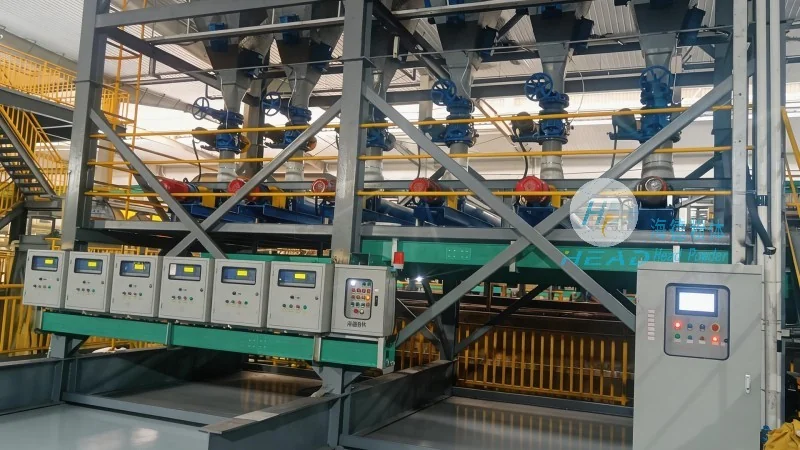
Operation Process of the Soap Granule Pneumatic Conveying Line
The operation of the soap granule pneumatic conveying line follows a systematic sequence of steps. First, the soap granules are loaded into the material hopper. The feeder then starts to rotate, gradually releasing the granules into the conveying pipe. Simultaneously, the compressed air system activates, creating a pressure differential that propels the granules forward. As the granules travel through the pipe, they are carried by the air stream, which can be either positive pressure (blowing air into the pipe) or negative pressure (sucking air out of the pipe). The air flow rate is carefully controlled to ensure the granules are transported at an optimal speed, avoiding issues like clogging or excessive wear on the system components. Once the granules reach the discharge unit, the air flow is adjusted to allow the material to be deposited into the receiving container. The dust collector continuously captures any airborne particles, ensuring that the system operates in a clean and safe environment.
Working Principle of the Pneumatic Conveying System
The working principle of the soap granule pneumatic conveying line is based on the principles of fluid dynamics and particle transport. In a positive pressure system, compressed air is introduced into the conveying pipe, creating a high-pressure environment that pushes the soap granules forward. The air and granules form a mixture known as a "slurry," which flows through the pipe until it reaches the discharge point. The velocity of the air stream must be sufficient to overcome the gravitational force acting on the granules and any frictional resistance within the pipe. In a negative pressure system, the air is drawn out of the pipe, creating a vacuum that pulls the granules along with it. The key to both systems is maintaining an appropriate air-to-material ratio, which ensures that the granules are fully entrained by the air and transported efficiently without separation or clogging.
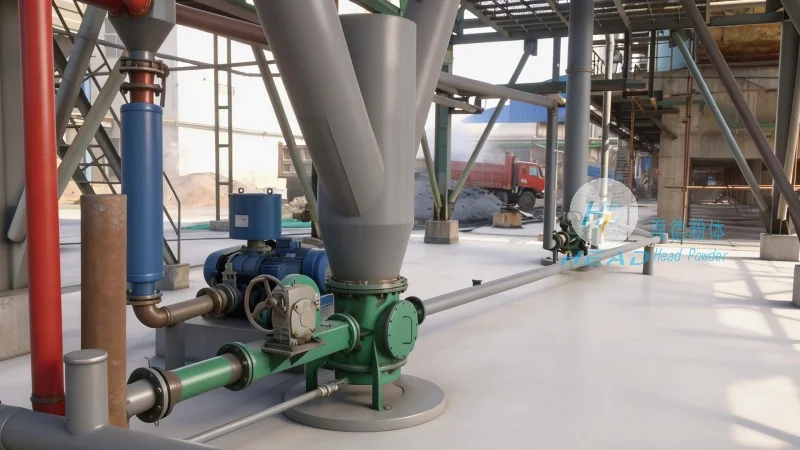
Benefits and Applications of the Pneumatic Conveying Line
The use of a pneumatic conveying line for soap granules offers several advantages over traditional conveying methods. These include reduced risk of product contamination, improved material handling efficiency, and the ability to transport materials over long distances without the need for multiple transfer points. The system is particularly suitable for industries where hygiene and product purity are critical, such as in the soap manufacturing sector. Additionally, the pneumatic conveying line can handle a wide range of particle sizes and shapes, making it versatile for different types of soap granules. The system's compact design and minimal maintenance requirements also contribute to its popularity among manufacturers.
About Shandong HeadPowder Engineering Co., Ltd.
Shandong HeadPowder Engineering Co., Ltd., commonly known as headpowder, is a leading manufacturer and supplier of pneumatic conveying systems and related equipment. With a strong focus on innovation and quality, the company has established itself as a trusted partner for industries requiring efficient material handling solutions. Headpowder's products are designed to meet the specific needs of various applications, including soap granule processing, and are manufactured using high-quality materials and advanced technology. The company's headquarters is located in Shandong, China, where it operates a state-of-the-art production facility and a dedicated research and development team. Headpowder is committed to providing reliable and durable equipment that enhances the productivity and safety of its clients' operations.