

What is the Pneumatic Conveying of Soybean Cake Material? What Are the Design Principles?
Pneumatic conveying systems are widely used in the processing and handling of various bulk materials, including agricultural products like soybean cake. For industries dealing with soybean cake, an efficient and reliable conveying system is crucial to maintain product quality, reduce labor costs, and enhance overall operational efficiency. This article delves into the concept of pneumatic conveying for soybean cake material and outlines the key design principles that ensure optimal performance.
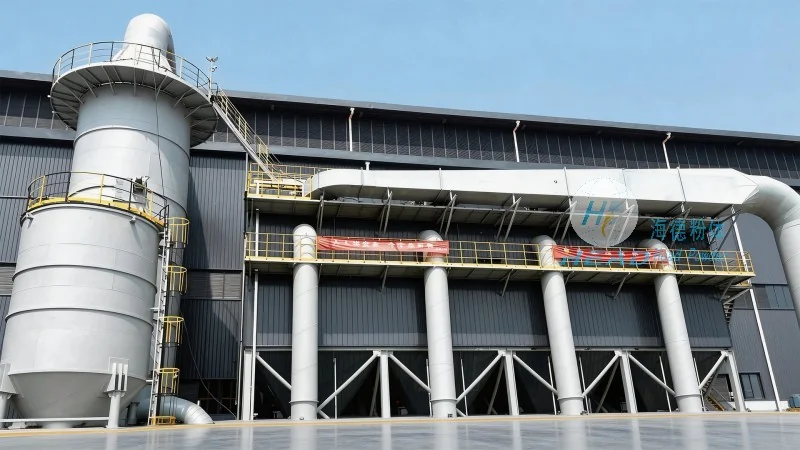
HeadPowder, a leading engineering company based in Shandong, China, specializes in the design, manufacturing, and installation of advanced pneumatic conveying solutions tailored to the unique needs of the agricultural and food processing sectors. With years of experience in the industry, HeadPowder has developed a deep understanding of the challenges associated with handling soybean cake, such as its density, moisture content, and potential for dust generation. Their expertise allows them to provide customized solutions that address these specific requirements.
The core of a pneumatic conveying system for soybean cake material lies in the ability to transport the material through a pipeline using air or gas as the conveying medium. This method eliminates the need for mechanical components like belts or buckets, reducing maintenance and operational costs. The design of such a system involves several critical components, including the hopper, feeder, conveying line, and receiver. Each component plays a vital role in ensuring the smooth and efficient movement of the soybean cake from the source to the destination.
One of the primary design principles is the selection of the appropriate conveying velocity. The velocity of the air or gas must be sufficient to overcome the gravitational force acting on the soybean cake particles and to prevent particle deposition or blockage in the pipeline. HeadPowder engineers carefully calculate the required velocity based on the material's properties, such as particle size, density, and flowability. This ensures that the conveying process is both energy-efficient and effective.
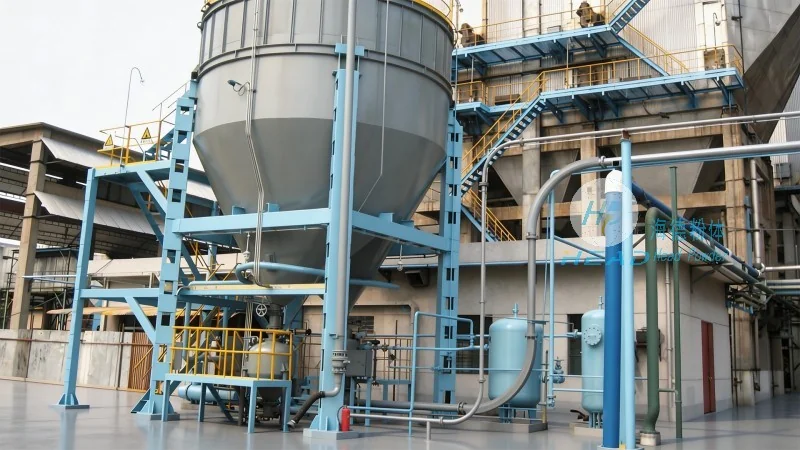
Another crucial design principle is the proper sizing of the conveying line. The diameter and length of the pipeline are critical factors that affect the system's performance. A too small diameter may lead to increased pressure drop and energy consumption, while a too large diameter may result in unnecessary material handling costs. HeadPowder uses advanced computational fluid dynamics (CFD) and empirical formulas to determine the optimal line size for each application, ensuring that the system operates at the lowest possible energy consumption while maintaining the required conveying capacity.
The hopper and feeder are also critical components in the design of a pneumatic conveying system for soybean cake. The hopper must be designed to store the soybean cake in a way that promotes uniform flow and prevents bridging or arching, which can lead to material blockage. HeadPowder's engineers design hoppers with appropriate angles and internal surfaces to facilitate smooth material discharge. The feeder, typically a rotary valve or a star feeder, is responsible for controlling the flow rate of the soybean cake into the conveying line. Properly sized and positioned feeders ensure consistent material flow and prevent surges or fluctuations that could affect the conveying system's performance.
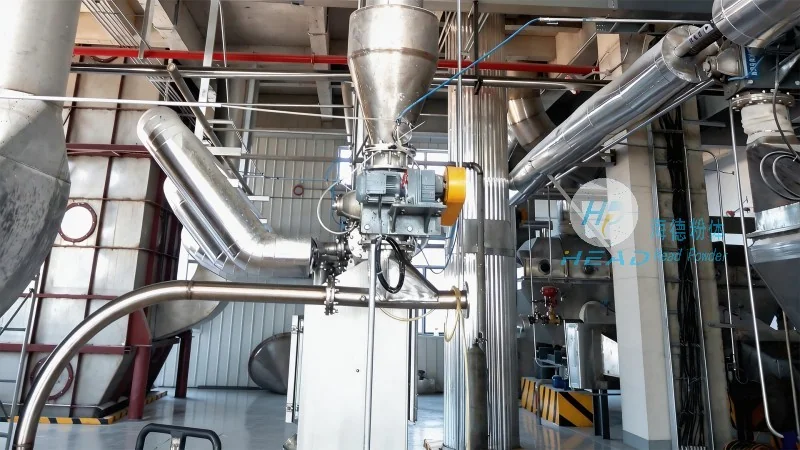
The receiver, where the soybean cake is deposited at the end of the conveying line, must be designed to handle the material's characteristics. Soybean cake can be dusty and may require dust collection systems to prevent environmental contamination and ensure worker safety. HeadPowder integrates dust collection and filtration systems into their designs to comply with environmental regulations and maintain a safe working environment. The receiver is also designed to minimize product loss and ensure that the material is discharged cleanly and efficiently.
Control systems are another essential aspect of the design, as they allow for the automation and monitoring of the pneumatic conveying process. Modern systems use sensors and controllers to regulate the air pressure, flow rate, and material feed rate, ensuring that the system operates within optimal parameters. HeadPowder's advanced control systems provide real-time monitoring and data logging, enabling operators to identify and address any issues promptly. This not only improves operational efficiency but also extends the lifespan of the equipment.
In conclusion, the pneumatic conveying of soybean cake material is a complex process that requires careful consideration of various design principles. From the selection of the conveying velocity and line size to the design of the hopper, feeder, and receiver, each component must be optimized to ensure the system's efficiency and reliability. Companies like HeadPowder, with their expertise and experience, play a vital role in providing customized solutions that meet the specific needs of the agricultural industry. By adhering to these design principles, industries can achieve efficient, cost-effective, and environmentally friendly material handling, enhancing their overall productivity and competitiveness.