

What is the Pneumatic Conveying of Calcium Carbide Dust Removal Ash? Exploring the Design Principles
Calcium carbide production is a critical industrial process that generates significant amounts of dust and ash as byproducts. The removal and handling of these materials, often referred to as calcium carbide dust removal ash, present unique challenges due to their fine particle size, potential reactivity, and hazardous nature. Pneumatic conveying has emerged as a highly effective method for transporting these materials from the dust collection systems to disposal or processing facilities. This article explores the fundamental principles behind the design of pneumatic conveying systems for calcium carbide dust removal ash, highlighting key considerations and technical aspects that ensure efficient and safe operation.
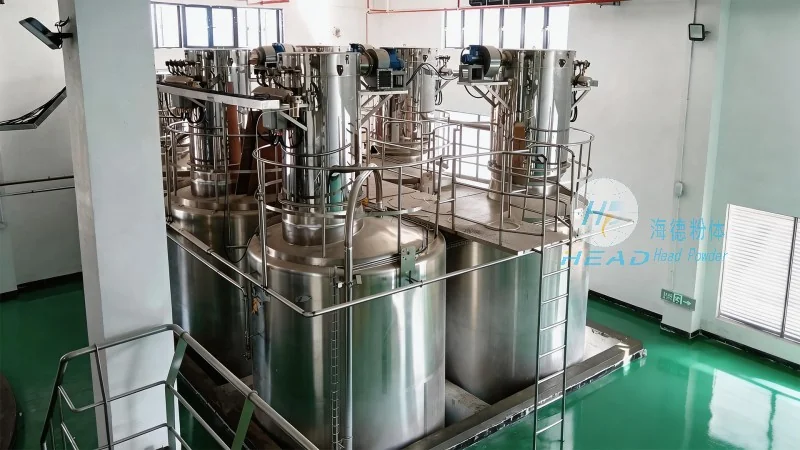
Characteristics of Calcium Carbide Dust Removal Ash
Before delving into the design principles of pneumatic conveying, it is essential to understand the physical and chemical properties of calcium carbide dust removal ash. These materials typically consist of fine particles with diameters ranging from a few microns to several hundred microns. The ash may contain residual calcium carbide, which can react with moisture to produce acetylene gas, posing fire and explosion risks. Additionally, the dust is often abrasive and can cause wear on conveying equipment. The density of the ash is usually low, around 0.8 to 1.2 g/cm³, and its flowability can be poor, making it prone to bridging or caking in storage silos. These characteristics directly influence the selection of conveying system type, equipment, and operational parameters.
Types of Pneumatic Conveying Systems
Pneumatic conveying systems for calcium carbide dust removal ash can be broadly classified into two main categories: positive pressure (pressure) systems and negative pressure (vacuum) systems. Positive pressure systems operate by blowing air or a carrier gas into the conveying line, creating a pressure higher than the ambient air pressure. This method is suitable for short to medium distance conveying and is often used when the material needs to be discharged into a high-pressure environment or when the system is located in an area where dust emissions are controlled. Negative pressure systems, on the other hand, create a vacuum in the conveying line by extracting air from the system, drawing the material into the line. These systems are ideal for long-distance conveying, as they minimize dust leakage and are commonly used when the material must be transported from a low-level source to a higher elevation.
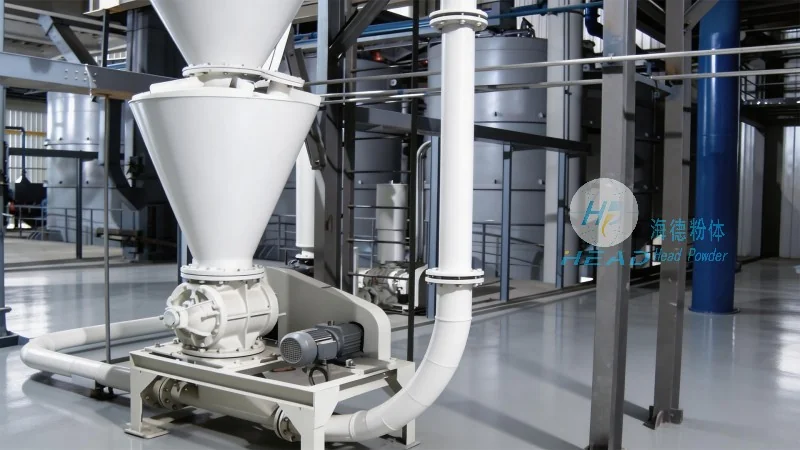
Design Principles for Pneumatic Conveying Systems
The design of a pneumatic conveying system for calcium carbide dust removal ash involves several critical factors that must be carefully considered to ensure optimal performance, safety, and reliability. The first step is to determine the required conveying capacity, which is typically expressed in terms of mass flow rate (kg/h or ton/h). This is calculated based on the production rate of the dust and the desired storage or processing capacity. The second key parameter is the air velocity or gas velocity, which must be sufficient to keep the particles suspended in the air stream and prevent deposition or clogging in the conveying line. For fine powders like calcium carbide dust, the recommended air velocity is usually between 20 to 30 m/s for positive pressure systems and 15 to 25 m/s for negative pressure systems. The air velocity is calculated using the formula: V = (Q / A) * (1 + (ρp / ρg)), where V is the air velocity, Q is the volumetric flow rate, A is the cross-sectional area of the pipe, ρp is the particle density, and ρg is the gas density.
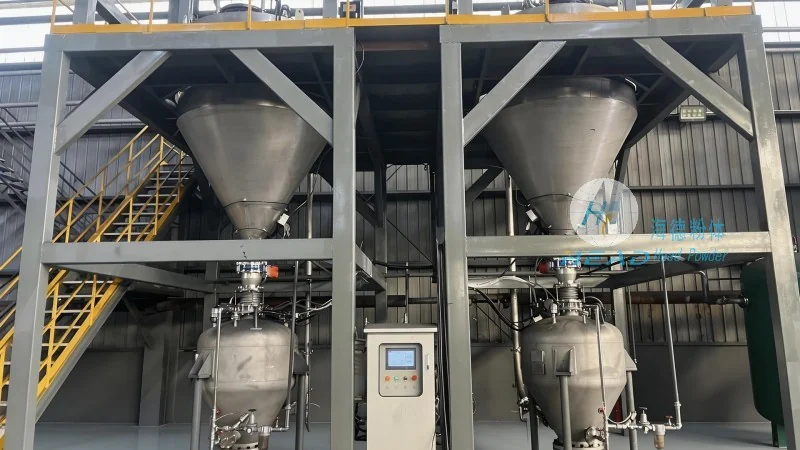
Pipeline Design and Layout
The layout of the conveying pipeline is another critical aspect of system design. The pipeline should be designed to minimize bends and changes in direction, as excessive bends can cause particle deposition and increase pressure drop. The pipe diameter is selected based on the required air velocity and the conveying capacity. For calcium carbide dust, a pipe diameter of 50 to 150 mm is commonly used, depending on the distance and flow rate. The pipeline should be equipped with appropriate fittings, such as elbows, tees, and reducers, which are designed to minimize pressure losses. To prevent dust accumulation and corrosion, the pipeline is typically made of materials like stainless steel or PVC, which are resistant to the abrasive and corrosive nature of the ash.
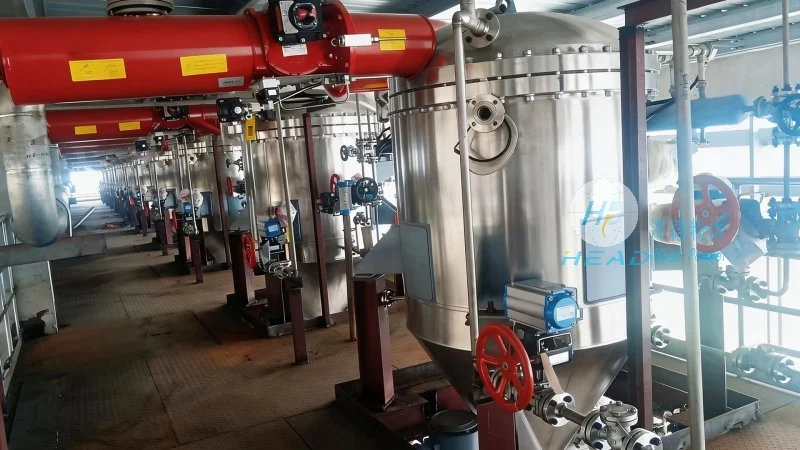
Equipment Selection and Components
A pneumatic conveying system for calcium carbide dust removal ash consists of several key components, each playing a crucial role in the overall operation. The primary components include a blower or fan (for positive pressure systems) or a vacuum pump (for negative pressure systems), which provides the necessary air or gas flow. The blower is typically a centrifugal or axial fan, selected based on the required pressure and flow rate. The fan is connected to the conveying line via a duct or inlet, which is equipped with a filter to prevent dust from entering the fan and causing damage. The conveying line is connected to a material feed device, such as a rotary valve or a feeder, which controls the flow of the ash into the system. The feed device is designed to prevent the material from clogging and to maintain a consistent flow rate. The system also includes a dust separator or cyclone, which separates the material from the air stream and returns the material to the conveying line or discharges it to a storage silo. The separator is typically a high-efficiency cyclone, which can achieve separation efficiencies of 95% or higher for fine particles. Finally, the system may include a filter or baghouse to capture any residual dust from the exhaust air, ensuring compliance with environmental regulations.
Operational Considerations and Safety Measures
Operational considerations are essential to ensure the safe and efficient operation of pneumatic conveying systems for calcium carbide dust removal ash. Regular maintenance of the equipment is crucial to prevent breakdowns and ensure optimal performance. The fan and blower should be inspected regularly for wear and tear, and the filters should be cleaned or replaced as needed to maintain air flow. The pipeline should be checked for leaks and corrosion, and any blockages should be cleared promptly. Safety measures are also critical due to the hazardous nature of the ash. The system should be equipped with explosion-proof fans and other components to prevent ignition of the dust. The area around the system should be well-ventilated to prevent the accumulation of dust and gas. Additionally, personnel should be trained on the safe operation of the system and the proper handling of the ash.