

Operation Process and Working Principle of High-Pressure Dilute-Phase Pneumatic Conveying Systems
High-pressure dilute-phase pneumatic conveying systems are advanced industrial equipment designed for the efficient transport of bulk materials over long distances. These systems utilize high-pressure air or gas to move particulate materials through a pipeline network, offering a reliable and flexible solution for various industrial applications. The technology is widely used in sectors such as chemical, food, pharmaceutical, and mining, where material handling requires precision, cleanliness, and minimal product degradation.
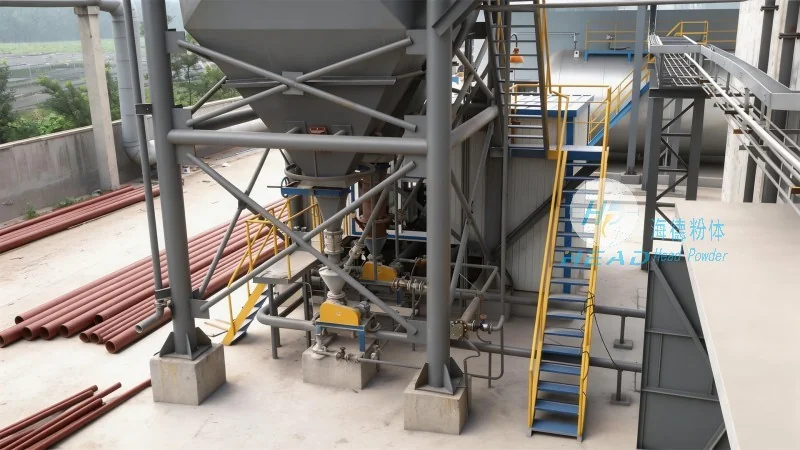
Company Overview: Shandong HeadPowder Engineering Co., Ltd.
HeadPowder, a leading manufacturer in the field of pneumatic conveying technology, is dedicated to providing high-quality, customized solutions for material transport. With a strong presence in China, particularly in Shandong, the company has established itself as a trusted partner for industries seeking efficient and sustainable material handling systems. The company's expertise lies in designing, manufacturing, and installing advanced pneumatic conveying equipment tailored to meet specific operational requirements.
Key Components of High-Pressure Dilute-Phase Pneumatic Conveying Systems
The core components of a high-pressure dilute-phase pneumatic conveying system include the air compressor, material feeder, pipeline system, and control unit. The air compressor generates the necessary pressure to create a high-velocity air stream that carries the material particles. The material feeder, such as a rotary valve or screw feeder, ensures a consistent and controlled flow of the bulk material into the pipeline. The pipeline system, typically made of stainless steel or other corrosion-resistant materials, transports the material-air mixture from the source to the destination. The control unit monitors and regulates the pressure, flow rate, and other parameters to maintain optimal system performance.
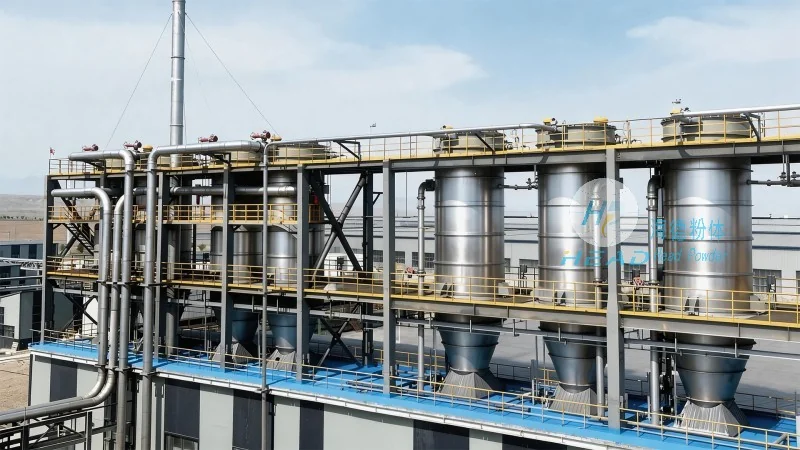
Operation Process of High-Pressure Dilute-Phase Pneumatic Conveying
The operation process of a high-pressure dilute-phase pneumatic conveying system involves several key steps. First, the air compressor is activated to build up the required pressure in the pipeline. Simultaneously, the material feeder starts to feed the bulk material into the system. The high-pressure air then picks up the material particles and propels them through the pipeline. The material-air mixture travels at high velocity, ensuring efficient transport over long distances. At the destination, the material is separated from the air through a separator or cyclone, and the air is either recirculated or discharged. The system's control unit continuously monitors the pressure and flow rates, adjusting the air compressor and feeder as needed to maintain stable operation.
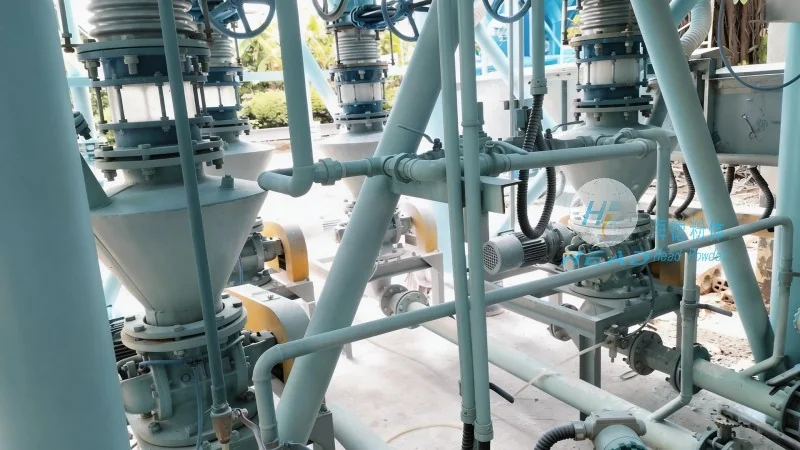
Working Principle of High-Pressure Dilute-Phase Pneumatic Conveying
The working principle of high-pressure dilute-phase pneumatic conveying is based on the principle of fluidization and momentum transfer. The high-pressure air creates a high-velocity flow within the pipeline, which lifts and transports the material particles. The material is suspended in the air stream, forming a dilute phase (low solid concentration) that allows for efficient movement. The key to the system's effectiveness is the balance between the air velocity and the particle size and density. Proper air velocity ensures that the particles are fully entrained and transported without settling or clogging the pipeline. The system's design, including the pipeline diameter, length, and inclination, is optimized to minimize pressure drop and energy consumption while maximizing material throughput.
Advantages of High-Pressure Dilute-Phase Pneumatic Conveying
High-pressure dilute-phase pneumatic conveying systems offer several advantages over traditional material handling methods. These include the ability to transport materials over long distances with minimal maintenance, the prevention of product contamination and degradation, and the flexibility to handle a wide range of materials, including powders, granules, and fine particles. The system is also suitable for applications requiring high cleanliness standards, such as in the food and pharmaceutical industries. Additionally, the use of high-pressure air reduces the risk of material spillage and dust emissions, contributing to a safer and more environmentally friendly operation.